
Guide des vêtements pour enfants : des styles pour bébés aux grands enfants
Publié le : décembre 19, 2025 Par : Cindy
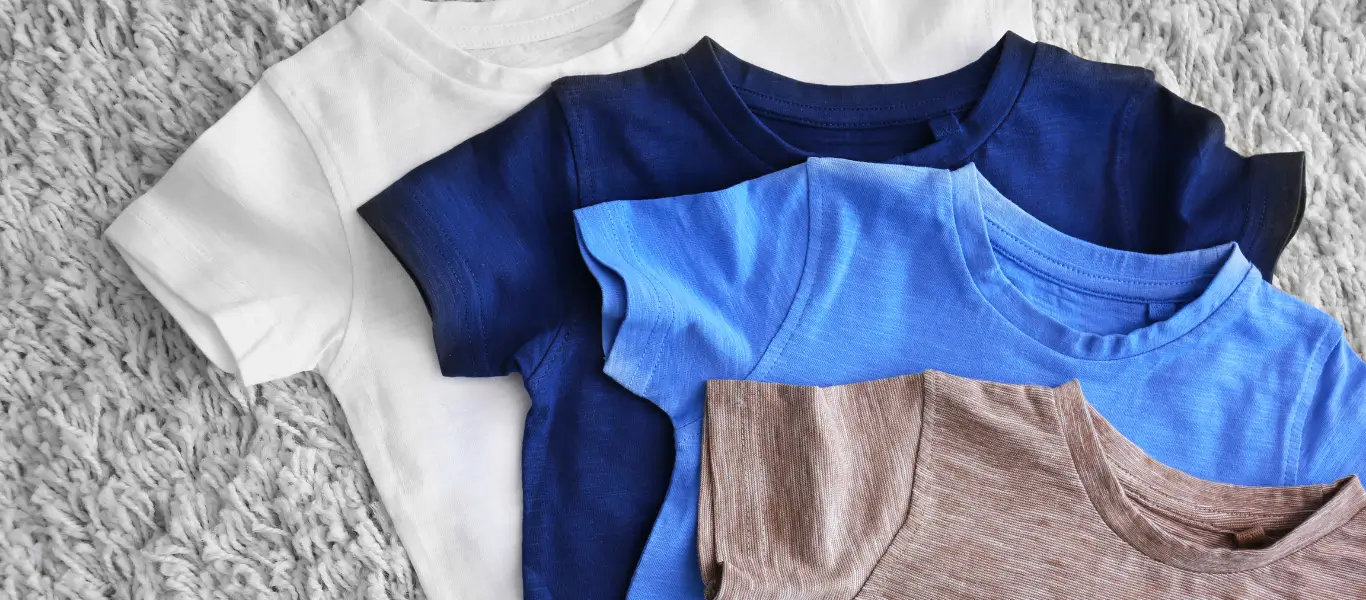
En tant que première barrière pour la sécurité des enfants, les vêtements pour enfants sont l'expression de leurs caractéristiques uniques. Il existe différents styles et couleurs de vêtements pour enfants parmi lesquels les parents peuvent choisir pour leurs enfants ou leurs bébés. À ce stade, comment choisir les vêtements adaptés à vos bébés ou à vos enfants ? Comment choisir la bonne taille et comment les assortir ? Ici, chez Aung Crown, avec plus de 27 ans d'expérience dans la confection de chapeaux et de vêtements sur mesure, nous vous guiderons à travers le guide des vêtements pour enfants, qui couvre les conseils de choix, les remarques et les styles pour tous les parents.
Acheter différents vêtements pour enfants
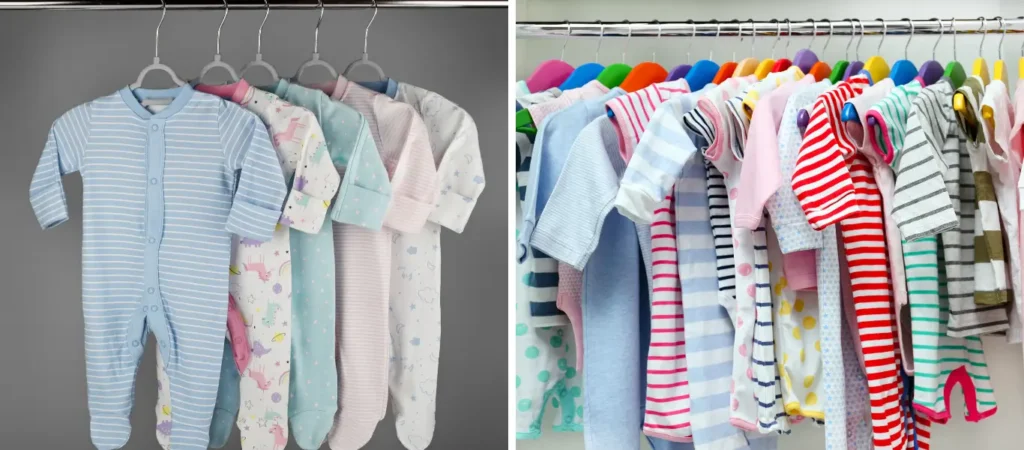
Fou différents âges
Tenues pour bébés
Cette organisation concerne les bébés âgés d'un an, qui transpirent et urinent fréquemment. Par conséquent, lorsqu'ils choisissent des vêtements pour enfants, les parents doivent privilégier ceux fabriqués en coton pur. Plus le style est simple, plus les vêtements sont faciles à enlever et plus il est facile de changer les couches.
Petits enfants et enfants d'âge préscolaire
En général, les enfants âgés de 1 à 5 ans ont une tête large, un cou court et un ventre proéminent. À cet âge, ils sont énergiques et dynamiques, c'est pourquoi les cols et les encolures de leurs vêtements doivent être légèrement plus grands que la taille habituelle. À partir de cet âge, la plupart des enfants adorent courir et sauter. Pour les aider à s'habiller et se déshabiller facilement, choisissez des vêtements qui s'ouvrent sur le devant.
Enfants (d'âge scolaire)
Les enfants âgés de 6 à 12 ans doivent privilégier la praticité et la sociabilité. Leurs tenues doivent être résistantes et légèrement ornées. Le choix des couleurs doit être complémentaire à leur teint. Si cela ne vous dérange pas, évitez les vêtements aux textures difficiles, qui peuvent irriter la peau délicate de votre enfant, entraver ses mouvements et même influencer son développement.
Adolescents/Adolescentes
Les jeunes âgés de 12 à 16 ans ont des courbes et des caractéristiques physiques évidentes, avec leur propre esthétique, leurs tenues préférées et leurs goûts extraordinaires. Par conséquent, le choix vestimentaire des jeunes se situe entre celui des enfants et celui des lycéens. Les vêtements de ces adolescents ne sont pas luxueux, mais reflètent leur style personnel : des couleurs vives et élégantes, avec quelques petites décorations. Il convient toutefois de respecter le style vestimentaire des adolescents.
Pour Filles et garçons
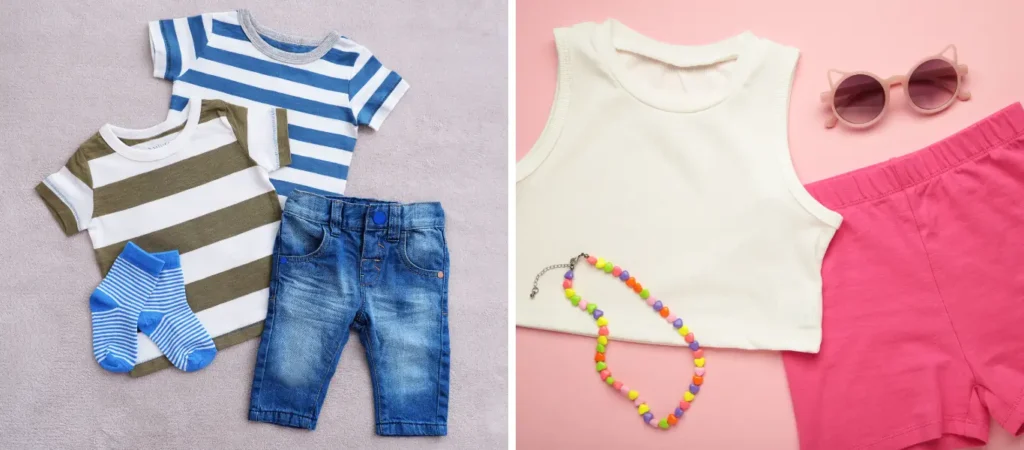
Vêtements pour garçons
De 2 à 7 ans : optez pour des modèles amples et colorés, ornés de broderies représentant des animaux, des lettres, des plantes, des fleurs ou des personnages de dessins animés. Choisissez des couleurs vives et résistantes aux taches.
De 7 à 14 ans : les garçons de cet âge sont dynamiques et vifs, et grandissent rapidement. Il est donc judicieux de choisir des tenues amples avec des ceintures ajustables. Les couleurs peuvent associer des nuances très contrastées et des tons complémentaires, tandis que le choix des vêtements pour enfants devrait, dans un monde idéal, refléter la personnalité de l'enfant.
Vêtements pour filles
Les filles âgées de 2 à 7 ans sont très mignonnes et adorables. Il est donc judicieux de choisir des vêtements ornés de motifs tendance, tels que des animaux de dessins animés, des graffitis de lettres, des plantes et des fleurs, ou avec des éléments décoratifs populaires comme des nœuds, des bordures en dentelle et des cols de poupée, qui sont à la fois élégants et mignons. Il existe une grande variété de styles et de choix pour les grandes filles de 7 à 14 ans. Les robes de princesse douces et élégantes sont suffisamment féériques. Les t-shirts à motifs d'animaux + pantalons en jean sont à la mode, décontractés, mais polyvalents.
Fou Différentes saisons
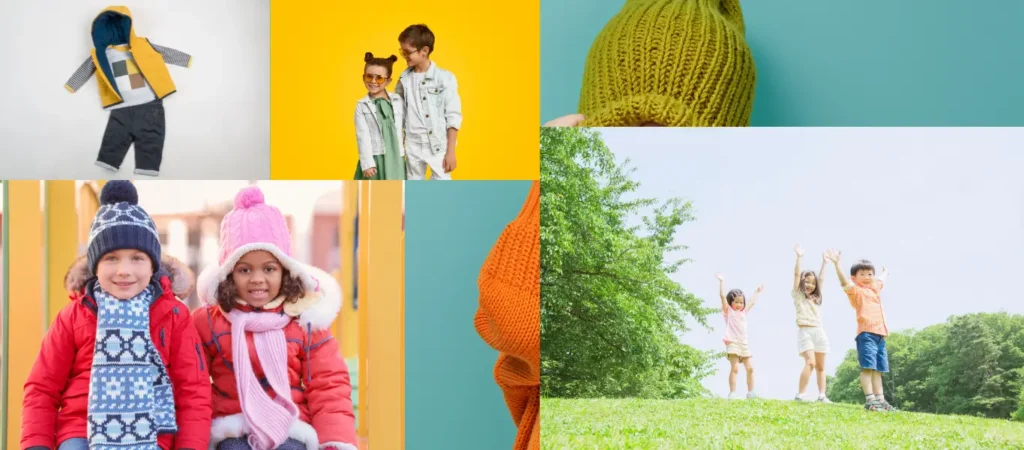
Printemps
Au début du printemps, il est également conseillé de ne pas trop tôt alléger les vêtements des bébés. Comme le dit le vieil adage, ’ gardez la chaleur au printemps et le froid en automne “. Si votre enfant ne transpire pas, vous n'avez pas besoin de lui enlever ses vêtements. Lorsque la température augmente pendant la journée, il est conseillé d'enlever un vêtement à la fois, mais n'enlevez pas trop de vêtements à la fois.
L'été
Pendant les chaudes journées d'été, on a tendance à transpirer. En général, les bébés sont dynamiques et ne peuvent pas rester assis tranquilles une minute. Il est donc conseillé aux parents d'habiller leurs bébés avec des vêtements un peu plus légers et respirants.
Automne
Le temps va se rafraîchir à l'automne, et au début de cette saison, il ne faut pas négliger l'habillement des bébés. Les habiller trop ou pas assez peut les rendre malades. En particulier, la baisse des températures à l'automne est un processus graduel. Il convient donc d'adapter l'habillement des bébés et des enfants à ce processus.
L'hiver
Lorsque le temps commence à se rafraîchir, ne vous précipitez pas pour emmitoufler votre enfant ; laissez-le s'habituer progressivement au froid. Tant que votre enfant ne présente aucun signe de respiration sifflante ou de toux, vous pouvez le laisser s'exposer un peu au froid, ce qui peut l'aider à renforcer sa résistance et à se préparer à affronter des températures plus froides.
Pour Différent Styles
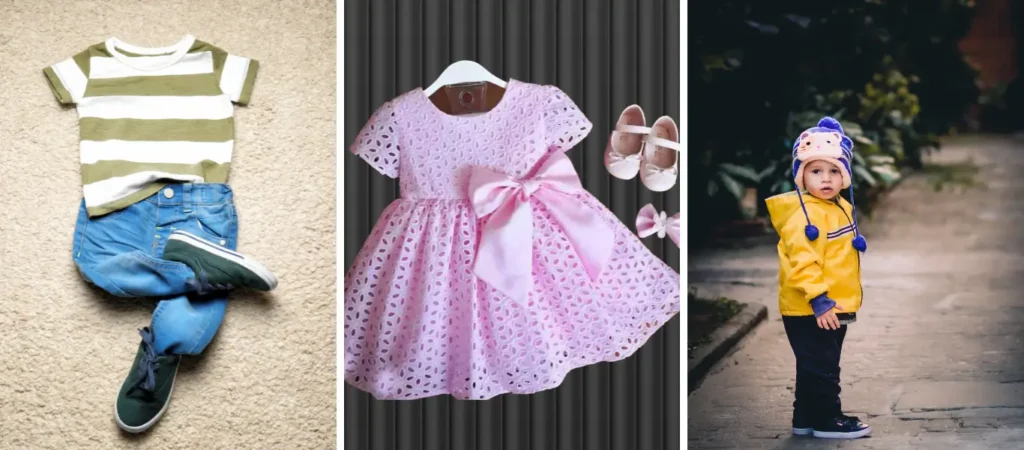
Style mignon et adorable
Le rose est la couleur principale des styles mignons et adorables. Les robes tutu roses ou les robes princesse en dentelle sont pleines de naïveté et de romantisme. Associées à des chaussures en cuir ou à des bottines princesse, elles vous permettront de devenir une princesse digne des contes de fées. Compte tenu de la fraîcheur automnale, il est judicieux d'ajouter un pull à col roulé ou une veste courte style Chanel.
Style dynamique et sportif
Les blousons bomber sont des classiques indémodables de la mode. Des combinaisons simples permettent de créer des tenues élégantes, et les blousons bomber amples gardent les enfants au chaud sans les gêner dans leurs mouvements. Avec leurs patchs alphabétiques uniques, les blousons bomber ajoutent une touche d'enfance. Les blousons bomber patchwork sont plus colorés. La combinaison d'un maillot de baseball et d'un pantalon de survêtement fuselé est très sportive et incarne parfaitement les dernières tendances.
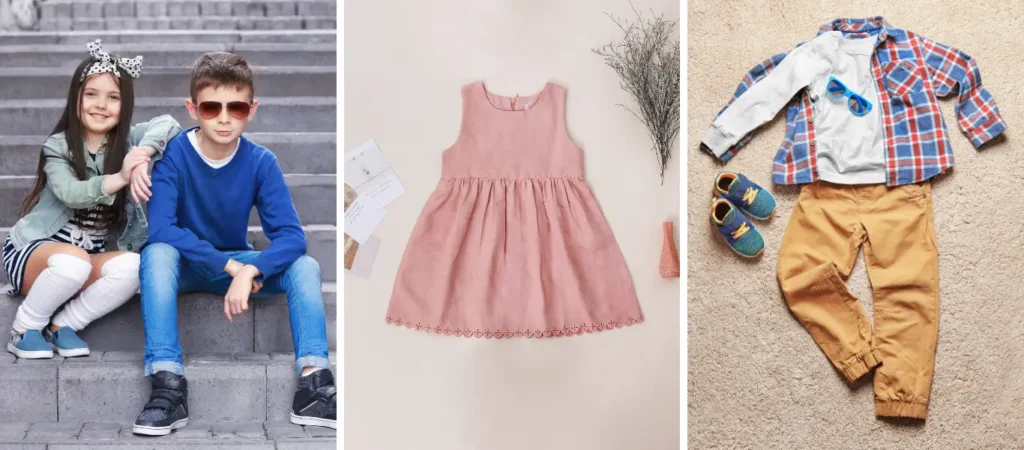
Mode chic personnalisée
La combinaison classique de couleurs noir et blanc ne se démode jamais et attire également les enfants. Le contraste éclatant entre le noir et le blanc et les associations de couleurs distinctives peuvent donner du caractère et une identité. La combinaison de couleurs noir et blanc peut être utilisée sur une seule pièce ou sur l'ensemble du style. Associée à des lunettes de soleil pour enfants et à une casquette, la tenue complète est super cool.
Nouvelle mode éducative
Le nouveau vert est particulièrement adapté à un style intellectuel. Les tricots verts sont pleins de dynamisme et s'accordent parfaitement avec une jupe kaki, qui est particulièrement nouvelle et sobre. La chemise blanche à l'intérieur est en fait raffinée, et les pieds sont chaussés de chaussures blanches ou de chaussures en toile, ce qui est basique et sans exagération. Si vous souhaitez un look plus vintage, optez pour une petite robe rouge inspirée de l'ethnique, qui peut ajouter une touche de charme bohème.
Pour différentes occasions
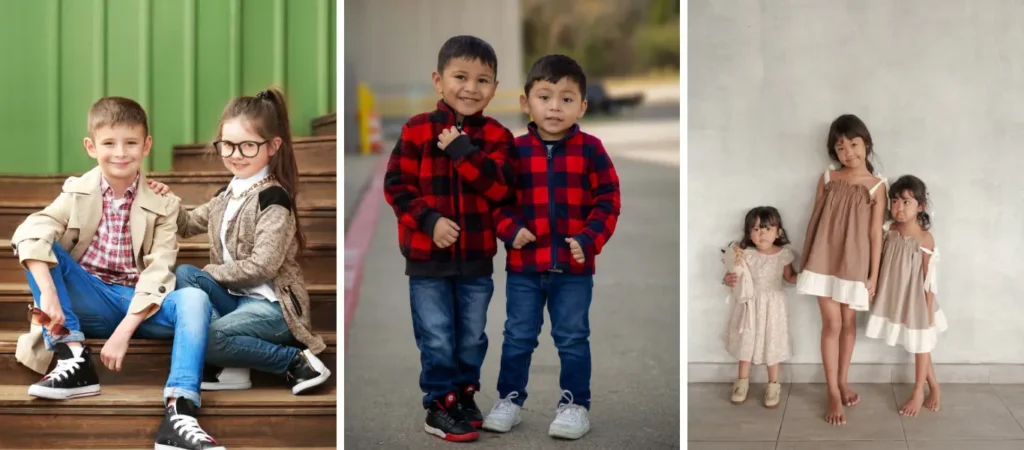
Usure normale
Les vêtements courants pour enfants sont les plus courants, notamment les t-shirts, les pantalons en jean, les shorts, les robes, les jupes, les pantalons à bretelles, etc. Tous ces vêtements sont confortables, basiques et faciles à assortir. De plus, ils doivent également tenir compte des besoins des enfants en matière d'exercice et de sport.
Tenue de soirée
Les tenues de fête sont les vêtements que les enfants portent pour diverses fêtes, célébrations ou carnavals. Elles comprennent des tenues, des costumes, des vêtements personnalisés de princesse/prince, qui sont chics, beaux et conventionnels afin de refléter l'identité et les goûts des enfants.
Vêtements de sport
Les vêtements de sport pour enfants sont les tenues que les enfants portent pour faire de l'exercice physique. Ils comprennent des chaussures de tennis, des pantalons de survêtement et des t-shirts dynamiques, qui évacuent l'humidité, sont respirants et extensibles afin d'assurer le confort et la sécurité des enfants pendant leurs activités physiques.
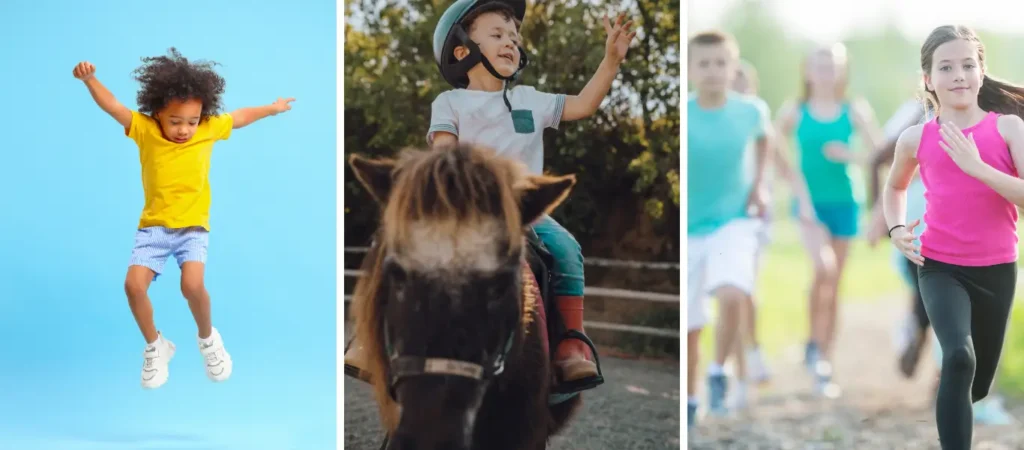
Tenue de festival
Les vêtements de fête pour enfants comprennent les costumes de Noël, les costumes d'Halloween, les vêtements pour la fête du printemps, etc. Tous ces costumes sont très festifs et mettent l'accent sur les combinaisons de couleurs, les motifs et les thèmes afin de refléter l'ambiance festive et les émotions des enfants.
Tenue scolaire
Pour être honnête, la plupart des écoles ont leurs propres uniformes, y compris des vêtements de tous les jours et des tenues de sport, qui sont confortables, résistants et faciles à laver. Tous leurs uniformes permettent de mieux mettre en valeur l'esprit de leurs élèves, la culture de l'école et sa devise.
Comment choisir la bonne couleur ?
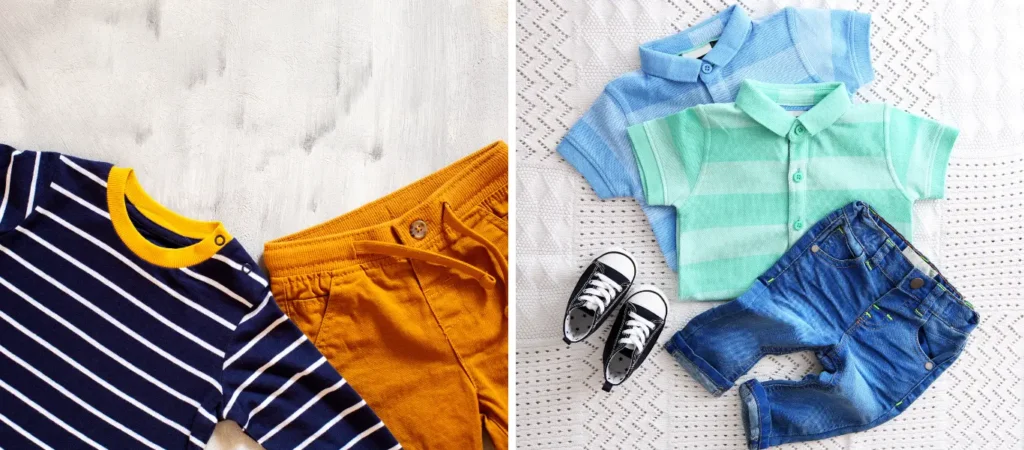
Le choix des couleurs pour les vêtements pour enfants est presque identique à celui pour les adultes. L'ensemble du style est harmonieux ou non selon que les couleurs s'accordent ou non entre elles. Les couleurs des vêtements pour enfants sont riches et variées. Comment choisir la bonne couleur pour votre bébé ?
Choisissez selon votre teint
Si votre bébé a le teint foncé, choisissez des vêtements aux couleurs vives et pures, comme le jaune, l'orange et le vert, qui peuvent rendre votre bébé plus spirituel et plus dynamique. Si votre bébé a le teint clair, les vêtements aux couleurs chaudes peuvent le rendre plus blanc, comme les vêtements rouges, orange et jaunes.
Choisissez selon votre morphologie
Si votre bébé est potelé et mignon, vous pouvez choisir des tenues aux couleurs froides ou sombres. Pour les hauts, optez pour des modèles à col rond ou sans col. Par exemple, des t-shirts à col rond, des robes à bretelles, associés à des pantalons ajustés, qui peuvent affiner la silhouette de votre bébé.
Si votre bébé est petit, choisissez des vêtements aux couleurs chaudes, comme le vert, le beige ou le marron. Toutes ces couleurs élargissent visuellement la silhouette, donnant l'impression que l'enfant est un peu potelé.
Choix pour des vêtements diversifiés pour enfants
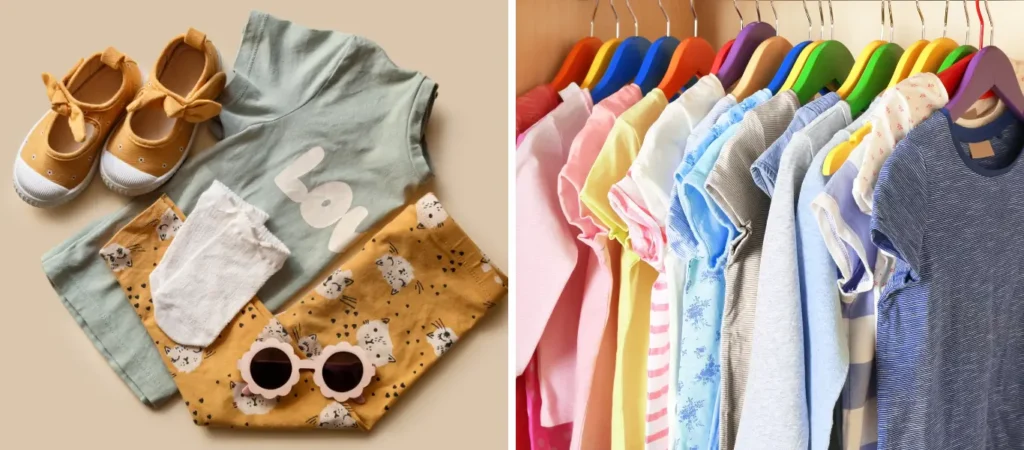
Haut de page
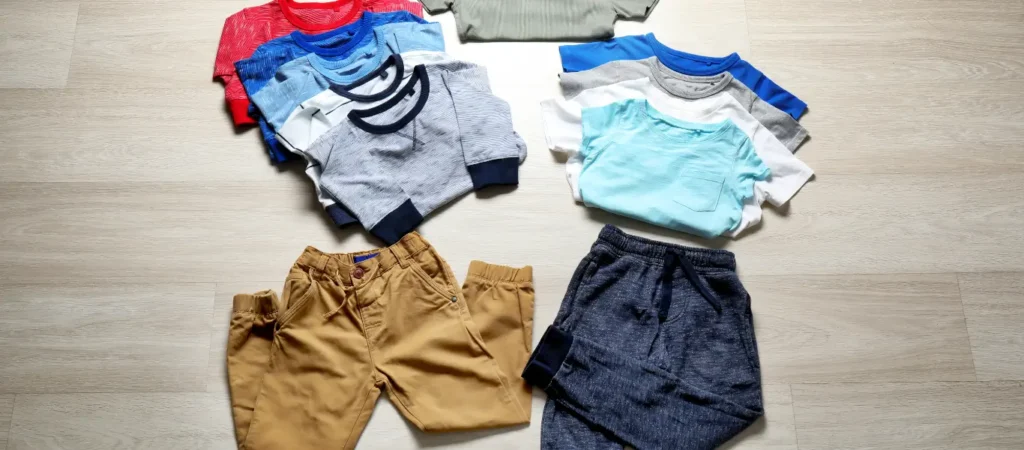
Les chemises et les t-shirts sont des vêtements basiques, généreux, polyvalents et résistants. Les pulls sont indispensables au printemps et à la saison des collections, car ils apportent de la chaleur et permettent de créer des styles variés. Par conséquent, lorsque vous choisissez des hauts pour enfants, privilégiez les matières confortables, les couleurs vives et les coupes bien ajustées afin de mettre en valeur leur vitalité et leur charme.
Pantalon
Les pantalons et les pantalons de sport sont indispensables pour un usage quotidien. Ils offrent une résistance à l'usure et une respirabilité exceptionnelles, ce qui les rend parfaits pour les enfants dynamiques et actifs. Les pantalons à jambes larges affichent un style ample et caractéristique. Par conséquent, lorsque vous choisissez des pantalons pour enfants, l'idéal est de privilégier les coupes amples, les textures résistantes et les couleurs agréables.
Jupes et robes
Les jupes courtes et longues peuvent donner des styles distinctifs. Les jupes courtes sont vives et charmantes ; les jupes longues sont raffinées et majestueuses. Les jupes en forme de A sont idéales pour un ventre rond, ce qui convient à différentes morphologies d'enfants. Les robes sont les préférées des petites filles, car elles mettent en valeur leur douceur et leur charme.
Manteaux
Les manteaux sont des vêtements courants dans les tenues hivernales. Les manteaux chauds et coupe-vent offrent suffisamment de chaleur aux enfants. Les anoraks et les robes-manteaux sont adaptés au printemps et à l'automne, car ils sont à la fois coupe-vent et élégants. Par conséquent, si cela ne vous dérange pas, tenez compte de la chaleur, de la résistance à l'usure et du séchage rapide lorsque vous choisissez des manteaux pour enfants.
Vêtements de nuit
La plupart des vêtements de nuit pour enfants sont confortables à porter, fabriqués à partir de coton pur. En termes de couleurs, les couleurs unies raffinées sont la norme, telles que le rose et le bleu clair, afin de créer un environnement familial. Les grenouillères et les sacs de couchage sont adaptés aux nouveau-nés et aux jeunes enfants, car ils offrent une meilleure chaleur et une plus grande sécurité.
Tenues assorties pour toute la famille
Les vêtements assortis pour toute la famille désignent les tenues que les parents et les enfants portent ensemble, identiques ou très similaires, afin de montrer l'entente et l'harmonie qui règnent au sein de la famille. Le plus souvent, ce type de vêtements est simple, confortable et courant, afin de refléter la chaleur et la joie de la famille.
Tableau des tailles pour vêtements enfants
Méthode simple pour mesurer la taille des vêtements pour enfants :
Tour de tête = 20% de la taille
Taille = 80% de hauteur
Longueur du short = 30% de hauteur
Longueur de la chemise = 50% de hauteur
Longueur du pantalon = 75% de hauteur
Longueur de la veste = 49% de hauteur
Longueur du costume = 53% de hauteur
Longueur du manteau = 70% de hauteur
Longueur de la robe = 78% de la taille.
Remarque : Les tableaux d'estimation ci-dessous correspondent à des estimations inactives pour les enfants ayant une morphologie standard. Mesure des variations entre les marques de vêtements. Le tableau d'estimation ci-dessous est fourni à titre indicatif. Nous vous recommandons de choisir une taille supérieure (par exemple, pour un enfant mesurant 80 cm, sélectionnez l'estimation 90 cm).
Unir : cm
| Yoreilles | Hauteur/cm | T-shirts | Vestes | Vêtements d'extérieur | Pantalon | Short | Manteaux longs | Robes |
| 0,5 à 1 an | 70 | 28 | 30 | 32 | 42 | 17 | 39 | 42 |
| 1 à 2 ans | 80 | 32 | 34 | 37 | 48 | 19 | 45 | 48 |
| 2 à 3 ans | 90 | 36 | 38 | 41 | 54 | 22 | 51 | 54 |
| 3-4 ans | 100 | 40 | 43 | 46 | 60 | 24 | 56 | 60 |
| 4-5 ans | 110 | 44 | 47 | 50 | 66 | 27 | 62 | 66 |
| 6-7 ans | 120 | 48 | 51 | 55 | 72 | 29 | 67 | 72 |
| 8-9 ans | 130 | 52 | 55 | 60 | 78 | 31 | 73 | 78 |
| 10-11 ans | 140 | 56 | 60 | 64 | 84 | 34 | 79 | 84 |
| 12-13 ans | 150 | 60 | 64 | 69 | 90 | 36 | 84 | 90 |
| 14-15 ans | 160 | 64 | 68 | 73 | 96 | 39 | 90 | 96 |
Types de tissus pour les vêtements pour enfants
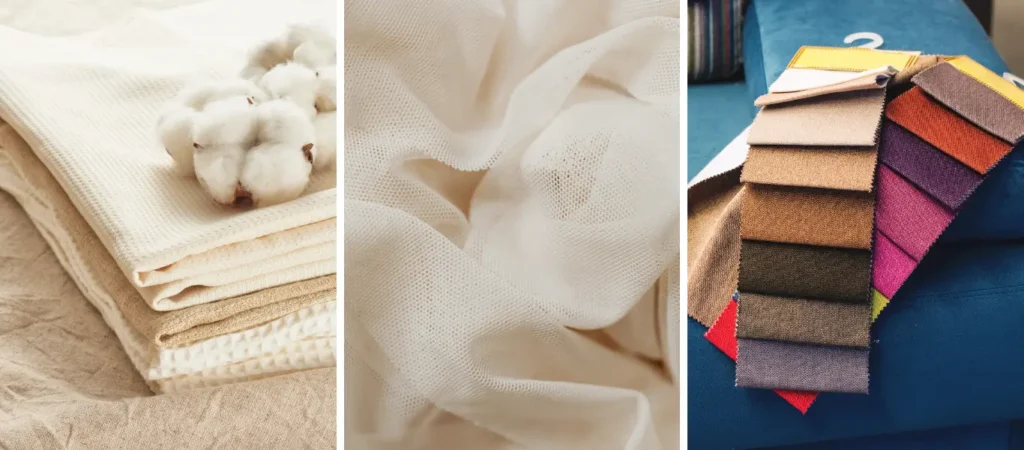
Coton immaculé
C'est l'une des textures les plus courantes, exceptionnellement délicate au toucher, extraordinaire pour évacuer l'humidité et respirante. En particulier pour les bébés ou les enfants à la peau délicate, le coton immaculé peut leur offrir une bien meilleure protection et leur procurer un confort accru. Parallèlement, le coût du coton pur est exceptionnellement avantageux pour le consommateur, ce qui est particulièrement raisonnable pour la plupart des acheteurs.
Lin
Le lin est un tissu très respirant et confortable, idéal pour confectionner des vêtements d'été. Ce type de tissu permet non seulement aux enfants de rester au frais, mais il possède également des propriétés antibactériennes qui préviennent efficacement les problèmes tels que les allergies.
Tissu mélangé polyester et laine
Ce tissu haut de gamme destiné aux vêtements pour enfants est doux au toucher, légèrement brillant, naturel et confortable à porter, et esthétique. De plus, il procure non seulement une sensation de chaleur aux enfants, mais il conserve également bien la chaleur, ce qui le rend idéal pour les hivers rigoureux.
Tissu tricoté
Le tricot est un tissu très adapté à la confection de pulls et de cardigans. Grâce à son toucher doux et à son excellente élasticité, il offre un confort optimal aux enfants et aux bébés. De plus, le tricot est un tissu très chaud, idéal pour la confection de vêtements d'hiver et pour les climats froids.
Tissu Denim
Le denim est un tissu extrêmement résistant à l'usure et élégant. Les vêtements confectionnés dans ce tissu peuvent donc être portés plus longtemps. De plus, le denim est respirant et confortable à porter, ce qui le rend adapté à toutes les situations.
Consignes de sécurité pour les vêtements pour enfants
Niveaux de sécurité pour les vêtements pour enfants
Conformément aux dispositions relatives aux critères obligatoires énoncés dans les détails spécialisés nationaux en matière de sécurité fondamentale des articles matériels, les niveaux de sécurité des matériaux et des vêtements en Chine sont classés en catégories A, B et C en fonction de la teneur en formaldéhyde, du niveau de pH, de la solidité des couleurs, de l'odeur et de la présence de colorants azoïques pouvant libérer des amines aromatiques cancérigènes. Parmi celles-ci, la catégorie A > la catégorie B > la catégorie C, les notes les plus élevées correspondant à des critères de sécurité supérieurs pour les vêtements. Les points particuliers à noter sont les suivants :
| Types de vêtements pour enfants | Classe A | Classe B | Classe C | |
| Teneur en formaldéhyde ((mg/kg) | 20 | 75 | 300 | |
| Niveau de pH(a) | 4.0~7.5 | 4.0~8.5 | 4.0~9.0 | |
| Solidité des couleurs (b)/Grade | Résistant à l'eau (décoloration, taches) | 3-4 | 3 | 3 |
| Résistant à la transpiration acide (décoloration, taches) | 3-4 | 3 | 3 | |
| Résistant à la transpiration alcaline (décoloration, taches) | 3-4 | 3 | 3 | |
| Résistant au frottement à sec | 4 | 3 | 3 | |
| Résistant à la salive (décoloration, taches) | 4 | — — | —— | |
| Odeur | aucun | |||
| Colorants aminés aromatiques cancérigènes dégradables (c) (mg/kg) | Interdit d'ajouter | |||
| Classe A: Pour les produits non finis nécessitant un traitement humide lors des étapes de fabrication ultérieures, la tolérance au pH peut être étendue à 4,0-10,5. Classe B : Non requis pour les produits non finis soumis à des processus de lavage/décoloration, les produits de couleur naturelle ou blanchis ; non requis pour les produits teints à la main de manière traditionnelle, comme le tie-dye ; les tests de résistance à la salive ne s'appliquent qu'aux produits textiles pour bébés. Classe C : Limite pour les amines aromatiques cancérigènes ≤ 20 mg/kg. | ||||
Classe A
Normalement, ce type désigne les produits pour nourrissons et enfants en bas âge. À savoir, tous les vêtements textiles pour les bébés de 0 à 36 mois, y compris leurs vêtements, bavoirs, chapeaux, couches et literie. Tous ces articles appartiennent à la classe A et leur teneur en formaldéhyde ne doit pas dépasser 20 mg/kg (milligrammes par kilogramme).
Classe B
Les vêtements de classe B peuvent entrer en contact direct avec la peau, ce qui signifie que la totalité ou la plupart des écailles des vêtements peuvent entrer en contact direct avec la peau, comme les sous-vêtements, les chemises, les maillots de bain, les chaussettes, les écharpes, les robes d'été, les pantalons, les draps, la literie et les serviettes. La teneur en formaldéhyde ne doit pas dépasser 75 mg/kg (milligrammes par kilogramme).
Classe C
Ce type de vêtement ne peut pas être en contact direct avec la peau, ce qui signifie que lorsqu'ils sont portés ou utilisés, les articles de classe C ne peuvent pas toucher directement la peau, ou seulement une très petite partie peut être en contact direct avec la peau, comme les vestes, les pantalons d'hiver, les couvertures, les tapisseries, les rideaux, les nappes, etc. La teneur ne doit pas dépasser 300 mg/kg (milligrammes par kilogramme).
En conclusion, les sous-vêtements pour adultes doivent être de classe B. Les vestes et les manteaux peuvent être de classe C. Les bébés de moins de 3 ans doivent utiliser des produits de classe A. À partir de 3 ans, ils peuvent choisir des vêtements de classe B.
Problèmes courants liés à la sécurité des vêtements pour enfants
Pollution chimique
Le formaldéhyde est souvent utilisé comme agent de finition anti-rides dans l'industrie textile, ce qui peut provoquer des rougeurs, des gonflements et des démangeaisons cutanées, voire induire une leucémie chez les enfants lorsqu'ils sont exposés à des vêtements contenant des niveaux excessifs de formaldéhyde pendant des périodes prolongées.
Lésions cutanées dues à un déséquilibre acido-basique
Le pH cutané des êtres humains est compris entre environ 4,5 et 6,5. Si le pH des vêtements pour enfants non conformes aux normes est trop soluble, cela peut endommager la couche cornée de la peau, ce qui peut entraîner une dermatite de contact.
Substances cancérigènes provenant d'une mauvaise solidité des couleurs
Les amines aromatiques présentes dans les colorants de qualité inférieure sont fortement cancérigènes. Lorsque les vêtements pour enfants dont la solidité des couleurs est médiocre sont soumis à des frottements ou entrent en contact avec la salive, les colorants se détachent et sont ingérés par les enfants ou les bébés.
Risques pour la sécurité liés à la structure physique
La conception du cordon coulissant des vêtements pour enfants n'est pas raisonnable et présente également un risque pour la sécurité. De plus, si les boutons, paillettes et autres ornements ne sont pas fixés, les enfants ou les bébés peuvent facilement s'étouffer en les avalant accidentellement.
Remplissages de mauvaise qualité
Les produits en coton peuvent contenir des déchets thérapeutiques, des déchets mécaniques et des fibres chimiques, qui sont susceptibles de provoquer des réactions allergiques, de retenir des micro-organismes propres et microscopiques, et d'aggraver les réactions défavorables.
Accessoires pour vêtements pour enfants
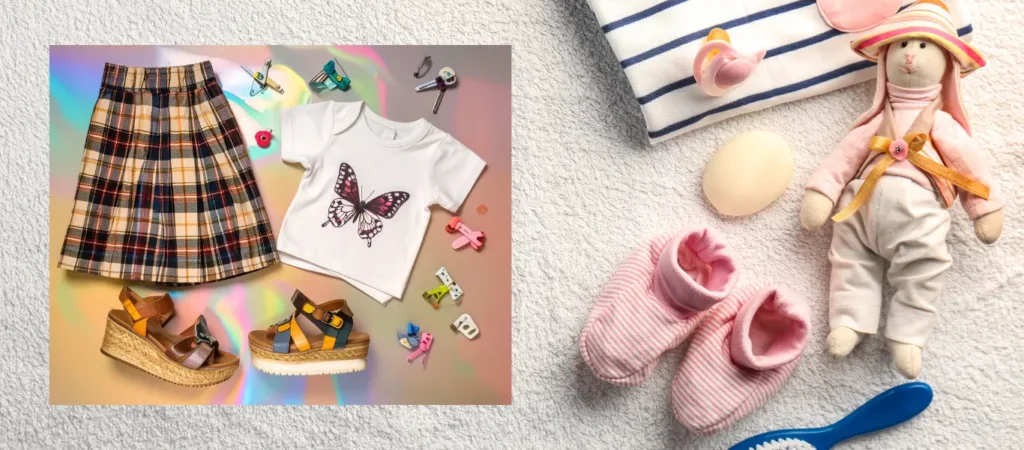
Chaussures pour bébés
Lorsqu'ils choisissent des chaussures pour enfants ou adolescents, ils doivent tenir compte de l'âge des enfants.
- Tout-petits (8 à 15 mois) : Les tout-petits de cet âge commencent à apprendre à se tenir debout et à marcher. Il est donc recommandé de choisir des chaussures dotées d'une semelle fine, légère et souple, afin que les enfants puissent mieux voir le sol et développer leur sens de l'équilibre.
- Nourrisson (16 mois à 3 ans) : Les bébés de cet âge apprennent à marcher correctement. Il est donc judicieux de choisir des chaussures à semelles souples, dont la partie flexible doit se trouver sur le tiers avant de la semelle, afin d'aider les bébés à mieux s'adapter à la marche.
- Enfants (âgés de plus de 3 ans) : À cet âge, les enfants commencent à sauter et à courir, à explorer leur environnement, et leur niveau d'activité physique augmente considérablement. Il est donc recommandé de choisir des chaussures dotées d'un renfort pour répondre aux différents exercices pratiqués par les enfants. Parallèlement, les pieds des enfants ont tendance à transpirer, il est donc important de choisir des chaussures extrêmement respirantes.
Chaussettes pour bébés
Le port de chaussettes permet de protéger les pieds des bébés et de les garder au chaud, sans les blesser. Veillez à ne pas choisir des chaussettes trop serrées ou trop longues. Choisissez des chaussettes à la taille normale et adaptée. Optez pour des chaussettes avec des plis serrés et sécurisés, ainsi que des manchons et des semelles épais. Les chaussettes doivent être légèrement plus grandes afin de laisser de la place pour que les pieds de votre bébé puissent se développer. Privilégiez les modèles basiques dans la mesure du possible, et achetez-les de préférence par lots afin de pouvoir remplacer facilement une chaussette égarée par une autre assortie.
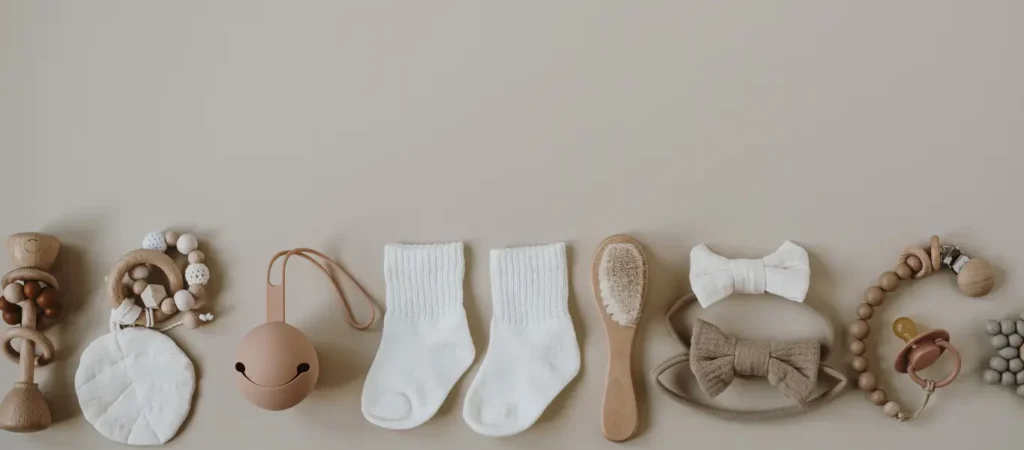
Bonnets pour bébés
Lors du choix d'un bonnet pour bébé, il faut tenir compte du confort, de la qualité et du style. Il est donc judicieux de choisir un bonnet léger, délicat, chaud, respirant et pratique. Les bonnets pour les enfants d'âge préscolaire sont davantage axés sur la fonctionnalité et la praticité ; les bébés de moins de 4 ans peuvent choisir des bonnets dynamiques et colorés ; les enfants de plus de 4 ans peuvent choisir des bonnets aux couleurs élégantes et raffinées.
Écharpes pour bébés
La peau des bébés est particulièrement fragile et délicate ; par conséquent, si vous n'avez pas d'autre choix, optez pour des écharpes en coton ou en lin, qui doivent être fragiles et respirantes. En termes de style, les écharpes ne doivent pas couvrir les yeux ni les voies respiratoires des bébés. Choisissez des écharpes légères et courtes qui gardent votre bébé au chaud, telles que des cache-cou, des écharpes à boucle ou des écharpes à motifs ajourés.
Gants/moufles pour bébé
En fonction de la différence de température entre le nord et le sud, choisissez des gants d'épaisseur différente. Il est préférable de choisir des gants fabriqués à partir de tissus souples et extensibles. Ces tissus doivent également être respirants et chauds, comme le coton et le velours. Veuillez noter que la taille doit être adaptée aux bébés ou aux enfants.
Remarques concernant le choix des vêtements pour enfants
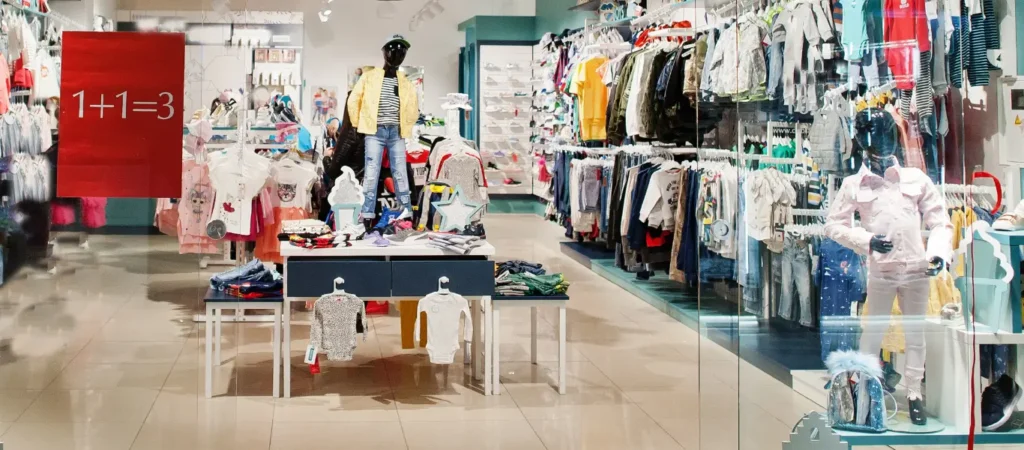
Vérifiez l'étiquette
Dans la plupart des cas, les fabricants dignes de confiance fournissent des vêtements pour bébés/enfants et indiquent des informations détaillées sur les vêtements sur l'étiquette. En général, ces informations comprennent la composition du tissu, les substances utilisées, les instructions d'entretien, les conseils de lavage, la classification par catégorie et les points d'intérêt du fabricant. Grâce à ces informations, les acheteurs peuvent évaluer à l'avance les vêtements pour bébés et enfants. Si cela ne vous dérange pas, accordez une attention particulière aux vêtements pour nouveau-nés qui doivent être étiquetés « Course A » et « No dry wash » (pas de lavage à sec).
Évitez les fermetures éclair grossières
Les fermetures éclair sont un élément décoratif indispensable dans les vêtements, en raison de leurs capacités. Dans tous les cas, des fermetures éclair inadéquates peuvent constituer une menace pour la sécurité des bébés et des enfants. Ainsi, lorsque vous choisissez des vêtements avec des fermetures éclair, il serait préférable de vérifier la qualité de celles-ci afin de vous assurer qu'elles sont lisses et qu'elles ne présentent pas de bavures. Sinon, elles pourraient blesser la peau fragile et délicate des bébés et des enfants.
Rémunération Décorations
Certains parents aiment acheter des vêtements avec des paillettes ou des perles, qui sont brillants et jolis. Cependant, si ces ornements ne sont pas bien fixés, ils peuvent facilement être avalés par les bébés, qui risquent alors de s'étouffer. Les nouveau-nés et les jeunes enfants ont souvent tendance à tirer sur leurs vêtements ou à les mordiller. Si les fermetures éclair, les boutons ou les éléments décoratifs en plastique des vêtements sont mal cousus ou mal fixés pour d'autres raisons, ils peuvent être facilement arrachés et avalés par inadvertance par les enfants, ce qui peut entraîner des problèmes gastro-intestinaux. Par conséquent, privilégiez la sécurité plutôt que le style lorsque vous choisissez des vêtements pour bébés, en optant pour des vêtements avec des ornements négligeables.
Menaces provenant des cordons
Les vêtements pour enfants sont conçus avec des cordons, notamment au niveau de la capuche, de l'abdomen et des coutures. Si les cordons s'enroulent autour des toboggans des aires de jeux, des entrées des transports scolaires ou d'autres objets, ou si le cordon au niveau de l'abdomen ou des coutures se coince dans une entrée ou une autre partie du véhicule, cela peut causer des blessures à l'enfant. Afin d'éviter tout danger lorsque les enfants jouent, les tuteurs doivent soit attacher les cordons des vêtements de leurs enfants, soit les couper.
Risques chimiques
Pour faciliter la coloration des vêtements et éviter les bavures, certains fabricants peu scrupuleux ajoutent des additifs chimiques nocifs, tels que des colorants azoïques et du formaldéhyde. Les parents doivent privilégier les vêtements portant la mention GB18401, norme nationale obligatoire relative aux matériaux. Les vêtements récemment achetés doivent être rincés à plusieurs reprises à l'eau claire avant d'être portés par les enfants.
Optez pour des couleurs claires
Lorsque vous choisissez une robe pour enfant, privilégiez les teintes claires aux tons délicats et sans composants fluorescents. Les vêtements ternes peuvent déteindre sur la peau au contact, en particulier lorsque les nouveau-nés mordillent leurs vêtements, ce qui permet aux couleurs et aux produits chimiques de pénétrer dans leur organisme. Évitez d'acheter des articles dont la solidité des couleurs est médiocre.
Règles vestimentaires pour les enfants
Le principe “ trois chauds, un froid ”
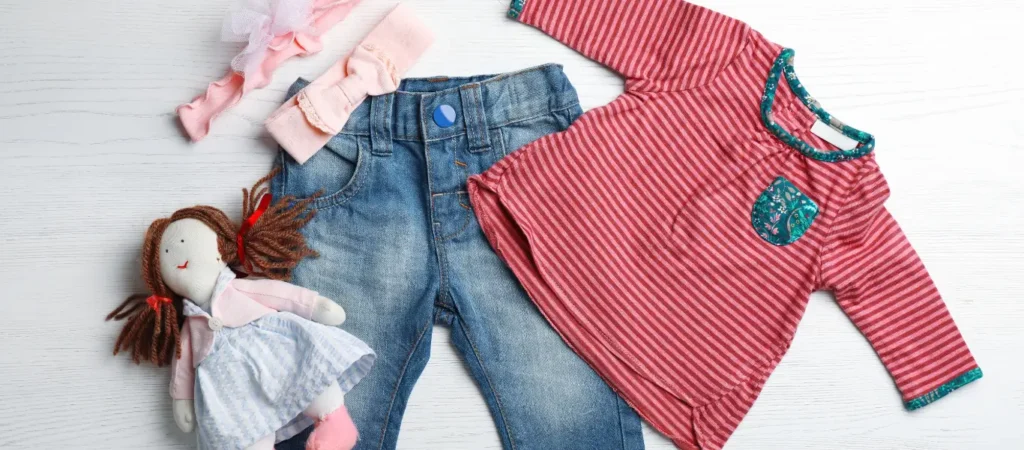
Pour vous assurer que votre enfant est habillé de manière appropriée, veillez simplement à respecter la règle “ trois chaud, un froid ” : mains chaudes, ventre chaud, pieds chauds et tête froide. Les mères peuvent vérifier à tout moment en touchant les mains du bébé. Si les mains sont bien chaudes et qu'il n'y a pas de sueur sur le cou ou le dos, cela signifie que le bébé est habillé de manière appropriée. Garder le dos suffisamment chaud réduit le risque d'attraper un rhume. Pour garder le ventre au chaud, il est préférable de mettre une couverture en coton afin d'éviter les maux de ventre et les diarrhées causés par le froid. Les pieds sont éloignés du cœur, c'est donc lorsque les petits pieds sont chauds que tout le corps peut rester au chaud.
Modifiez les vêtements selon les besoins.
Les bébés dynamiques transpirent plus efficacement que les bébés plus calmes. Enlevez une couche pendant la récréation. Les jours nuageux ou venteux, habillez votre enfant d'une couche de plus qu'à l'intérieur. Les jours ensoleillés, il n'est pas toujours nécessaire d'ajouter des couches supplémentaires ; parfois, il fait vraiment plus frais à l'intérieur qu'à l'extérieur !
Apporter continuellement une couche supplémentaire
Les températures extérieures sont irrégulières, avec des variations importantes entre le jour et la nuit. Lorsque vous voyagez, emportez toujours un vêtement supplémentaire pour parer à toute éventualité : pluie, refroidissement soudain ou baisse imprévue de la température. Les mères doivent également noter que le fait d'enlever des vêtements nécessite une réflexion approfondie ; ne retirez jamais rapidement les vêtements d'extérieur à votre retour à la maison simplement parce que votre bébé transpire.