Intro
Many customers ask us:
“If I order just 50 hats directly from a factory, why is it sometimes more expensive than buying online?”
As a source manufacturer, let us be honest — small orders are not expensive because factories want higher profits. The cost simply cannot be reduced at certain stages.
For small batch production, the “extra cost” mainly comes from three areas: fabric, trims, and labor.
1. Fabric: Small Quantities Rarely Get Wholesale Prices
Factories usually stock regular fabrics in full rolls (for example, 1,000 meters per order), which allows us to negotiate the lowest possible unit price.
But when an order only requires 10 meters of fabric, problems start:
Suppliers are reluctant to sell small leftover pieces, and the price can be 20% higher than full-roll pricing.
If you need a special fabric with a 50-meter MOQ, but your order only uses 10 meters, the remaining 40 meters sit in inventory. That unused material cost must be included in the small order.
There is also the risk of color variation. Full rolls ensure consistent dye lots, but leftover fabrics may come from different batches, leading to color differences. If that happens, we may need to reorder fabric — increasing the cost again.
2. Trims: Small Accessories Can Add Up More
Snaps, drawstrings, embroidery threads, and labels may look inexpensive, but small orders often suffer the most from these “minor” costs.
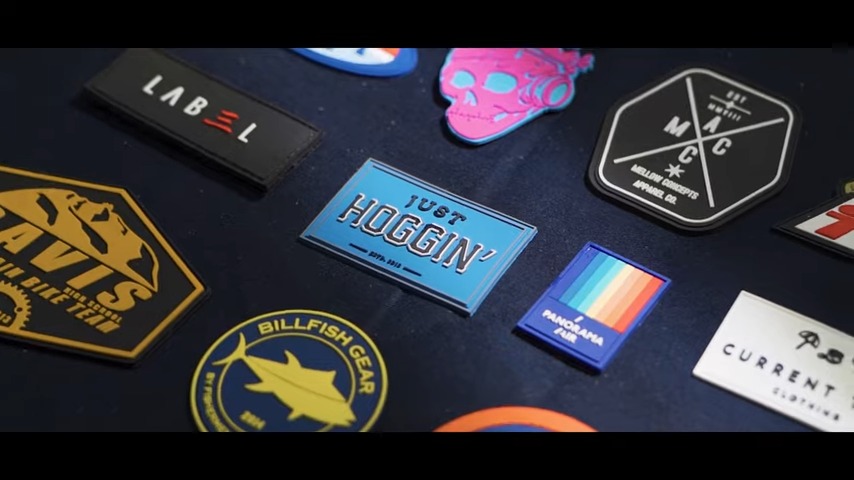
For example:
Custom logo hangtags may require a 500-piece minimum from the printing factory. If your order only needs 50, you either pay for 500 and use only a fraction, or find a small workshop with higher prices and lower quality.
Special embroidery thread colors (such as muted or Morandi tones) may not be in stock. Buying one small cone can cost as much as a large roll of regular colors.
Even packaging bags may cost more. At 1,000 pieces, the price may be $0.50 each. For 50 pieces, it could rise to $1.50 each. That alone adds $50 in extra cost.
When you add all these small components together, the trim cost for 50 hats can actually be higher per unit than for 500 hats.
3. Labor Costs: Setup Time Can Take Longer Than Production
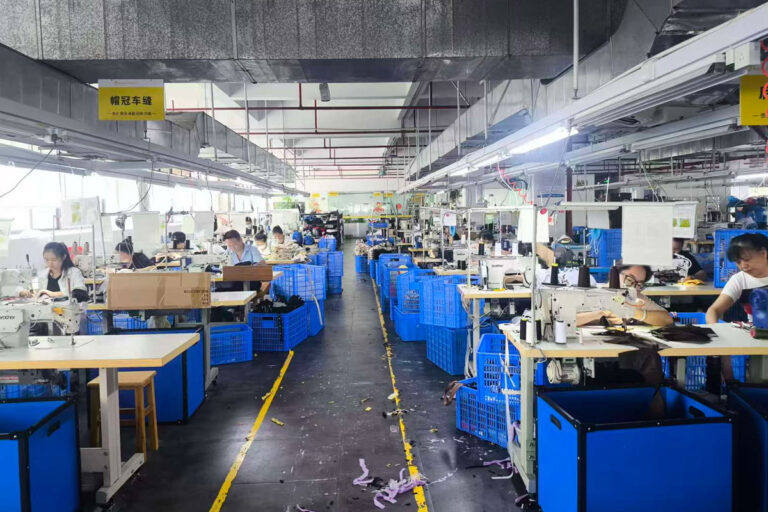
Workers are optimized for bulk production. Switching to small orders requires adjustments.
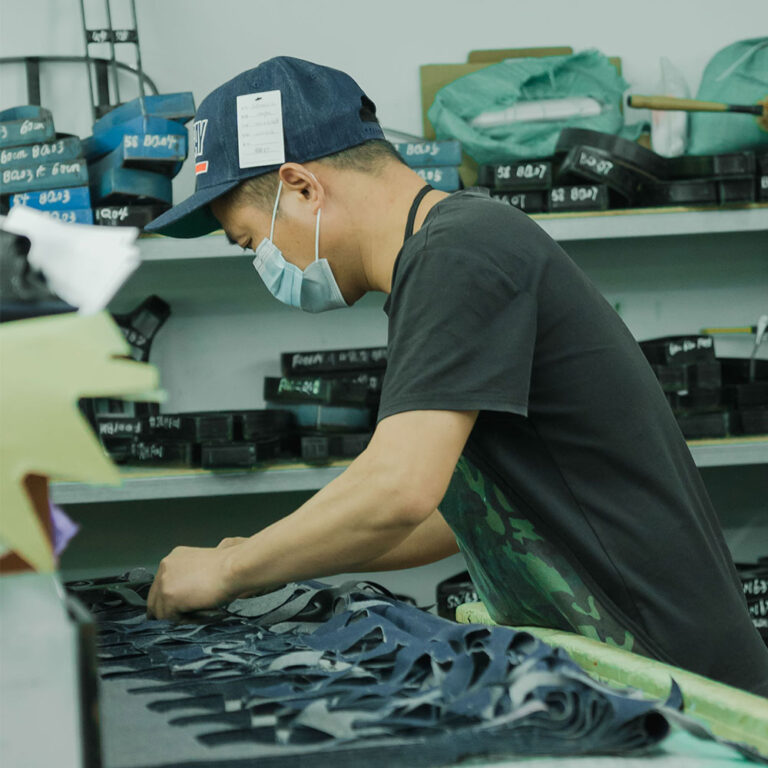
A large order might cut 100 hat panels in one run. A 50-piece order may require multiple setups, and preparing patterns and adjusting cutting tables can take more time than cutting 300 hats for a bulk order.
Changing styles often requires resetting sewing machines. If it takes 10 minutes to adjust the machine and only 1 hour to produce 50 hats, one-sixth of the total time is spent on preparation.
Quality inspection can also be more time-consuming. Large orders are usually inspected by sampling, but small orders often require 100% inspection. Checking 50 hats one by one takes nearly as much time as inspecting 500 pieces proportionally — which increases the labor cost per unit.
A Manufacturer’s Honest Perspective From Aung Crown
The higher price of small batch customization is not about higher profit margins. It’s about cost allocation.
Think of it like ordering food in a cafeteria. If one person orders 10 dishes alone, the cost per person is much higher than if 10 people split the same 10 dishes.

However, the value of small orders is never about low price.
Small batch production allows you to:
- Test the market with 50 pieces before scaling up
- Customize exclusive details
- Reduce risk before committing to large inventory
When working with a factory, instead of focusing only on price, clearly communicate your needs. Ask which costs can be optimized — such as using in-stock fabrics or standard trims.
Sometimes, flexibility saves more than chasing the lowest quote.

I have over 25 years of experience in hat and apparel manufacturing. With a steady and detail-oriented approach, I oversee factory production and team operations, ensuring reliable quality and on-time delivery for customers worldwide