
Down Jacket Guidelines from Choosing to Down Shedding
Published On: January 30, 2026 By: Cindy
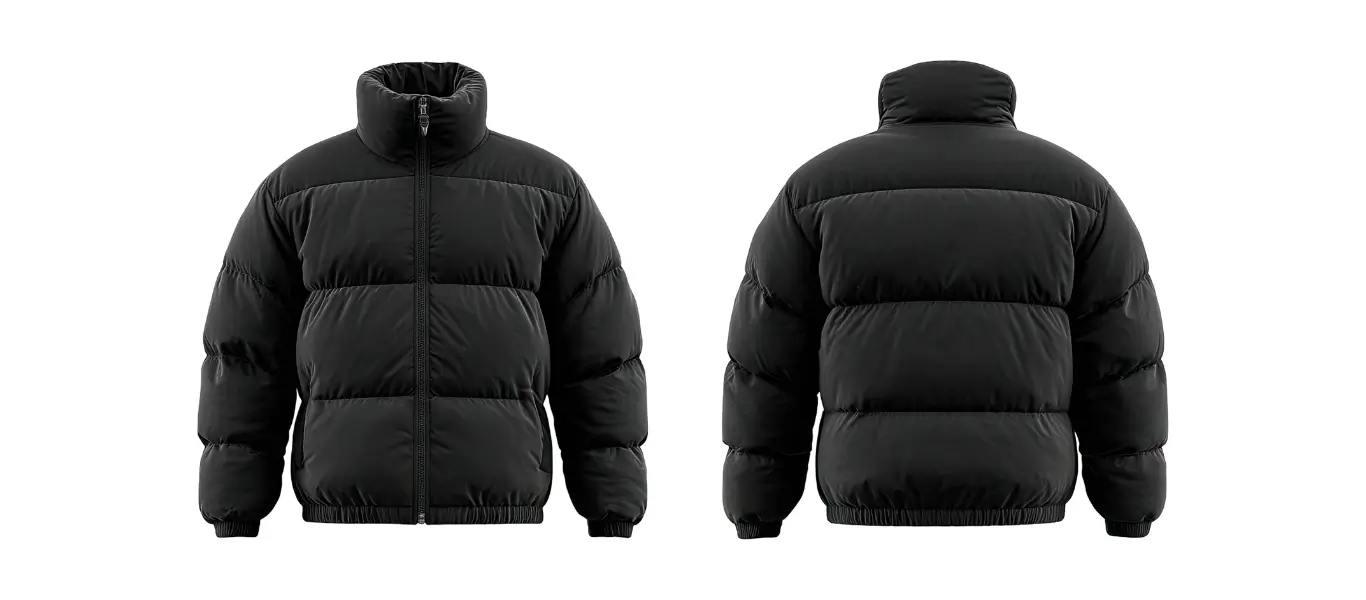
Down jackets are essential warm gear for modern people in winter, but down shedding has confused consumers a lot. The down penetration through fabrics or seams not only affects the appearance and warmth, but also can increasingly shorten the lifespan of down jackets. To address this problem, we need to understand the essence and proper care of down jackets to form a comprehensive recognition and response system. Here, we, Aung Crown, a professional custom hats and apparel manufacturer since 1998, will share the down jacket guidelines from choosing to down shedding.
The Root of Down Shedding

The root cause of down leakage is that the fine down overcomes the physical locking of the fabric and machine stitching. These can be sorted into the following three types.
1. Insufficient Fabric Density:
The fabric density is the first barrier against down leakage. Normally, the yarn count needs to reach over 230T, and 250T is the best, which can effectively lock down in place. If the fabric is too thin and low in fabric density, or pursuing thin and lightweight to omit the lining, all these can make the first barrier fragile, which can cause down leakage. Now, nylon taffeta and TC fabric are the common high-density fabrics to prevent down leakage.
2. Needle-hole Permeability
Needle holes are the main way of down leakage. If needle holes are too wide, stitching is unprofessional stitching for down jackets, or unsealed needle holes after stitching, all these can leave micro spacing, and these details look invisible, but most are the root cause of down leakage.
3. Down Content and Washing Ways
If the fill down content is very low with feathers not down, pointy feathers can easily permeate the fabric. If washing down jackets with alkaline detergents, screw to dry, or high-temperature to dry, all these can cause damage to the coating of fabrics, make the fabric spacing bigger, and even cause the fabric to break, increasing internal down migration and intensifying down leakage.
How to Choose A Down Jacket?
Preventing the problem of down leakage is better than addressing the problem of down leakage. Therefore, it’s vital to choose a down jacket that is not prone to causing down leakage. When purchasing a down jacket, we can go through the following ways to make an initial judgment of the down-proof performance.
1. Component Fabrics and Labels
Please prior to choose down jackets marked with the fabric density over 250T and made from calendered finishes or coated fabrics. Check the label on down jackets to see if they are clearly marked with the down content, filling duck/goose down, or feather. Usually, the down content should be over 80%. Please be aware of “down cotton”, “down-like”, or down jackets without specific down content.
2. Patting and Pressing
When selecting a down jacket, gently pat and press it to check for down leakage. If there is down leakage, the fabric density is insufficient. After obtaining the agreement of store owners, we can gently rub the seams and fabric of the down jacket. If no fine down fibers emerge between our fingertips, it indicates good down-proof performance and effective anti-leakage construction.
3. Checking Stitching and Fabric Feel
Observing the stitching is fine and even, or not ( like stitch density: approximately 13 stitches per 3 cm). Meanwhile, the fabric handfeel of real down jackets is very soft and fluffy. After pressing the fabric, it can rebound quickly, without any obvious hand feathers. If the fabric handfeel is heavy, rigid, and slowly rebounds, then these down jackets are filled with chemical fibers or poor down.
Here is a label example.
Filling: Duck/goose down
Insulation: Premium goose/duck down
Down type: White goose down/Grey goose down
Down content: 90%
Fill power: 700FP
Fill weight: 180g
Down/feather ratio: 80/20
Emergency Repair and Daily Maintenance

When down leakage occurs, there are still ways to fix it. Here are the solutions for different down leakage or damage.
Types of Issues & Emergency/Simple Repair & Full Restoration
- Down Leakage at Stitching: Use transparent tapes to stick the surface down, and then use candle wax or clear nail polish to slightly brush the stitching, or use the same sewing to re-lock the seam and reduce the needle-hole size.
- Down Leakage of tiny holes: Fine, dense hand-stitching from the inner side using color-matching thread, or applying specialized fabric repair adhesive to the inner surface of the hole for sealing and reinforcement.
- Down Leakage from Large-Scale Damage: Use a personalized ironing cloth to cover the damaged scale. Or use a small embroidered decoration to highlight the flaw become highlighting spot.
- Inner Lining Damage: For such damage, we suggest sending it to a professional garment repair store to repair the inner lining damage or professional repair involving opening the inner lining to patch and restore the down liner fabric.
Besides that, down clumping also affects the warmth and wearing experience. The way to address down clumping is to flatten the down jacket and use a hanger to slightly pat the clumping. If the condition allows, also put the down jacket into a dryer with 2 to 3 tennis balls for a low tumble dry, and tennis balls can effectively pat the down clumping issue.
The proper daily maintenance is the pre-way to preventing down leakage and down clumping.
- Gentle Wash: Use neutral detergent, hand wash or machine wash in a professional down jacket wash model, and the water temperature should not be over 30℃/86°F. Please make sure that you always turn the down jacket inside out before washing.
- Avoid Wringing, Twisting, or Rubbing: After washing, squeezing water by hand or towels, please do not strongly wring, twist, or rub the down jacket.
- Proper Drying Method: Hang or flatten the down jacket to dry in cool, well-ventilated places. After it is totally dry, please use a hanger to pat the down jacket to get it fluffy again. Also, can put the down jacket into a dryer for low tumble dry with several tennis balls.
Authenticity Identification: Stay Away from the Root Cause of Down Leakage

The root cause of down leakage is filled with poor or fake down. Therefore, knowing how to tell the real down from the fake down is vital.
Checking the Label: Real down jackets with labels that are marked with the down type, down content, fill power, and product standard: GB/T 14272 – Chinese National Quality Standard for Down Garments.
Crinkly Handfeel: For real down jackets, the handfeel is very soft without hard feathers. For fake down jackets, he handfeel is rigid with a sense of hardness.
Loft or Fill Power(FP): Pressing the down jacket, if the down jacket rebounds fast, then it’s real. If the down jacket rebounds slowly or collapses, then the down jacket is fake.
Sampling Test: Take a small amount of filling from a hidden area. Real down consists of three-dimensional clusters, whereas fake down is often flat synthetic fibers.
In the End
How to address the problem of down leakage is a vital systematic project from selecting, wearing, to maintaining. The core point is that at the first purchase, prioritizing down jackets made from high-density fabrics with high down content to build strong protection at the source. When wearing, follow the scientific washing and drying ways to avoid damage to the down layer that is caused by humans. When the down leakage occurs, we need to take actions from simple sealing to professional repair, due to the level of down leakage.
Only if we master all these knowledges about how to choose a down jacket and how to repair down leakage. We can easily keep our favorite down jacket in great shape and excellent warmth function.