Introduction
As someone working in the textile industry, I’m no stranger to India — I travel there two to three times a year on average.
India’s textile industry is remarkably well-developed, with a complete supply chain that covers everything from raw materials and spinning to weaving and dyeing.
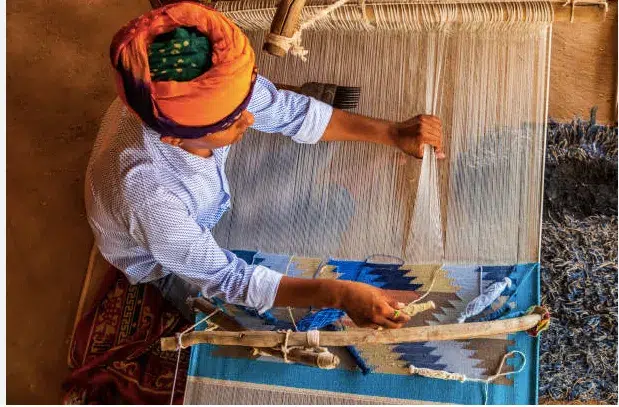
Compared with China’s fully automated production, India still preserves part of its traditional handcraft techniques.
For example, the famous Kashmir handwoven carpets can sell for anywhere between $10,000 and $100,000 for a size of just 8×10 feet. The most expensive handwoven Kashmir carpet ever sold fetched an astonishing $33 million at auction.

As the world’s largest cotton yarn producer, India ‘s production will reach 5.2 billion kilograms in 2023-2024 alone.
Relying on the high production of cotton yarn, India has become one of the world’s largest textile producers and exporters.
According to statistics, India’s textile exports will reach US$350 billion by 2030. The textile industry alone contributes 2.5% to India’s GDP and creates 45 million jobs. The textile industry is the third largest industry after agriculture and construction.
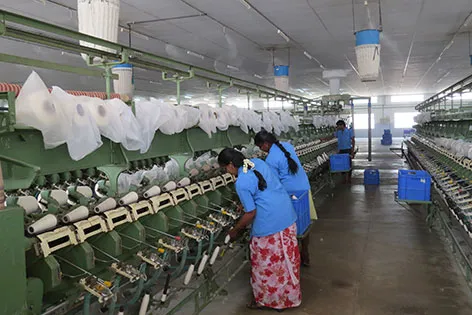
You rarely hear about the export of India’s agricultural products because most of India’s crops are used as raw materials for the textile industry.
Today’s article will briefly talk about textile raw materials made in India.
1,Cotton
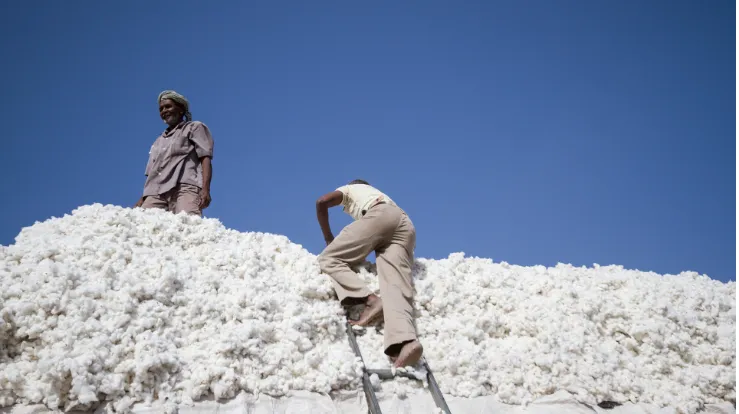
India is the world’s largest cotton producer, accounting for 22% of the world’s total cotton production.
Its national cotton cultivation area exceeds 11.7 million hectares, while the global cotton cultivation area is 31.2 million hectares.
India alone contributes 37% to the world’s cotton planting area, and cotton cultivation provides livelihoods for more than 60 million people in India.
India is also the world’s third largest cotton exporter. Between 2023 and 2024, it exported cotton to more than 160 countries around the world, accounting for 10.2% of the world’s total cotton exports.
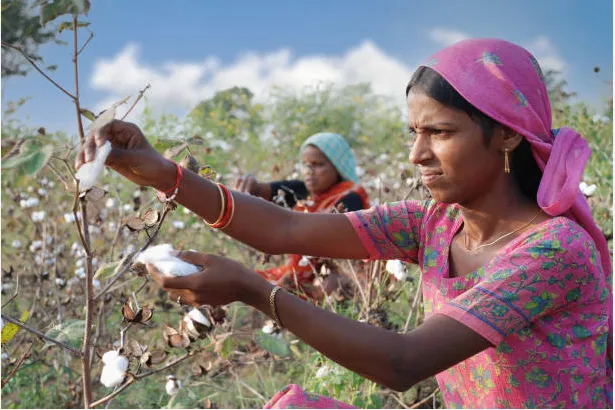
India’s cotton production is concentrated in Gujarat (accounting for 35% of the country’s total production), followed by Maharashtra (accounting for 21% of the country’s total production), and then Andhra Pradesh and Telangana, which are collectively known as the “India cotton basket”.
2, Jute
Jute fabric is one of the most expensive raw materials in the world and is mainly used in home furnishing products, sofa covers, carpets, home decoration, etc.
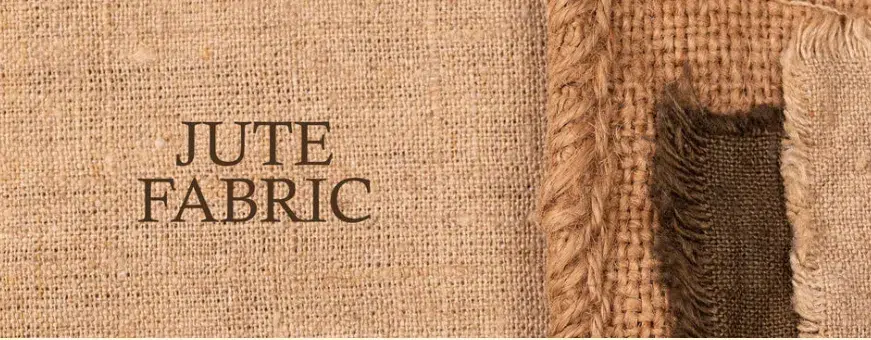
Jute is an extremely breathable fabric with very high moisture wicking capabilities.
Jute is also known as the “Golden Fiber of India” because of its high tensile strength. It is highly sought after by consumers in Europe and the United States because of its natural breathability, elasticity, and renewable properties.
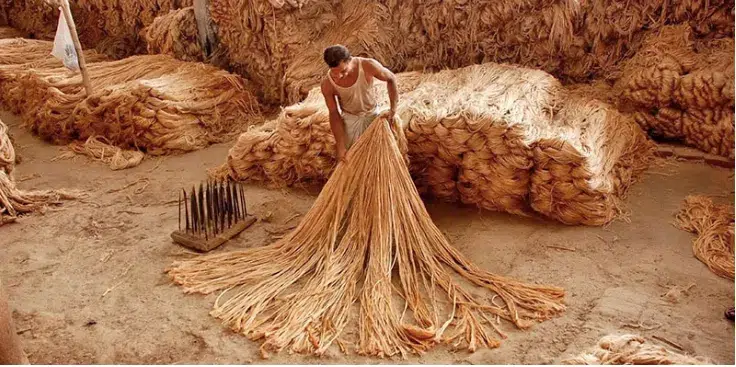
The cultivation of jute raw materials is mainly concentrated in Bihar and West Bengal. There are about 70 jute planting bases in these two states, with a total planting area of about 800,000 hectares, and about 350,000 people working in the jute planting industry.
3, Silk
Speaking of silk, everyone must be familiar with it. The main silk producing areas in China are Huzhou, Zhejiang, Suzhou, Jiangsu, and Nanchong, Sichuan.
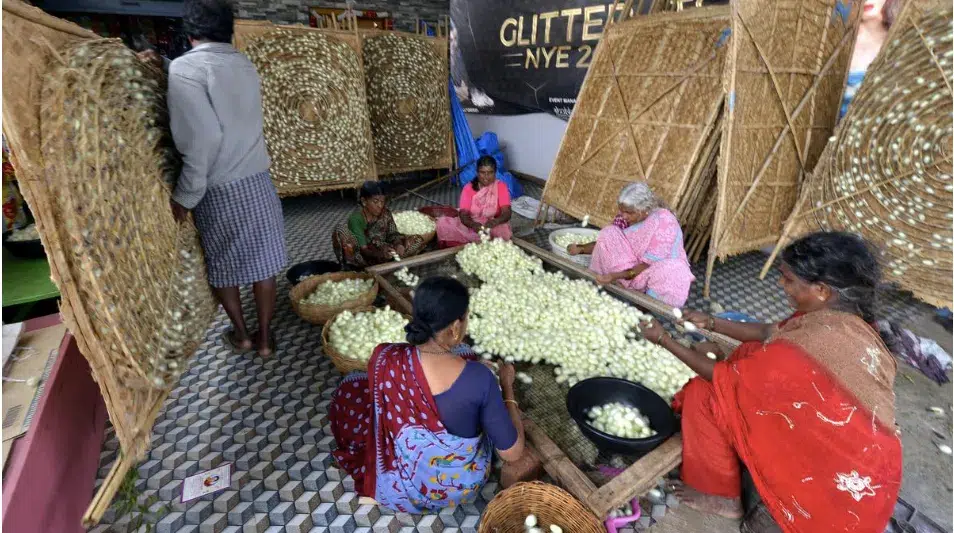
What you may not know is that India is the second largest silk producing area in the world, thanks to the Silk Road four thousand years ago.
A Chinese merchant sold silk to the cities of Harappa and Mohenjo-daro (now on the border between Punjab and Pakistan), and the silk industry began to take root in India.
India’s raw silk accounts for 74% of the world’s raw silk production. Karnataka has the largest silk production in India, producing about 8,400 tons of silk annually, followed by Andhra Pradesh with an average output of 5,500 tons.

In the two states, about 52,360 villages are engaged in sericulture, and about 9.76 million people are employed in the silk industry. Due to their significant contribution to India’s silk manufacturing industry, Mysore and North Bengaluru are known as India’s “Silk Cities”.
The light, soft and smooth feel of silk fabrics combined with the totem pattern design with Indian characteristics have created high-end sarees that are deeply loved by Indian women and female consumers in South Asia at home and abroad.
4, Wool
Wool is loved by consumers around the world because of its warmth, softness, durability and natural properties.
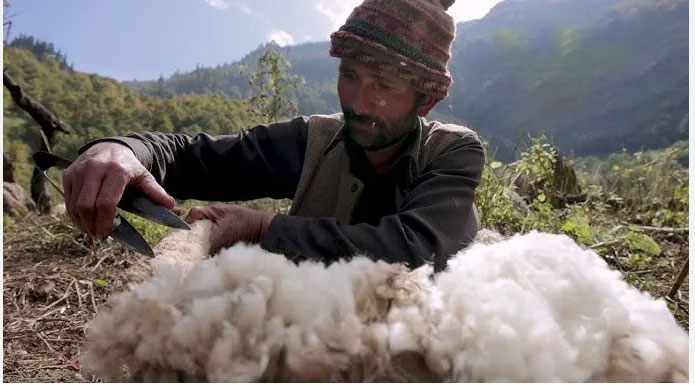
India has the world’s third largest sheep breeding base, with about 74.26 million sheep in the country. It is the world’s ninth largest wool producer, accounting for about 3% of the world’s total wool production.
India’s wool products are export-oriented, and their main products are classified into handmade carpets, woolen clothing, and woolen handicrafts.
The price range of wool products ranges from US$30 to US$100,000. They are high-end craft products, among which handmade wool carpets account for 80% of the export volume.
There are wool product production sites all over India, employing approximately 2 million people, with the main production areas concentrated in Rajasthan and its surrounding states.
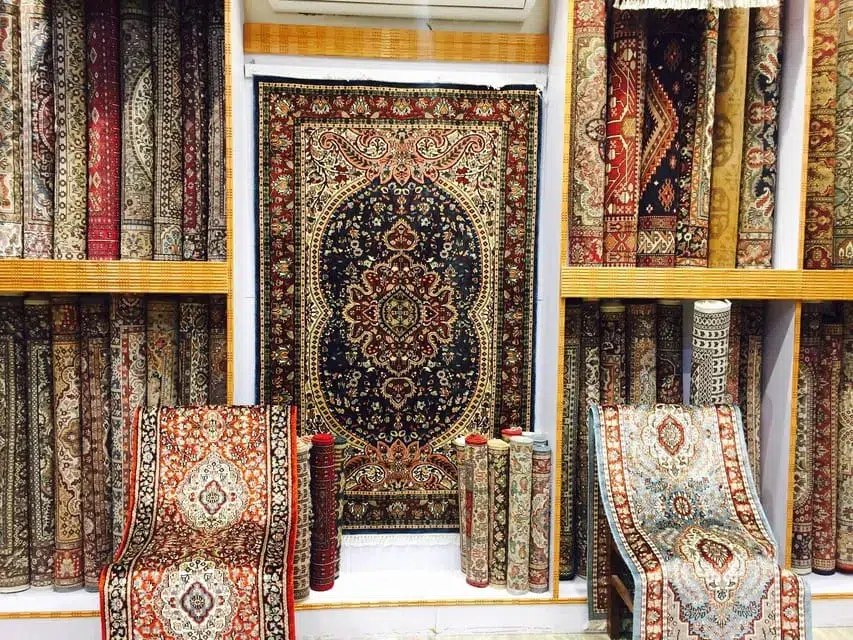
If you have friends traveling to India, you can consider taking a handmade wool carpet home to preserve its value. This item is a standard item for middle-class families in Europe and the United States.

I have over 25 years of experience in hat and apparel manufacturing. With a steady and detail-oriented approach, I oversee factory production and team operations, ensuring reliable quality and on-time delivery for customers worldwide