Intro
Traditional clothing is an important part of a country’s cultural heritage, reflecting its history, lifestyle, and regional influences.
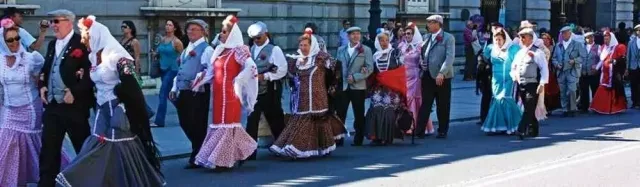
To better understand Spanish culture, we should also explore its traditional costumes.
Today, let’s take a look at the beautiful and elaborate traditional clothing of Spain!
Traditional Spanish clothing is closely connected to religion, dance, bullfighting, and other aspects of Spanish culture. Influenced by different cultures, climates, and geographical conditions, traditional costumes vary greatly from one region to another, each with its own unique style and colors.
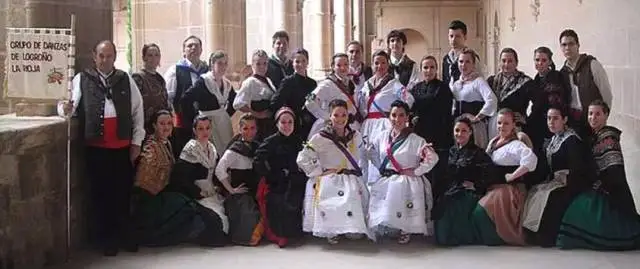
In general, clothing in northern Spain tends to be simple, with gray, black, and white as the main colors. In contrast, southern Spanish costumes are often more colorful, bold, and vibrant, reflecting the region’s passionate spirit.
Traditional Clothing of Salamanca
Traditional clothing in the Salamanca region features women’s blouses decorated with colorful embroidery around the collars and cuffs, with fringes along the edges.
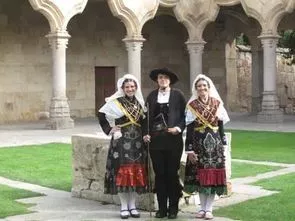
Shoes play an important role in Spanish traditional dance. Dancers create rhythmic tapping sounds by striking the ground with their soles and heels. For this reason, traditional leather shoes are an essential part of the costume.
These shoes are usually bright red, with large tongues to keep them securely in place during dancing. The uppers are decorated with shiny metal buckles and red trim. Their sturdy heels are approximately 5–7 cm high, helping dancers create a stronger visual and rhythmic effect.
Dance traditions have also influenced everyday fashion. Local people sometimes wear similar leather shoes in daily life, although these are usually less decorated.
Traditional Clothing of Valencia
The traditional dress of Valencia is best represented by the beautiful costumes worn by the Fallera ladies during the annual Fallas Festival. Every year, local girls dress in elaborate traditional outfits to take part in the festival and compete for the title of Fallera.
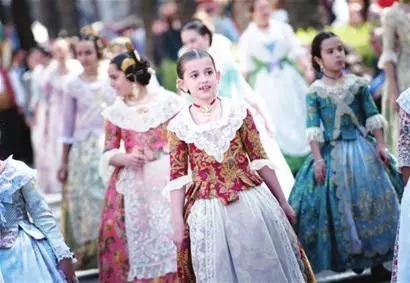
These costumes are colorful, elegant, and extremely detailed.
The upper part features a fitted bodice that extends from the shoulders to the waist. The neckline is decorated with white lace, while crossed white lace ribbons adorn the front.
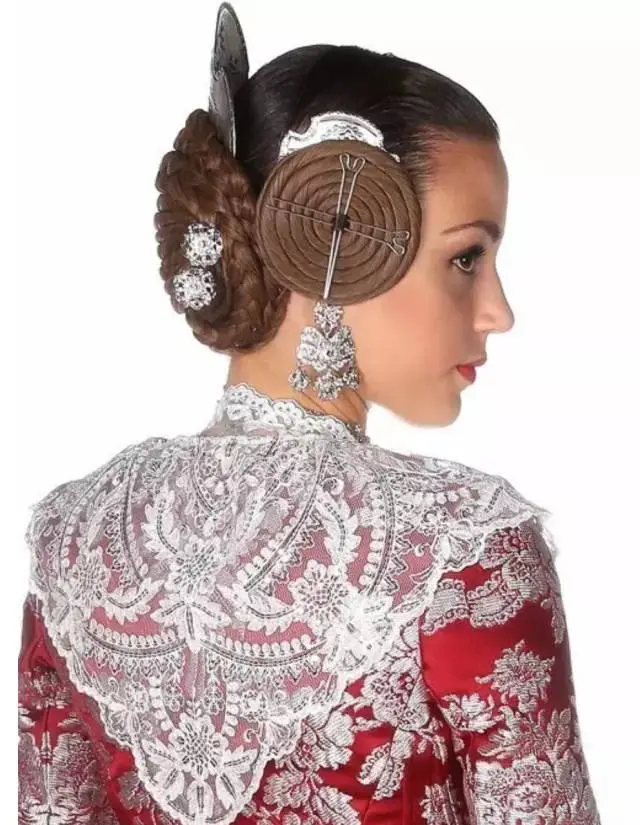
The lower part consists of a wide, full skirt that gives the outfit a beautiful and voluminous shape.
Traditional Matador Costume
The traditional matador costume is known as the Traje de Luces, meaning “Suit of Lights.” Its dazzling decorations make the bullfighter look like a shining warrior in the arena.
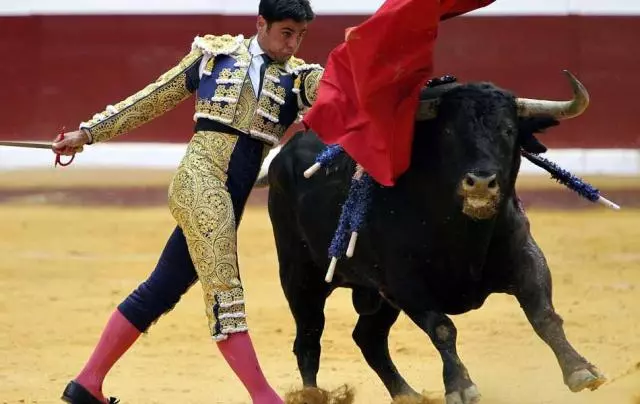
A traditional matador usually wears a tricorn hat, a white shirt, and a short jacket or waistcoat. The trousers are tight-fitting, while the lower legs are covered with long, protective gaiters made with folded metal strips. Soft leather ankle boots complete the outfit.
The matador also carries a long cape with a red lining and a dark outer surface. Besides adding to the dramatic appearance, the cape helps protect the bullfighter.
The costume is famous for its luxurious embroidery. Both the short jacket and trousers are decorated with intricate patterns, often stitched in gold thread and embellished with pearls and colorful tassels.
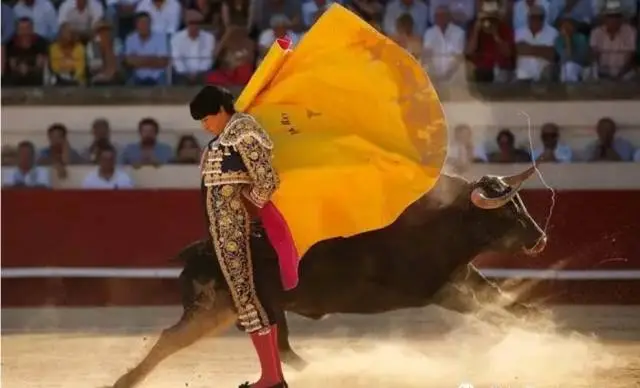
When entering the bullring, the matador carries a red cloth, known as a muleta, and a sword. This traditional outfit is both a distinctive cultural costume and a symbol of Spain’s bullfighting tradition.
Traditional Clothing of Catalonia
Traditional clothing in Catalonia has its own distinctive style, with black and white being the dominant colors.
During traditional folk dances, women often wear dark or black tops with large white embroidered shawls crossed over the chest and tucked into the waistband.
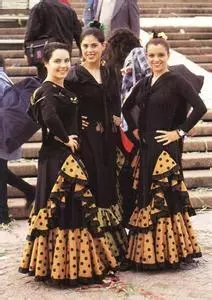
The lower half consists of a colorful long skirt with a wide hem. Women also wear long white stockings and black fabric shoes with white soles. Black ribbons are wrapped around the legs and tied in a crisscross pattern below the knees.
The outfit is completed with a small white lace cap and a white headscarf.
Galician traditional clothing
Traditional Galician clothing dates back to the 18th century. Today, it is mainly worn by traditional bagpipe musicians and dancers performing the Muiñeira, a popular folk dance from Galicia.
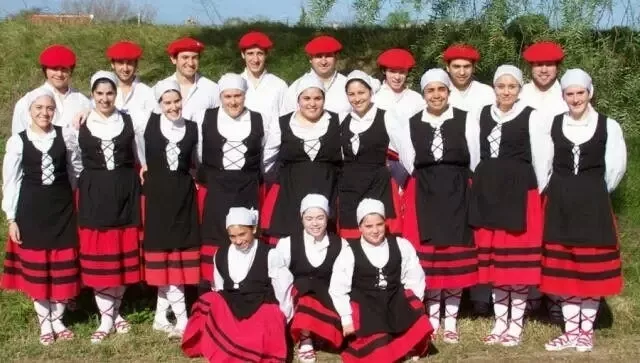
The women’s Muiñeira costume is one of the region’s most recognizable traditional outfits. It usually consists of a white blouse paired with a black waistcoat and a red skirt decorated with black ribbons.
Traditional wooden clogs are also associated with this costume. However, dancers often prefer comfortable shoes that allow them to move more easily during performances.
Traditional Clothing of Madrid
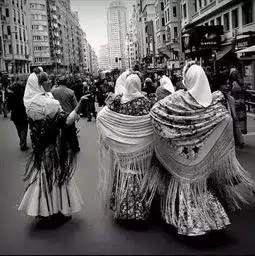
Traditional women’s clothing in Madrid is known for its elegant and fitted silhouette.
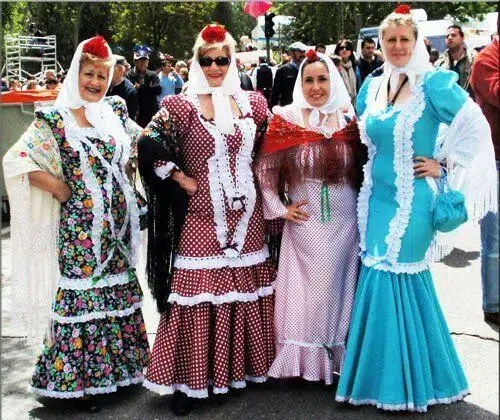
The dress usually features a slim, ankle-length skirt decorated with polka dots. The upper part has a sweetheart neckline and puffed sleeves, creating a distinctive feminine look.
The outfit is often completed with a fringed shawl, a white headscarf, and a red carnation worn in the hair.
Together, these details create one of the most recognizable traditional looks associated with Madrid.

I have over 25 years of experience in hat and apparel manufacturing. With a steady and detail-oriented approach, I oversee factory production and team operations, ensuring reliable quality and on-time delivery for customers worldwide