Intro
T-shirts have become an important way for companies, schools, and organizations to spread culture in everyday life. However, many customers don’t know what fabrics to select when customizing T-shirts. Today, we will talk about this problem.
Common fabrics and characteristics of promotional T-shirts
Pure cotton
Pure cotton is a fabric made from cotton through textile processes.
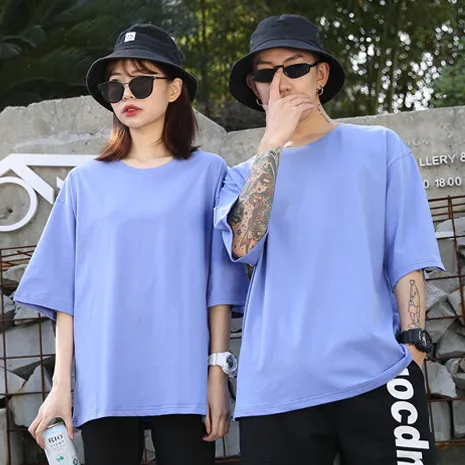
Advantages: Comfortable, soft to the touch, highly absorbent, elastic, heat and alkali resistant.
Disadvantages: Poor durability, poor elasticity, prone to fading and shrinking, easily deformed and wrinkled, easily attracts lint, and is particularly susceptible to acid.
Polyester Cotton
Polyester-cotton blend refers to a general term for blended fabrics made of polyester and cotton. It is a textile made of yarn blended with 65%-67% polyester and 33%-35% cotton, and is commonly known as “Dacron”.

Advantages: Good wrinkle resistance and not easily deformed.
Disadvantages: It pills easily, the fabric feels stiff, and the comfort level is slightly lower than that of pure cotton.
Combed cotton
Combed cotton is produced by using a combing machine to remove shorter fibers (about 1 cm or less) from the cotton fibers, leaving longer and more uniform fibers. Yarn spun from combed cotton is of higher quality.

Advantages: High-end texture, soft and comfortable, durable and washable, not easy to pill, and has a strong luster.
Disadvantages: Relatively expensive, prone to shrinkage.
Mercerized cotton
Mercerized cotton is spun into high-count yarn, and then undergoes special processing steps such as singeing and mercerizing to produce high-quality mercerized yarn that is smooth, bright, soft, and wrinkle-resistant.
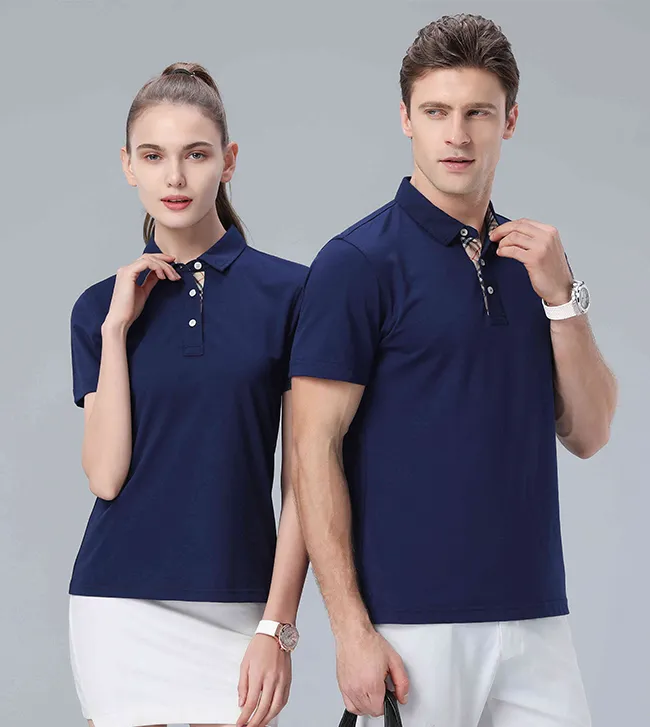
Advantages: Lightweight and soft, highly comfortable, with good moisture absorption and breathability, wrinkle-resistant, and has a strong gloss.
Disadvantages: Relatively high price; sensitive to acids, such as vinegar; if accidentally spilled on clothes, wash immediately.
Lycra cotton
So-called Lycra cotton contains 95 or 97 percent cotton and 5 or 3 percent Lycra. Unlike traditional elastic fibers, Lycra can stretch up to 500% and return to its original shape.

Advantages: Highly elastic, not prone to pilling.
Disadvantages: Comfort and breathability are average.
Modal
Modal fiber is a cellulose fiber, belonging to the same cellulose fiber family as rayon, and is a pure man-made fiber. It is made from wood pulp produced from shrubs in Europe and then processed through a specialized spinning process.
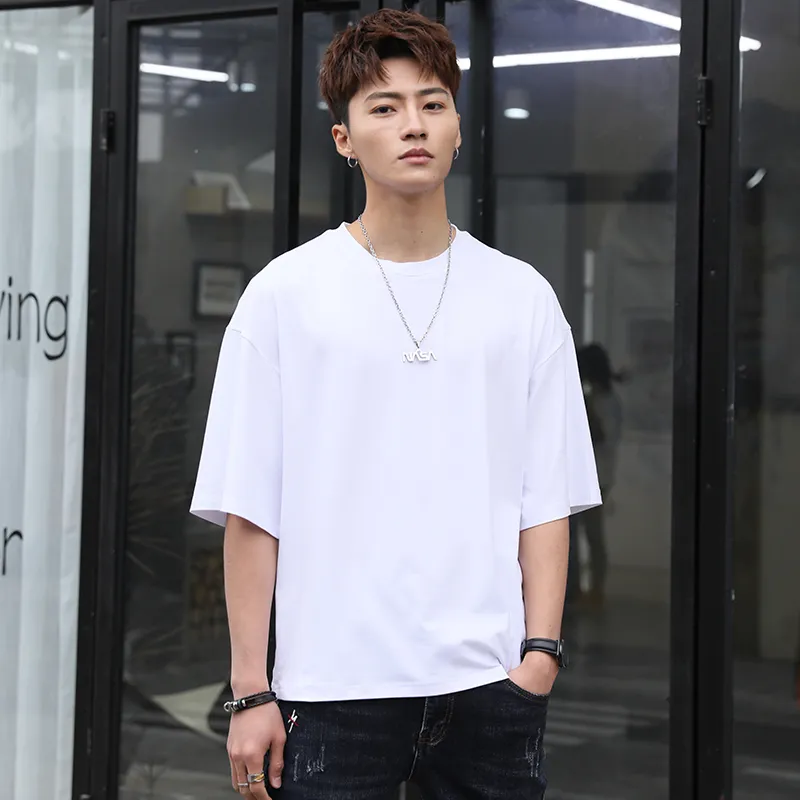
Advantages: It has the softness of cotton, the luster of silk, and the smoothness of linen. Its breathability is superior to cotton, and it is soft, smooth, and has a bright, lustrous surface.
Disadvantages: Easily deformed, poor abrasion resistance, easily damaged, and the fabric has poor stiffness.
Spandex
Spandex is short for polyurethane fiber, a type of elastic fiber. Spandex is generally composed of multiple filaments, typically 10 denier (10D) per filament.
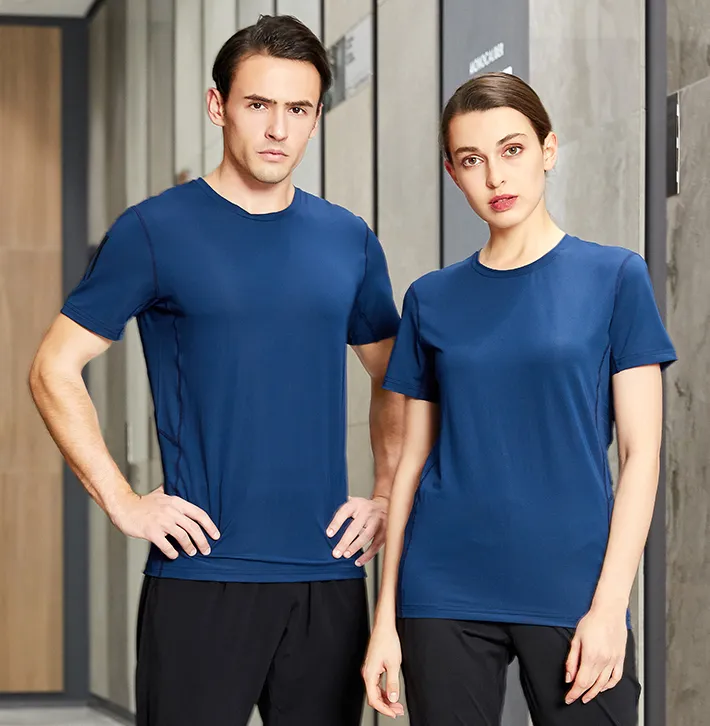
Advantages: High elasticity, static-free, and comfortable to the touch; good resistance to acids, alkalis, and light.
Disadvantages: Poor moisture absorption and heat resistance; lower strength compared to common fibers; prone to fading in sunlight.
Pique
Piqué is a type of knitted fabric with a perforated appearance. Piqué fabric is a type of knitted fabric structure; the material can be 100% cotton, a cotton blend, or synthetic fibers. It’s the English translation of PIQUE. It’s commonly used to make polo shirts.

Advantages: Breathable and moisture-wicking, quick-drying and more washable, not easily deformed, does not pill, good colorfastness, and does not easily fade when washed.
Disadvantages: While the pique knit fabric isn’t as comfortable as pure cotton, it’s still quite comfortable overall.
Fabric-related knowledge
What is gram weight?
What does grammage mean? Strictly speaking, it refers to the weight of one square meter of fabric. In simpler terms, you can think of it as the thickness of the fabric. The higher the grammage, the thicker the fabric, the better the quality, and the more expensive it is. Conversely, the lower the grammage, the thinner the fabric, and the lower the quality.
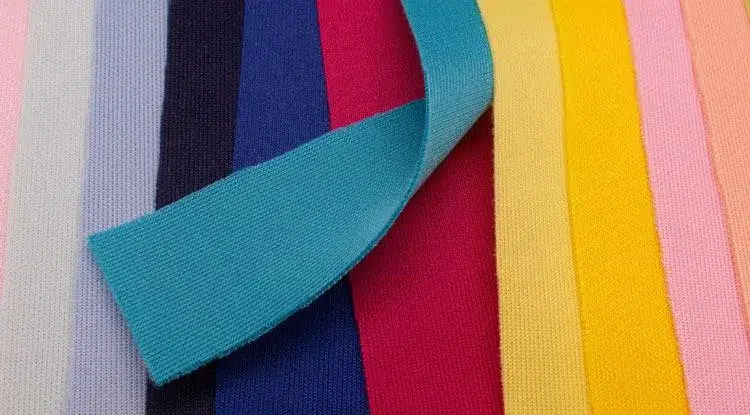
The commonly used unit for evaluating textile and silk products is the weight of the fabric per square meter, expressed in grams per square meter (g/m²), abbreviated as FAW. Weight per square meter (g/m²) is an important technical indicator for knitted fabrics, and it’s also frequently used as a key indicator for woolen fabrics. Different weights directly reflect the season the garment is intended for!
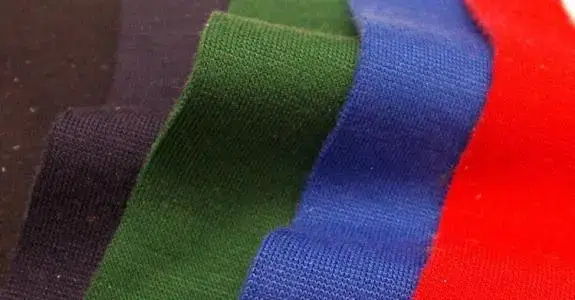
T-shirts typically weigh between 160 and 220 grams per kilowatt-hour. Too thin and they’ll be see-through, too thick and they’ll be stuffy. A weight between 180 and 280 grams per kilowatt-hour is generally ideal. Short-sleeved T-shirts are usually 180-220 grams per kilowatt-hour, which is just the right thickness. Long-sleeved T-shirts are generally made of 260 grams of fabric, making them a thicker option.
What does ‘yarn count’ mean for fabric?
Yarn Count is a unit that indicates the fineness of a fiber or yarn. The higher the count, the finer, softer, and stronger the yarn, and the higher the quality of the cotton used. The lower the count, the coarser and stiffer the yarn.

For example:
40s (yarn count)
Coarser yarn, commonly used in ordinary home textiles
60s (yarn count)
Finer, denser yarn, relatively soft and comfortable
A standard T-shirt typically has a thread count of around 21-32.
18-count coarse yarn, used in rough and durable specialty fabrics.
18-27 count yarns are used in smooth twill fabrics.
Fine yarns with a count of 28 or higher are used in smooth, delicate, and high-end fabrics.
Weight and yarn count are two key factors in judging the quality of a T-shirt. Fabric density is generally expressed by yarn count. Different fabrics have different advantages and disadvantages. Look at the size of the gaps in the T-shirt fabric under sunlight. Larger gaps indicate a lower yarn count, and vice versa.
I have over 25 years of experience in hat and apparel manufacturing. With a steady and detail-oriented approach, I oversee factory production and team operations, ensuring reliable quality and on-time delivery for customers worldwide