When buying sweaters, suits, T-shirts and shirts online, do you often see the fabric count listed? This might be too technical for fabric novices. Today, we’ll tell you how to understand fabric count, weight, and density!
What is Fabric Count?
Fabric count is a way number of yarns. The better the raw materials, the finer and longer the fibers, and the greater the strength, the longer the yarn will be spun, the more loops can be wound around the yarn, and the more delicate and soft the fabric will be.
For example:
Yarn count calculation: For a constant 1g of cotton, if it is spun into yarn that is about 40km long, the count is 40S; if 60km long, the count is 60S; and so on.

Additional note: The higher the yarn count, the higher the quality required of the raw cotton material. Only better cotton fiber strength can produce fabrics with higher yarn counts.
The higher the yarn count, the finer the yarn; the finer and softer the cotton fabric.
Schematic diagram:
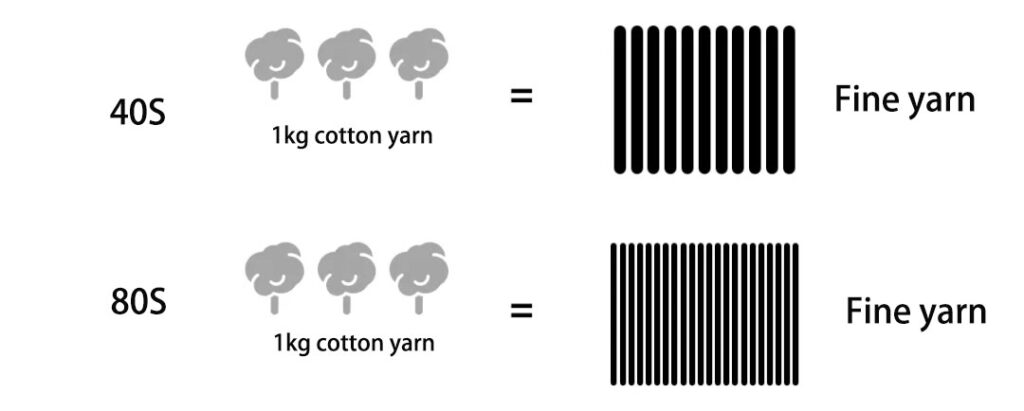
Comparison of different yarn counts
Yarn count is related to the length and weight of the yarn. The higher the yarn count, the finer the yarn. The fabric woven from high‑count yarn is denser, feels smoother and softer, and offers a better wearing experience.
The table below compares the characteristics of a lower‑count yarn (40S) and a higher‑count yarn (60S):
| Feature | 40S (Lower Count) | 60S (Higher Count) |
|---|---|---|
| Yarn thickness | Thicker yarn | Finer yarn |
| Hand feel | Rough | Soft and gentle |
| Fabric tendency | Pills easily, deforms easily | More wear‑resistant, holds shape better |
Note: The illustration above contrasts lower‑count vs. higher‑count yarns.
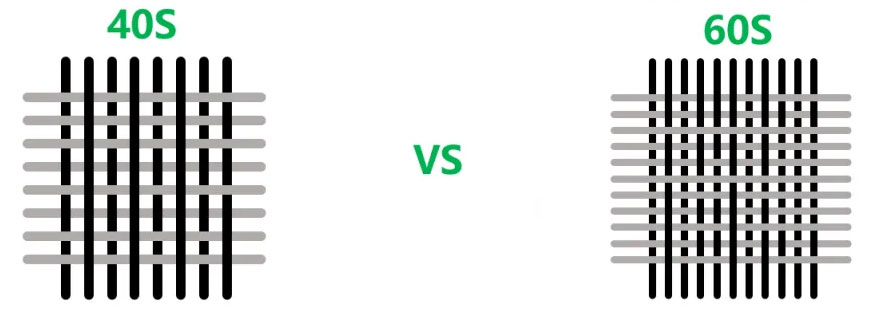
Schematic diagram:
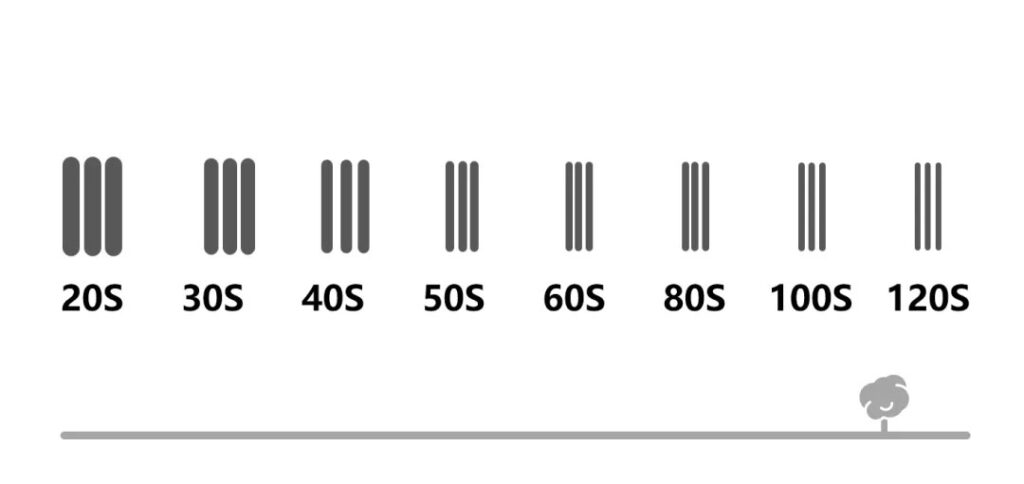
Generally, the higher the yarn count, the thinner and denser the fabric. The term “high count and high density” refers to the yarn count.
Yarn thickness classification
Yarn Thickness Classification for Pure Cotton Yarns
| Yarn Count Range | Classification | Main Uses |
|---|---|---|
| 17S and below | Low-count yarn | Weaving thick and heavy fabrics, or pile and loop cotton fabrics |
| 18S – 27S | Medium-count yarn | Weaving general fabrics such as plain weave, twill, and sateen |
| 28S and above | High-count yarn | Weaving fine poplin, high-grade knitted and woven fabrics |
Carded yarn vs Combed yarn
Yarn can be divided into carded yarn and combed yarn according to the processing method.
| Processing Method | Description |
|---|---|
| Carded yarn | Cotton fibers are spun using an ordinary spinning system |
| Combed yarn | Cotton fibers are spun using a combed spinning system |
Combed yarn is made from high-quality raw materials. The fibers in the yarn are straight and parallel, with few knots and impurities, good luster, evenness, and high strength. This type of cotton yarn is mostly used to weave high-end fabrics.
Performance of fabrics with different yarn counts
Fabric Yarn Count and Density Explanation
- The higher the yarn count, the finer the yarn, the better the yarn evenness, the thinner the woven bedding fabric, and the relatively softer and more comfortable the fabric.
- The larger the thread count, the higher the density, and the stronger and more durable the fabric. However, due to higher weaving technology requirements and greater yarn consumption, the cost is higher.
Currently, mainstream T‑shirt products have densities between 140‑200 TC (21‑40 count). Our densities are all above 300 TC (60 count and above). Our product has high density, soft fabric, and we choose the best skin touch.
Comparison Table (under the same fabric construction)
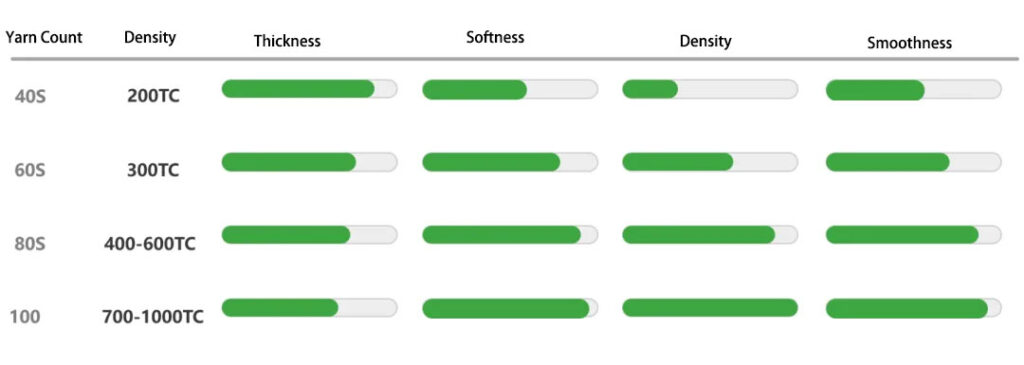
Note: S = yarn count (British system); TC = thread count (per square inch)
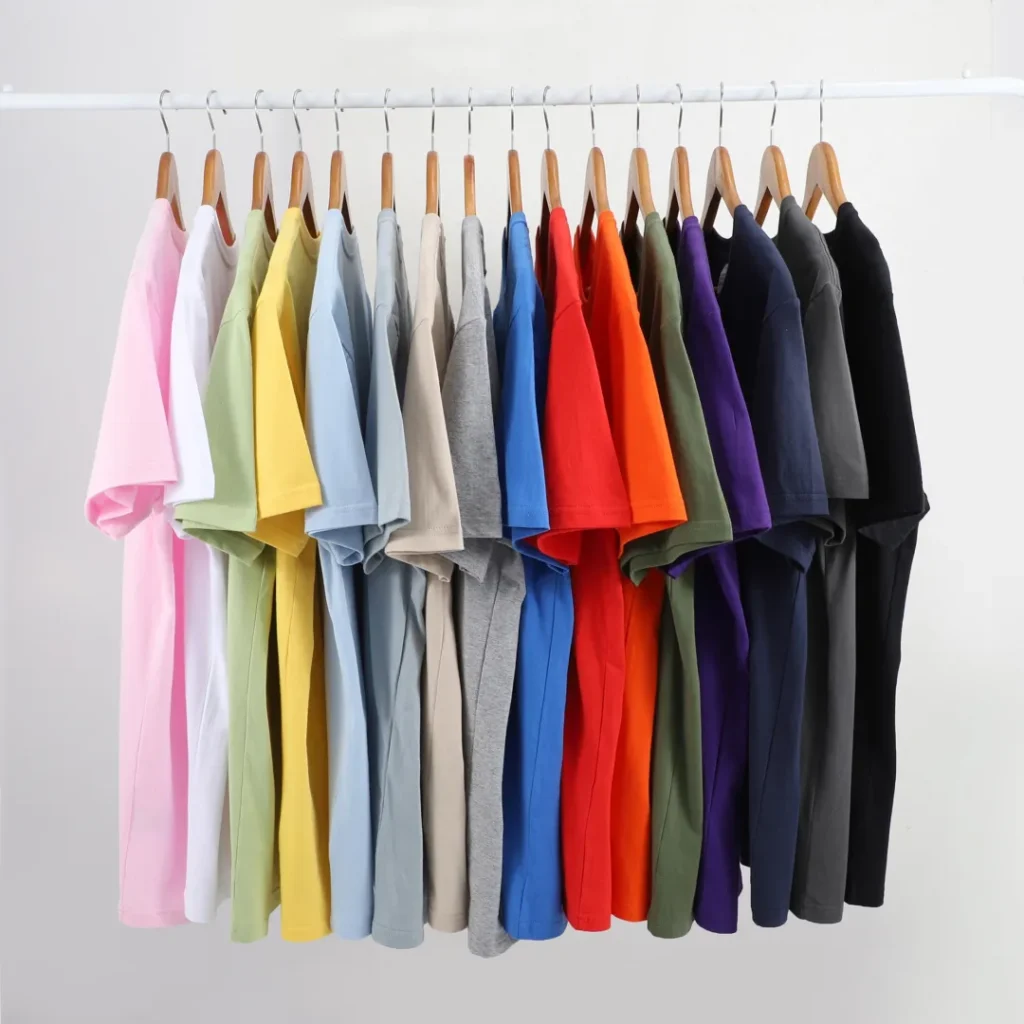
What are the differences between different yarn counts?
| Yarn Count Range | Common Applications | Hand Feel & Characteristics |
|---|---|---|
| Below 40S | Budget bedding, winter thermal products | Yarn is thicker, solid feel, good breathability |
| 40S – 60S | Daily home textiles, shirts | Smooth and delicate, comfortable touch, balances comfort and durability |
| 80S – 100S | High-end shirts, quality bedding | Silky smooth, fine and tight, good luster |
| Above 100S | High-end hotels, luxury apparel | Extremely soft, thin and smooth, luxury grade |
Yarn count is not the only standard. The material, weave, and finishing process of the fabric are equally important!
Buying tip: Is a higher yarn count always better?
Common misconception:
Ultra‑high count fabrics (e.g., above 120S) can be too soft and lack support, making them prone to pilling and deformation. Their everyday durability may be lower than that of medium‑count products.
Golden Choice & Buying Guide
Golden Choice: 60‑80 count is the “golden choice” that balances comfort, durability, and value for money.
Watch Out for Traps:
Ply yarn warning: Two yarns twisted together (e.g., labeled 80/2) have the thickness of a single 40‑count yarn. Don’t be fooled by inflated numbers.
Suggestions From Aung Crown: Choose According to Your Needs
| Use Case | Recommended Yarn Count | Reason |
|---|---|---|
| Daily home use | 40‑60 count | Perfectly sufficient – comfortable and washable |
| Higher quality | 60‑80 count | Feels more delicate |
| Gifts or luxury experience | 80 count and above | Premium feel |
| Summer clothing | 60‑100 count | More breathable |
Generally, 40-count fabrics are quite comfortable to wear. The higher the count, the finer the yarn and the smoother the fabric. However, fabrics exceeding 100-count tend to be stiffer due to textile processing techniques and are too thin for everyday wear. High-end European and American ready-to-wear brands often prefer cotton fabrics between 32 and 60 counts.
Of course, the concept of yarn count has been around for over two centuries, and many manufacturers’ methods of labeling yarn count in daily life are not rigorous enough. However, yarn count remains an important reference standard in the textile and apparel industry. Especially when purchasing cotton fabrics, only high-quality cotton can be spun into high-count cotton fabric. Therefore, in the absence of more quantitative standards, yarn count has become the most intuitive standard for determining wearing comfort.
Remember
High‑count fabrics need high‑quality raw materials (such as Egyptian cotton) to support them. Otherwise, simply chasing a high number is meaningless.
Furthermore, there is a very simple logic: cotton fabrics made with high-quality cotton will generally indicate the yarn count, and those without yarn count indication are likely not made with strict selection of raw materials.

I have over 25 years of experience in hat and apparel manufacturing. With a steady and detail-oriented approach, I oversee factory production and team operations, ensuring reliable quality and on-time delivery for customers worldwide