Dear Partners and Customers:
As a custom manufacturer of hats and apparel since 1998, we (Aung Crown) receive plenty of quotations and numerous design inquiries. There are two crafts that confuse most people – embroidered texture and embroidered pattern, which have essential differences. To ensure that your customization needs are totally and accurately understood and that the finished product meets your expectations, we would like to offer you a clear overview of both embroidered texture and embroidered pattern.
Embroidered Pattern
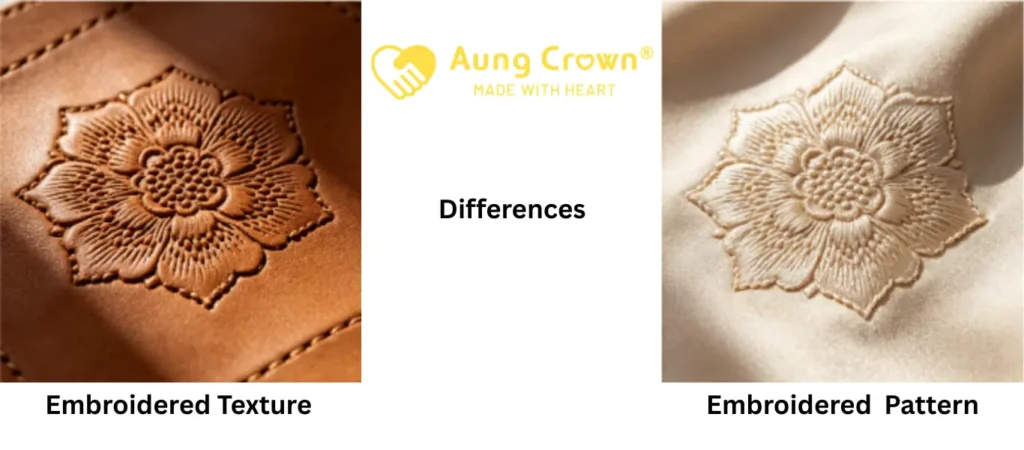
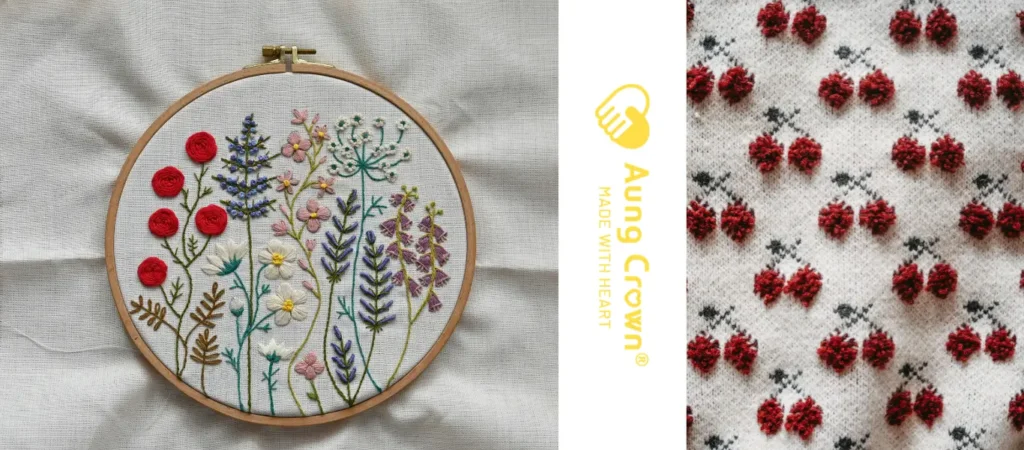
Embroidered pattern, also called embroidery, is the process of embellishing the surface of textiles with decorative stitching using colorful thread, often made of silk or cotton. The craft theories of both embroidered texture and pattern are different, which is the essential difference between them. Embroidered pattern is the traditional embroidered craft that we know. Using the fabric as a base, threads are added by hand or machine – stitch by stitch, layer upon layer – to outline a complete pattern. Embroidery is an “additive” process: it introduces new silk thread textures onto the originally flat fabric surface. The pattern stands apart from the base cloth, creating a rich sense of depth and dimension.
Embroidered Texture
Textured texture, on the other hand, is mostly created through techniques such as needle punching and embossing. They rely on the fabric’s own fiber texture – using needling, pleating, stamping, or similar methods to alter the fabric’s structure, creating recessed or raised patterns without the need to add large amounts of decorative thread.
Visual and Tactile Differences
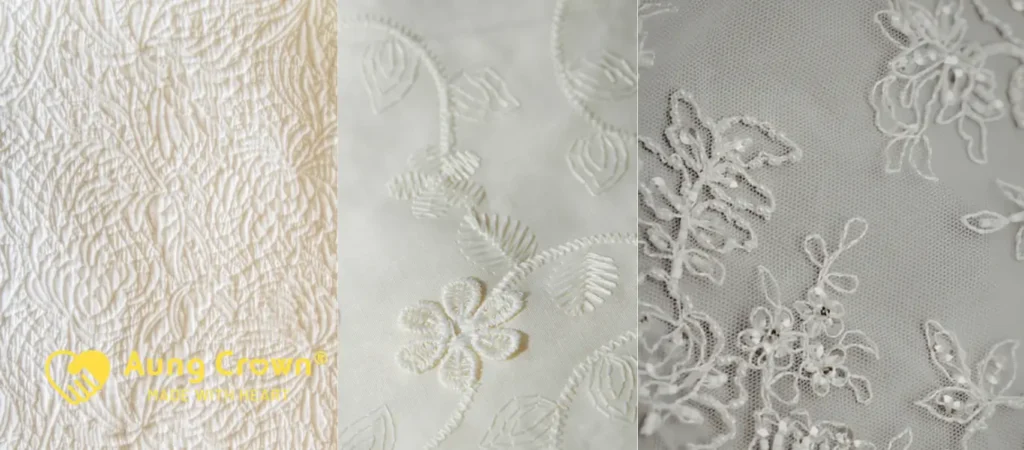
The differences in visual appeal and tactile feel can be quickly distinguished by the naked eye and by touch. Embroidered pattern features highly three‑dimensional patterns with smooth, full lines and rich, varied colors. The front and back are clearly different – the front is exquisite and ornate, while the back shows neat stitching traces. When touched, the texture feels clearly raised, and the fabric is soft, substantial, and thick. Textured texture, on the other hand, has relatively understated, restrained patterns – mostly tone‑on‑toned textures with a single color scheme. The overall surface is flatter, with very mild three‑dimensional effects. The feel is fine and matte, lacking the heaviness of embroidery, giving a more minimalist and sophisticated impression.
Differences in Durability and Applied Scenarios
The differences between embroidered texture and embroidered pattern in durability and applied scenarios. The threads of embroidered pattern are layered up, which makes it prone to snagging, thread pull, and deformation after frequent friction or washing. It requires more careful maintenance and is better suited for low‑frequency, appearance‑oriented applications such as formal wear, Hanfu, decorative pieces, and high‑end home textiles.
Embroidered texture is highly stable due to its fabric structure, which is super stable, wash- and friction-resistant, and not easily damaged. Therefore, frequently used fabrics like daily styling shirts, dresses, and bedding are clothes with embroidered textures, which are pretty and practical.
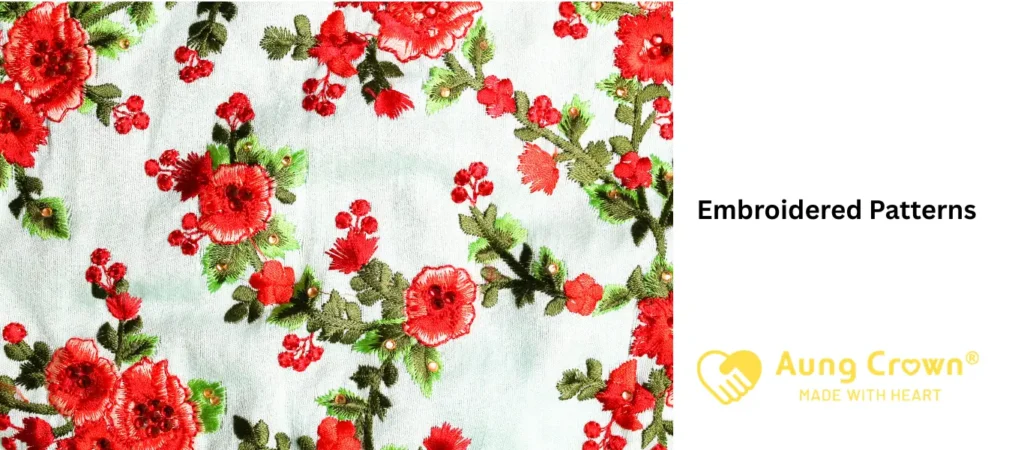
“Embroidered patterns” are our core decorative technique – using a needle to guide colored threads, piercing and stitching through the fabric according to a designed pattern to form motifs with thread. Embroidery offers a distinct three‑dimensional look, fine layering, and lasting durability. Whether it’s a logo on the front of a hat, letters on a garment cuff, or intricate ethnic patterns, embroidery presents them firmly and beautifully – and it supports both computer‑driven mass production and hand customization.
Embroidered texture, on the other hand, is not a standard technique in textile customization. It’s more likely embroidered texture cloth that can be used to make garments or other items. That is completely different from what we do when we decorate fabrics with embroidery thread. Therefore, when you want to add a colored thread pattern to a hat or sweatshirt, please remember to use the word “embroidery” to avoid any miscommunication.
As your trusted global custom partner, we know that precise craft terminology is the first step to efficient collaboration. We have fully automated embroidery production lines and an experienced sampling team, supporting flat embroidery, 3D puff embroidery, appliqué embroidery, and other techniques – ensuring that every hat and every garment not only looks beautiful but also lasts. Next time you place an order, feel free to leave the “embroidering” to us. We look forward to working with you to stitch together even more wonderful designs!
In the End
In a simple word, if you pursue a luxury 3D effect or exquisite atmosphere, then you can choose embroidered pattern. If you prefer a simple texture or durable or easy-care fabric, you can choose embroidered texture cloth. After mastering the core differences between embroidered pattern and embroidered texture, you can easily tell the difference between the two and get the most value for your dollars.
Having studied in the U.S., I now lead the global digital operations at Aung Crown. My passion lies in blending fashion trends and musical inspiration into the B2B landscape, allowing me to share the unique craftsmanship of Chinese hat-making with a global audience.