In 2026, the loungewear industry is undergoing a profound structural transformation. Borderless scenarios, minimalist silhouettes, and segment functional fabrics – these three core trends are not only redefining the meaning of “home dressing” but are also sending a clear signal throughout the entire apparel supply chain: consumers’ pursuit of “comfort without compromising style” is forcing every niche category to rethink its product logic.
As a B2B manufacturer specializing in custom headwear and apparel since 1998, we (Aung Crown) have observed that this transformation extends far beyond the loungewear sector itself. When “wearable outside” becomes a key selling point for loungewear, when fabrics shift from “single material” to “functional layering,” and when digital tools evolve from “nice‑to‑have” to “essential for survival” – the custom headwear industry, too, stands at a crossroads where transformation is no longer optional. This article begins with the innovation underway in the loungewear sector, combined with our front‑line market experience and observations, to explore how custom headwear manufacturers can find their place in this wave of industrial upgrading.
What the “Scenario‑Agnostic” Shift in Loungewear Means for Custom Headwear: When the Line Between Home and Out‑and‑About Blurs
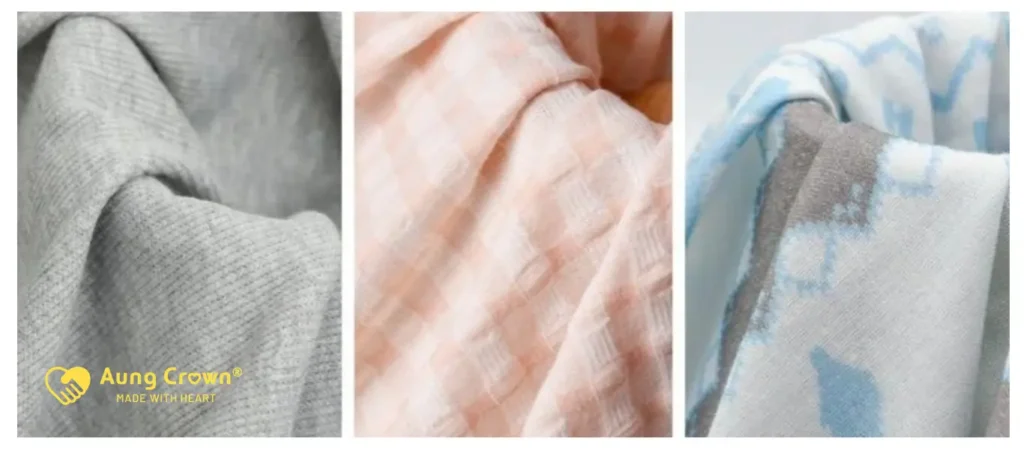
As the original analysis points out, the loungewear consumption landscape has been completely reshaped over the past two years. Consumer perception of loungewear has moved well beyond the single function of “staying at home in comfortable clothes.” Today, loungewear is expected to cover a wide range of everyday scenarios – from working from home and casual lounging to quick errands and light social outings. In 2026, the domestic loungewear sector is undergoing a structural upgrade, with “scenario‑agnostic design” listed as its number‑one strategic direction.
So what’s really driving this change? It all comes down to a sharp rise in consumer demand for scenario adaptability. Shoppers no longer want to buy separate outfits for every micro‑context. Instead, they want a single piece of clothing that can move with them – from the sofa to the office, from grabbing a package to meeting a friend for coffee.
So what does this “scenario‑agnostic” mindset mean for the custom headwear industry?
First, the very definition of a hat’s “scenario” is being rewritten.
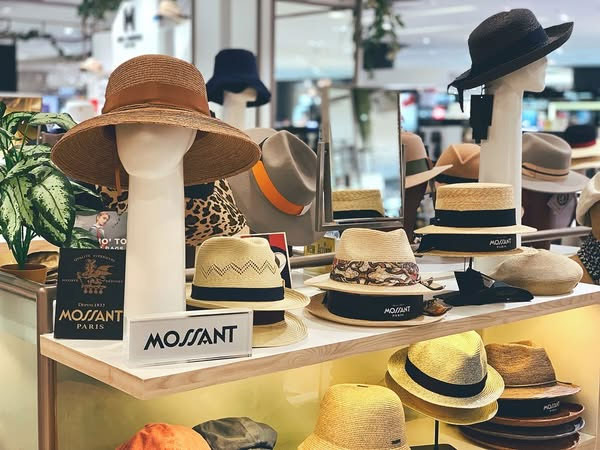
In the past, headwear categories were largely defined by function or occasion – baseball caps for sports and casual wear, fedoras for formal events, bucket hats for vacations. But now that “wearable‑outside loungewear” has become a mainstream concept, the connection between headwear and “home scenarios” goes far beyond the simple question of “do you wear a hat at home or not.” Consumers are starting to ask: when I step out in my wearable‑outside loungewear to grab a package, walk the dog, or grab coffee – what kind of hat keeps me looking effortlessly put‑together without feeling sloppy?
Second, the rise of “light‑outing” scenarios is creating new headwear demand.
In spring‑summer 2026, early in this year, more than 60% of new loungewear collections will be explicitly labeled as “wearable outside.” Correspondingly, the headwear categories that sit somewhere between “formal” and “casual” are gaining unprecedented traction. Neutral‑tone baseball caps, minimalist bucket hats, and well‑crafted knit beanies – styles that pair perfectly with the relaxed feel of loungewear while still looking presentable for the outside world – are among the fastest‑growing categories in B2B custom orders.
Third, “coordinated headwear and loungewear” is becoming a new design imperative.
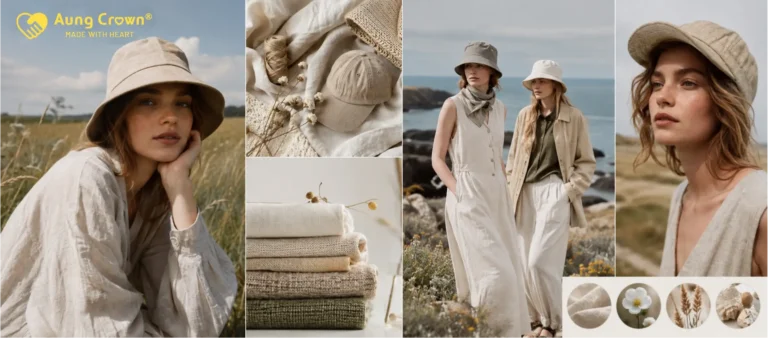
As the original analysis notes, today’s loungewear emphasizes relaxed, loose silhouettes and low‑saturation, understated color palettes. This means that the headwear worn with it needs to echo that same minimalist, wearable‑outside aesthetic – in color, texture, and overall vibe. In our actual order data, we’re seeing more and more brand clients come to us not just for a specific hat style, but for a total styling solution – where headwear and apparel collections are designed as a cohesive whole, from fabric handfeel and color systems to silhouette flow and finishing details.
Following Loungewear’s “Fabric Function Segmentation” Strategy: The Upgrade Path for Headwear Fabrics – From Pure Cotton Basics to T/R Four‑Way Stretch
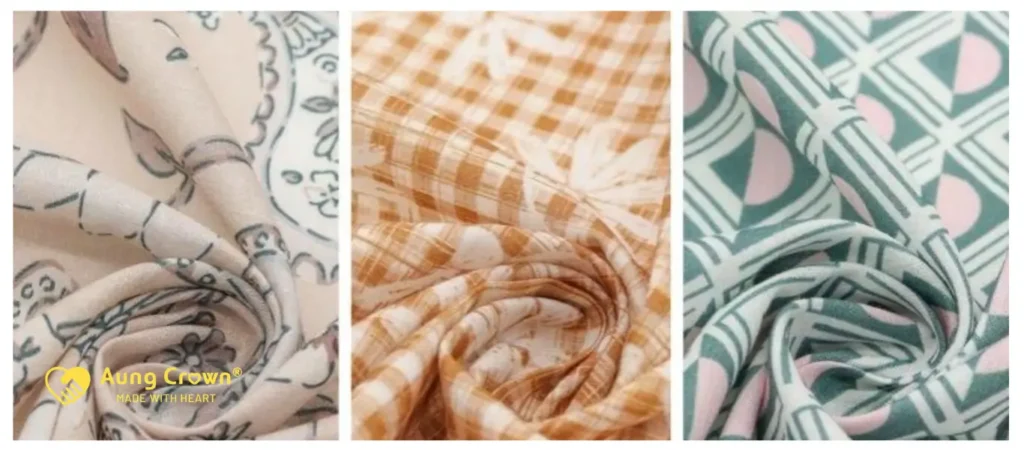
One of the most valuable insights from the original analysis is the “layered segmentation” approach now shaping the loungewear fabric market. On one hand, natural fiber fabrics like cotton satin and cotton‑rayon solids continue to anchor the mass market. On the other, textured performance fabrics such as stretch piqué and T/R four‑way stretch are being precisely targeted at the premium, wearable‑outside loungewear segment.
This “dual‑track” fabric landscape offers direct and actionable lessons for the custom headwear industry.
The foundational value of natural fabrics is not to be underestimated. In loungewear, cotton satin and cotton‑rayon solids remain the go‑to choices for the mass market, thanks to their skin‑friendliness, breathability, and safety. The same holds true in headwear. Pure cotton twill, canvas, and denim remain the workhorse materials for core styles like baseball caps and bucket hats. Their key strengths – comfort, safety, and cost‑effectiveness – make them ideal for large‑scale standardized production. For B2B headwear manufacturers, the natural‑fabric product line is the bread‑and‑butter foundation – the pillar that supports both quick‑turn e‑commerce orders and high‑volume brand production runs.
But the real growth opportunity lies in differentiation through functional fabrics.
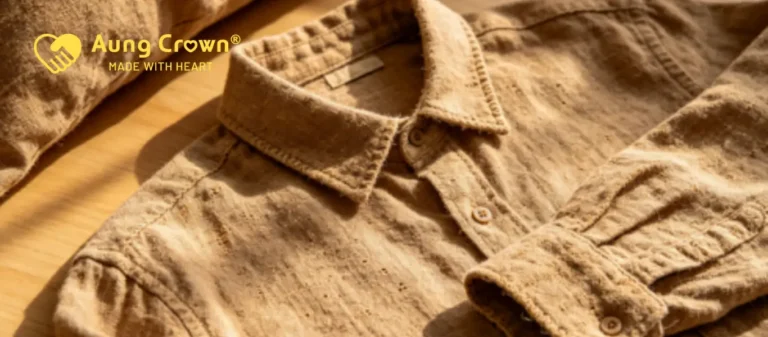
As the original analysis points out, functional textured fabrics such as stretch piqué and T/R four‑way stretch effectively address the pain points of traditional cotton fabrics – being too soft, prone to wrinkling, and lacking stretch. In the headwear space, similar challenges exist – traditional cotton hats tend to lose shape, are difficult to hold structure, and wear poorly over multiple washes. The introduction of functional fabrics is fundamentally reshaping the product value of headwear:
- Structure retention and shape memory: T/R four‑way stretch and other polyester‑blend fabrics offer excellent dimensional stability, allowing hats to maintain their shape even after repeated wear and washing. For custom headwear that aims to convey a sense of “refinement,” this is a game‑changer.
- Multi-functional integration: Moisture-wicking, UV protection, and breathable constructions are becoming standard features in headwear fabrics. In 2026, the three key directions in sun‑hat sourcing – wide‑brim styles, visor‑style caps, and foldable travel hats – are all underpinned by functional fabric technology.
- Texture and tactile appeal: Stretch piqué fabrics come with a subtle, three‑dimensional texture that gives headwear a visual depth not found in traditional smooth surfaces. In an era where “minimalism” dominates, the intrinsic texture of the fabric itself is increasingly replacing elaborate patterns as the key differentiator in product design.
The commercial logic behind fabric layering is “precision matching.”
The approach of Shaoxing Zengfangna Textile, as highlighted in the original analysis, offers a useful model – the company operates an integrated value chain covering weaving, dyeing, and finishing, supported by a full‑process quality control system. For custom headwear manufacturers, this means that a “one‑fabric‑fits‑all” approach no longer works. Orders at different price points, hats for different scenarios, and seasonal variations all demand tailored fabric solutions. Building a fabric grading system – natural fibers for basic lines, functional blends for mid‑to‑high‑end styles, and differentiated textures for custom orders – is now a core competency for any B2B manufacturer looking to stay competitive.
Digital Empowerment for Custom Headwear: AI Design, Virtual Try‑On, and Supply Chain Synergy (Drawing on the “AI Fabric” Case in the Loungewear Industry)
The original analysis devotes considerable space to the digital upgrading of the industry, with particular mention of digital tools like the “AI Fabric” mini‑program that are deeply empowering the entire fabric selection, R&D, and matching process.
This trend may have even more profound implications for the custom headwear industry than for loungewear itself. That’s because custom headwear has a natural characteristic: an extremely high number of SKUs, very small batch sizes, and extremely high requirements for personalization. The variables involved in a single custom hat include dozens of parameters – hat shape, fabric, color, embroidery pattern, size, packaging – and the traditional “experience‑driven” production model faces clear efficiency bottlenecks when confronted with massive customization demand.
Digitalization is reshaping the industrial logic of custom headwear across three dimensions:
- First, on the design front, “AI empowerment is turning personalization into a scalable business.”
One case shows that a company specializing in custom baseball caps, relying on just one person plus eight AI agents, can complete 1,800 hat designs in a single month – far exceeding industry efficiency benchmarks. AI design tools compress the traditional sampling cycle – which used to take days or even weeks – down to minutes, making custom orders with “small batches, wide variety, high quality, and short lead times” feasible. In 2026, the core competitiveness of customized fan merchandise has shifted from “price advantage” to a combined strength of “AI design capability + service response speed.”
- Second, on the supply chain front, “data integration enables precise matching.”
The “AI Fabric” platform has already aggregated over 100 datasets, more than 300 million high‑quality industry data points, and completed the digital capture and 3D presentation of over 70,000 fabric varieties. Similar digital supply chain platforms are emerging in the custom headwear space – by integrating upstream and downstream resources such as fabric suppliers, accessory suppliers, and processing factories, they enable precise matching of orders with production capacity. For B2B custom headwear manufacturers, plugging into such digital platforms is no longer a “nice‑to‑have” but a “must‑have” for securing orders and improving efficiency.
- Third, on the marketing front, “visualization reduces communication costs.”
The original analysis mentions that the “AI Fabric” fabric visual creation feature helps businesses generate fabric promotional videos with a single click, eliminating the time and labor costs of shooting them in‑house. In the custom headwear industry, clients traditionally need physical samples to judge fabric feel, hat shape, and embroidery precision – which leads to high sampling costs and lengthy communication cycles. 3D virtual displays, AI try‑on technology, and other innovations are changing that. Clients can now see online how different fabrics, hat shapes, and embroidery options will look when worn, dramatically lowering the decision barrier and reducing trial‑and‑error costs.
Building a Tiered Product System for Custom Headwear: How to Apply Loungewear’s “Dual‑Track” Strategy to Create Basics and Bestsellers
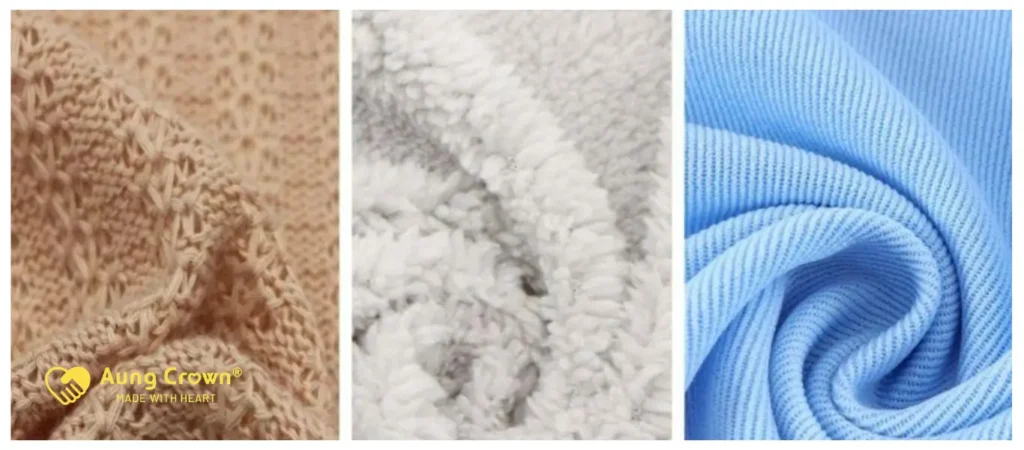
Based on the analysis above, we believe the core competitive strategy for our B2B custom headwear manufacturers in 2026 and beyond can be summed up in three keywords: tiered, connected, and agile.
Tiered refers to a layered product and service architecture. Drawing on the loungewear industry’s “dual‑track” category strategy, custom headwear manufacturers need to establish a clear product hierarchy:
- Entry tier: Natural fiber fabrics covering classic styles like baseball caps and bucket hats – focused on high cost‑performance and fast delivery, serving both e‑commerce quick‑turn orders and high‑volume brand production runs.
- Upgrade tier: Functional blended fabrics that offer shape retention, performance features, and textured finishes – developing differentiated hat styles to meet mid‑to‑high‑end custom needs.
- Custom tier: Personalization at its core, leveraging AI design tools and flexible production capabilities to handle small‑batch, high‑value‑added deep customization orders.
Connected refers to deep collaboration across the upstream and downstream value chain. Just as the loungewear industry now operates as a fully linked ecosystem – from raw material suppliers to weaving and dyeing, all the way to brand partners – custom headwear manufacturers need to establish data‑sharing and coordination mechanisms with fabric suppliers, accessory vendors, and brand clients. This is not a simple buyer‑seller relationship, but an ecosystem partnership enabled by digital platforms.
Agile refers to the ability to respond quickly to market shifts. The “minimalist, wearable‑outside” trend in loungewear in 2026 has compressed the cycle from consumer demand to fabric adaptation to production readiness – and that cycle is getting shorter. The same holds true for custom headwear. A viral hat style on social media can generate a flood of custom inquiries within a week. Only those with agile design capabilities, flexible production systems, and efficient supply chain responsiveness will be able to stay ahead in this fast‑moving market.
In the End: The Custom Headwear Industry’s “Loungewear Moment”
At its core, the loungewear revolution is about one thing: redefining what product value really means. When consumer expectations for loungewear shift from just “comfortable” to “comfortable and polished,” from “for home only” to “for anywhere” – the entire value chain is forced to rethink its product logic, fabric strategy, and production methods.
For the custom headwear industry, this is equally a moment of redefinition. Headwear is no longer just “something you put on your head” – it’s an integral part of the total styling equation. Customization is no longer just “a different color or a name embroidered on” – it’s a full‑chain personalized service from design to delivery. And fabric is no longer just “a piece of cloth” – it’s the core variable that determines performance, feel, and differentiation.
We have every reason to believe that as the loungewear industry completes its evolution toward “minimalist, wearable‑outside” dressing, the next growth curve for custom headwear lies hidden right in the extended lines of these very trends.
FAQs – Why Outing Homewear Can Affect Custom Hat Manufacturers?
Having studied in the U.S., I now lead the global digital operations at Aung Crown. My passion lies in blending fashion trends and musical inspiration into the B2B landscape, allowing me to share the unique craftsmanship of Chinese hat-making with a global audience.