Introduction
Can a White T-Shirt Be Worn to the Office? It Has Less to Do with Price Than You Think.
What really sets a great white tee apart from a mediocre one often comes down to a few small details.
The softness of the collar, the opacity of the fabric, the shape of the sleeves, whether it clings to your stomach, and even how well the collar bounces back after washing.
These details may not matter as much on other garments.
But a white T-shirt is different.
It is so simple that there is almost nothing to hide its flaws.
So whether a white tee is meant for layering or for wearing on its own becomes obvious the moment you put it on.
First, Look at the Collar
This is the first thing I check when deciding if a white T can be worn alone.
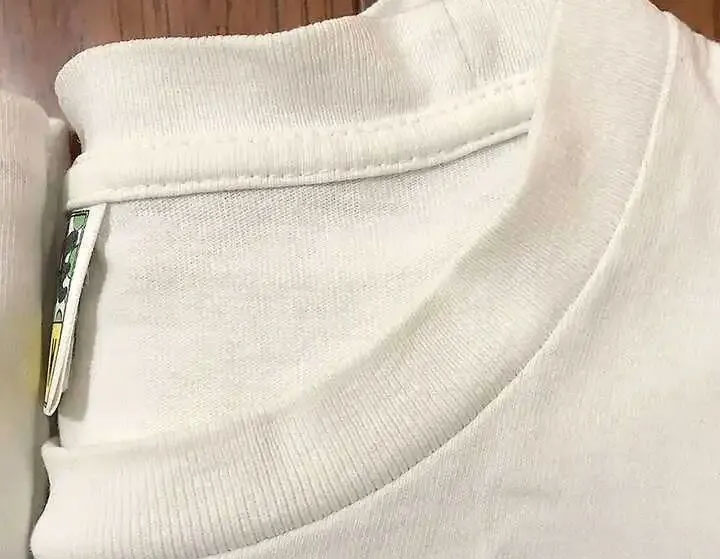
Because people’s eyes naturally focus on the face and the collar area.
If the collar is thin, limp, and clings to the neck, and then starts to stretch, curl, or lose its shape after a few washes, the whole shirt instantly looks like underwear.
This becomes even more noticeable when worn under a blazer.
A blazer has sharp shoulders and a structured lapel. If the T-shirt collar underneath cannot hold its own, the stiffer the outer layer, the sloppier the inner layer appears.
So for a white T that is office-appropriate or meant to be worn with a jacket, I pay attention to:
- Whether the collar has sufficient width and thickness,
- Whether the ribbing has good recovery,
- Whether it sits naturally around the neck,
- And whether it stays that way after washing.
Often, you can tell if a T-shirt looks expensive just by looking at that one ring of fabric.
Second, Sheer Is a Real Problem for White
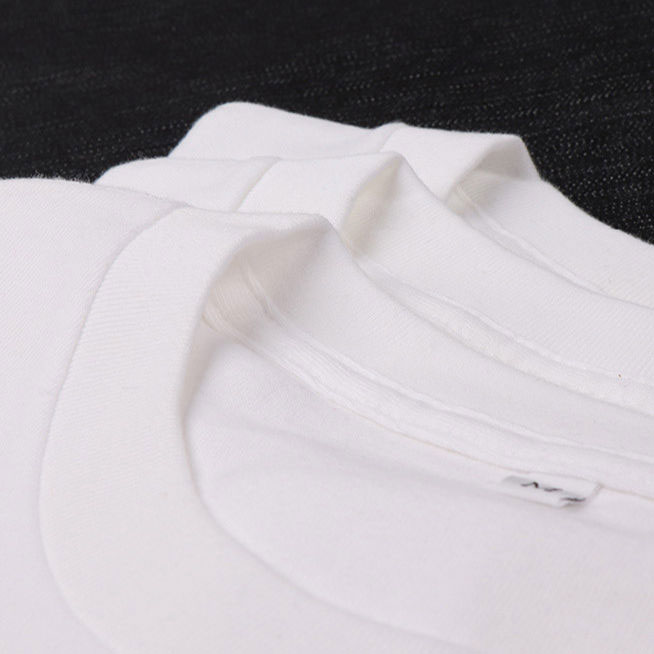
Everyone likes lightweight fabrics in summer.
But white T-shirts have one practical issue:
The thinner they are, the more they reveal.
Skin tone, chest contours, abdomen, and even the waistband of your pants can show through.
Such T-shirts work perfectly as undershirts—their job is to be light, breathable, and hidden.
But if you wear them directly to the office, they lack a sense of completeness.
So for outerwear, a white T does not need to be as thin as possible.
I actually prefer fabric with a bit more weight and coverage.
But do not simply equate higher weight with higher quality.
If it is too thick for summer, the wearing experience suffers.
The sweet spot is: opaque but not heavy, crisp but not stiff.

Third, Does the Fabric Hold Its Own Shape?
This is another detail many men overlook.
Some T-shirts drape completely against your body.
They reveal exactly the shape of your chest, your belly, and any love handles.
That is fine for someone with a perfect physique.
But for most men in their thirties and forties, it is not always flattering.
Especially when there is a bit of a stomach, I actually prefer a fabric with a little more structure and drape.
It does not cling to your body; instead, it falls naturally from the chest.
What you see is the silhouette of the shirt, not the outline of your belly.
This is the same principle we discussed about shirts creating a slimming effect.
A mature man does not have to show every contour of his body. Sometimes, subtly concealing a little creates a much cleaner look.
Fourth, The Sleeves Are an Easy Giveaway
This is often ignored.
Some T-shirts have sleeves that are too short and tight, wrapping around the biceps and giving off a sporty vibe.
Others have armholes that are too large, making the sleeves hang loosely and look like loungewear.
For office wear, I prefer sleeves that maintain a clean silhouette.
The cuff should not squeeze your arm, nor should it be overly wide. It should fall naturally around the middle of your upper arm.
Especially when worn under a blazer, the sleeves should not bunch up inside the jacket’s armholes.
Often, what people call “premium” is simply the absence of excess.
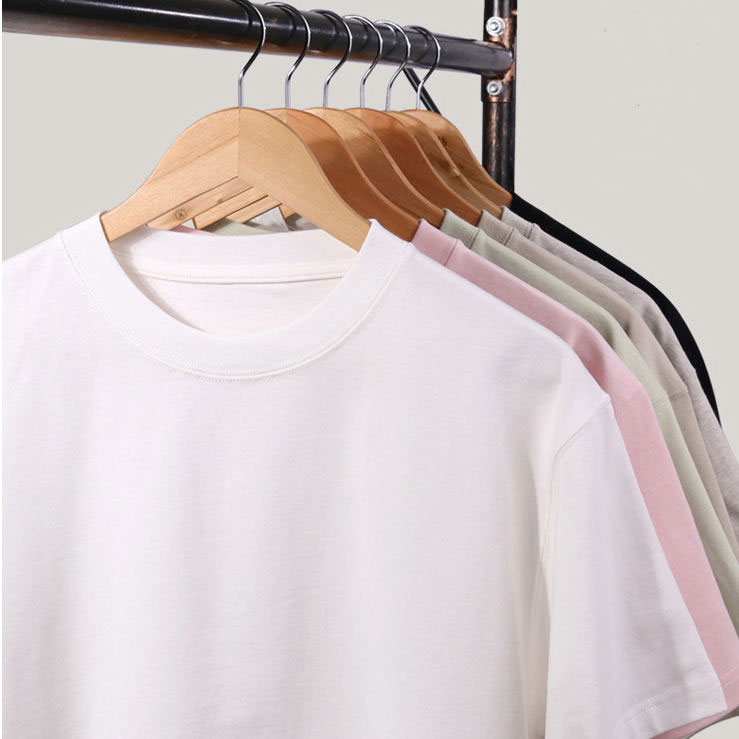
Fifth, Do Not Size Down Just to Look Slimmer
White itself has a strong visual presence.
If the T-shirt is too tight against your body, the curves of your chest, stomach, and waist become very obvious.
When you sit down, the folds around your abdomen are hard to hide with a thin knit.
So I always believe:
For a mature man, a white T should be fitted, not tight.
The shoulder seam should be roughly correct, there should be a little room around the chest, and the waist should fall naturally.
The length should cover the waistband of your trousers but not be oversized.
This is the state that usually looks the neatest.
Why Are Some White T-Shirts Particularly Suitable For Pairing With Suits?

Because a suit and a white T speak two completely different languages.
A suit jacket is structured; a white T is not.
A suit is formal; a white T is casual.
When you put them together, the key to making it look good is:
The white T may be casual, but it must not be sloppy.
So when I choose a white T to wear under a suit, I pay special attention to: a solid collar, opaque fabric, a clean surface, a proper fit, neat sleeves, and preferably no prominent logos or prints.
That way, it tones down the formality of the suit jacket without bringing down the overall quality of the outfit.
For example:
- Navy suit + white T + grey trousers
- Beige linen suit + white T + khakis
- Grey casual blazer + white T + dark jeans
They are all simple combinations.
But the simpler the combination, the more it tests the quality of each piece.
The Simple Truth
So, the same white T-shirt…

Some can only be worn as undershirts, while others can be paired with a jacket, dress trousers, or even worn to meet a client.
The difference often lies not in complexity.
It lies precisely in the simplest details:
- A collar that holds its shape,
- Fabric that is not see-through,
- A fit that is not tight,
- And a clean overall silhouette.
For a white T-shirt, achieving all that is already quite difficult.
The simpler the garment, the harder it is to hide imperfections.
That is probably what makes white T-shirts so interesting.

I’m Kailyn, the founder of Aung Crown. I’ve spent over a decade “in the trenches” of the hat and clothing trade, learning exactly what it takes to make a product stand out. I’m a bit of a perfectionist when it comes to design and quality, but that’s because I care about your brand’s success as much as you do. Whether you need production advice or post-sales support, I’ve got you covered every step of the way.