Introduction
In the last fiscal year, Bangladesh’s total exports reached US$55.6 billion , of which garment exports accounted for US$47.39 billion , second only to China, making it the world’s second-largest garment exporter.
Yesterday, I happened to see a list of the top ten garment exporters published by the Bangladeshi media outlet Prothom Alo. Nine of these companies derive 90%-100% of their revenue from garment production. This piqued my interest, and I wanted to see just how powerful these top ten Bangladeshi factories really are. Today, I’ll break down this list of the top 10 Bangladeshi exporters.
1. Youngone | Annual exports: US$970 million
Bangladesh’s top exporter and the world’s largest OEM manufacturer of down jackets. They produce for high-end brands such as Arc’teryx, The North Face, Patagonia, Lululemon, and Adidas, with an average price of $23 per jacket, and the most expensive down jacket selling for $448. Their products cover the entire high-end category, from outdoor down jackets and windbreakers to sportswear.
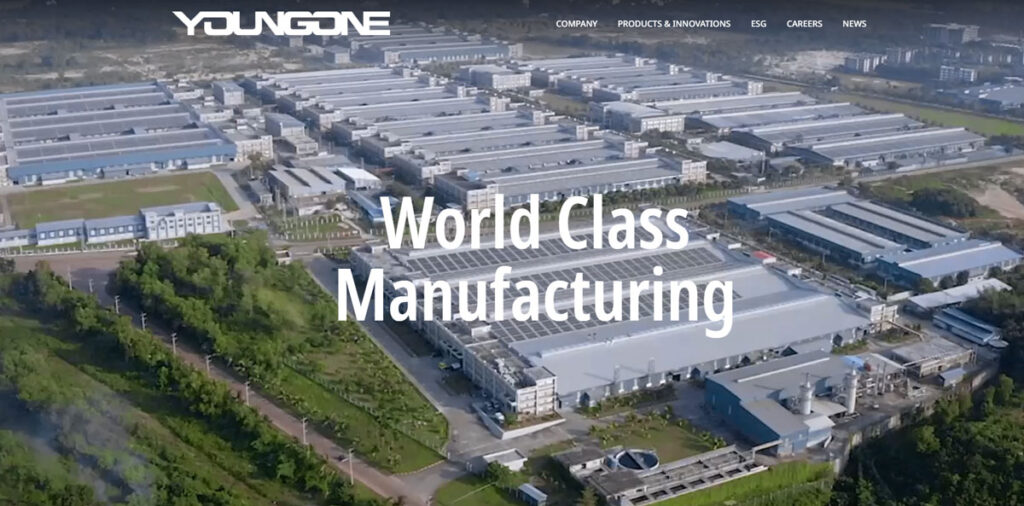
It owns KEPZ, Bangladesh’s largest garment export processing zone, achieving true vertical integration across the entire process from weaving, fabric, down filling to finished garments, shoes, and bags. It employs over 100,000 people globally and exports to 48 countries worldwide.
Official Website: https://youngonecorporation.com
2. Ha-Meem Group | Annual exports: US$650 million
This is Bangladesh’s leading garment export group, consistently ranking as the country’s second-largest apparel exporter (after the foreign-owned Youngone). With 75,000 employees, 26 garment factories, 1 denim factory, and numerous washing, printing, and accessories factories, it represents a typical vertically integrated “composite textile” system. Its export structure is extremely concentrated, with 90%-100% coming from garment processing, 80% of which is exported to the United States. It is a core supplier to GAP, H&M, and Zara. In the last fiscal year, it exported to 63 countries worldwide.
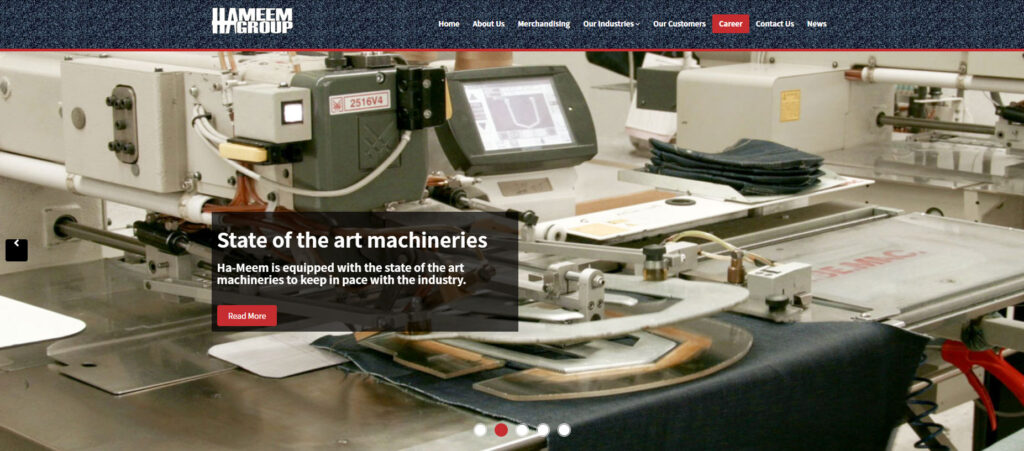
A leader in denim technology: Owning 88 laser processing machines, with a daily production capacity of 100,000 pieces, the entire process from fabric to garment, washing, laser processing, and packaging is handled in-house. It is the strongest local garment group in Bangladesh and the top exporter among local companies.
Official Website: https://www.hameemgroup.net
3. Mondol Group | Annual exports: $566 million
Bangladesh’s third-largest exporter, and the most typical and powerful knitwear leader. Main products include T-shirts, polo shirts and casual knitwear. It’s entirely export-oriented, with 90%-100% of its revenue coming from ready-made garments. Almost all of its products are sold to the United States (99%), with clients including fast fashion and mid-to-high-end brands such as Zara, Benetton, and US Polo.
The group has 23 manufacturing plants and over 30,000 workers. It possesses an integrated system from weaving and dyeing to garment making. Monthly output exceeds 6 million pieces, and last year its average daily exports reached 712,000 pieces. Over the past few years, its export value has steadily increased from US$478 million to US$566 million, showing stable growth for many consecutive years, making it one of the most efficient and competitive basic garment manufacturers in Bangladesh.
Official Website: https://mondol.net
4. DBL Group | Annual Exports: US$520 million
The fourth largest exporter in Bangladesh, this is the country’s strongest integrated knitting factory and one of the largest vertically integrated groups in the country. It operates a closed-loop process from spinning, weaving, dyeing and finishing to garment making, washing, and packaging. It boasts a green factory and the largest sampling center in the region, exporting nearly 200 million pieces annually. Its clients include top brands such as H&M, Walmart, Puma, M&S, and Hugo Boss. Products cover knitwear categories such as underwear, T-shirts, and sportswear.
It is investing $1.2 billion to build a super industrial park with 10-19 factories in Sylhet, aiming to become a “super platform group” for Bangladeshi manufacturing. It has previously established a presence in Ethiopia and Vietnam and is one of the most favored local giants by international capital (IFC, BII, DEG).
Official Website: https://dbl-group.com
5. Ananta Group | Annual exports: US$462 million
Bangladesh’s fifth-largest exporter – a hidden champion in suits, jackets, and denim, and a prime example of a company focusing on “high value-added, multi-category” products. Its client list includes major brands such as M&S, Next, Zara, GAP, H&M, Walmart, Carters, and Dickies. It owns seven factories in Bangladesh and one in Ethiopia, and has experienced continuous export growth for years. It is currently investing US$70 million to build Bangladesh’s first 100% synthetic fabric factory, aiming to overcome the raw material bottleneck for sportswear and underwear. This project has secured US$40 million in financing from the Asian Development Bank and, once completed, will provide a dedicated fabric supply chain for its sportswear/underwear division, with projected underwear revenue rising from US$50 million to US$200 million.
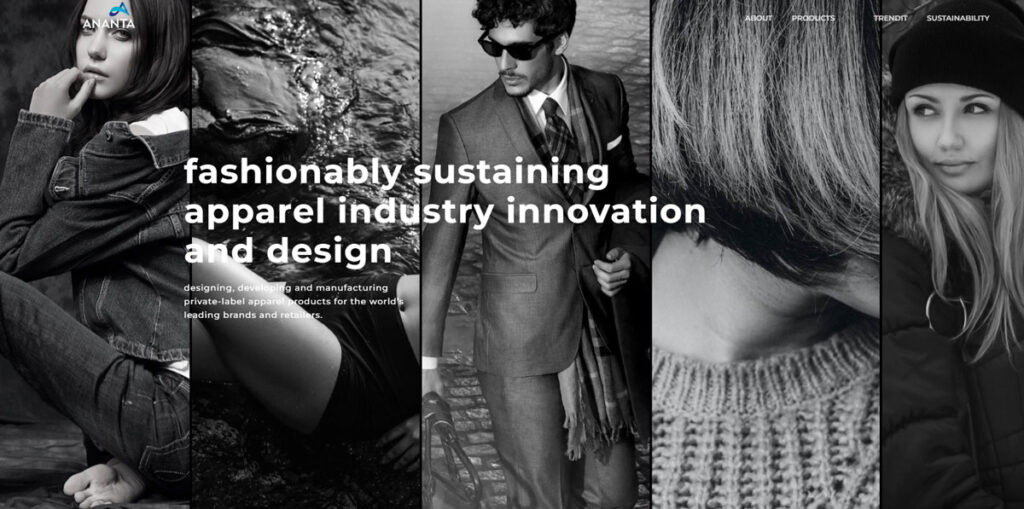
Its strategy is clear: focus on high-end and diversified products, and integrate upstream through synthetic fabrics to create a comprehensive group that can “make everything from outerwear to underwear”. It is the most competitive company in Bangladesh’s complex garment segment.
Official Website: https://ananta-bd.com
6. PRAN-RFL Group | Annual exports: US$449 million
The sixth-largest exporter, and the only group among the top 10 that is not represented by garments alone – it is one of Bangladesh’s largest diversified companies, employing 145,000 people and making it the country’s biggest employer. Its business spans food, plastic products, hardware, electrical appliances, light industrial machinery, and garments, with products sold in 145 countries worldwide.
The most distinctive feature of this group is that it relies entirely on OBM (Own Brand Manufacturing) to build its business. Its subsidiaries, PRAN and RFL, enjoy strong brand recognition in South Asia, the Middle East, and Africa, serving as a prime example of Bangladesh’s strongest OBM brand going global. While the apparel sector constitutes only a small portion of the group’s business, it still provides supply chain services for brands like H&M.
Official Website: https://rflbd.com
7. Square Group | Annual exports: US$431 million
Bangladesh’s seventh-largest exporter, established in 1958, is one of the most respected conglomerates in the country, with businesses spanning pharmaceuticals, food, home appliances, and textiles. However, it is its RMG division, Square Fashions, that drives its top-ten export ranking.
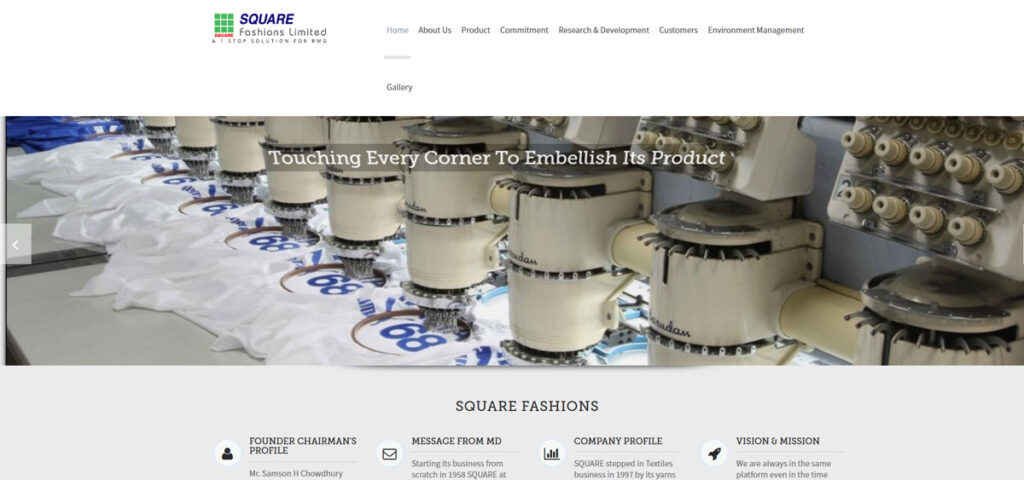
Square Fashions is entirely export-oriented, backed by the group’s own Square Textiles (spinning) and Square Denims (denim fabric), forming a vertically integrated system from spinning, weaving, dyeing and finishing to garment making. Its exports grew by an impressive 20% in the past year, making it the fastest-growing company among the top 10.
Official Linkedin: https://www.squarefashions.com
8. Palmal Group | Annual exports: US$408 million
Bangladesh’s eighth-largest exporter – a typical “large-scale knitwear manufacturer.” They produce the most basic, high-volume knitwear: T-shirts, polo shirts, and shorts. 90%-100% of their production is exported as finished garments, primarily targeting large, high-turnover clients like Old Navy and Walmart. Their export market covers 67 countries.
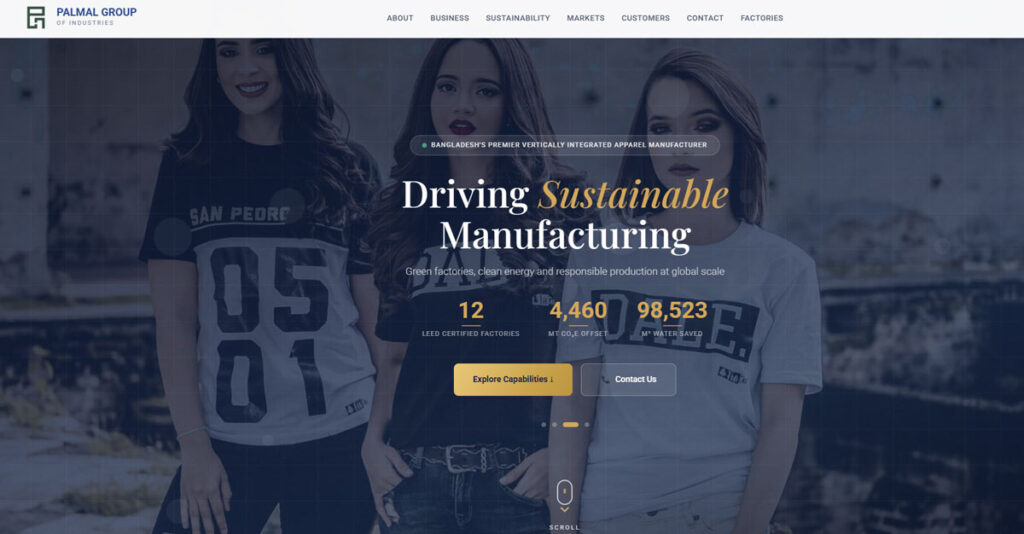
The group is very large, with more than 30 factories and over 60 production units, making it one of the few “knitting giants” in Bangladesh. After two consecutive years of decline, it resumed growth in the last fiscal year, with exports rising 8% and regaining its position among the top 10.
Official Linkedin: https://palmalgarments.com
9. Pacific Jeans Group | Annual exports: US$406 million
Bangladesh’s ninth-largest exporter and the largest denim garment manufacturer in South Asia and Bangladesh. This company does almost nothing else but export jeans, with a monthly production capacity of 4 million pairs. Its clients include Uniqlo (its largest buyer), Zara, C&A, CK, Tommy Hilfiger, and others. It has 7-13 factories, all focused on denim research, cutting, washing, and garment processing. The average export price is about US$9 per piece, making it a typical “high-end denim specialist champion”.
The most unique aspect is that it does not engage in vertical integration. Instead, it collaborates with global fabric suppliers, which allows it to change styles, update washes, and launch new products more quickly, making it more agile than the traditional “asset-heavy integrated” model.
Official Linkedin: https://pacificjeans.com
10. Micro Fiber Group | Annual exports: US$394 million
Bangladesh’s tenth-largest exporter, primarily engaged in export-oriented knitwear, with 100% of its products being processed into finished garments and almost all sold to Europe. 98% of its orders come from the EU, making it the company with the highest dependence on Europe among the top ten.
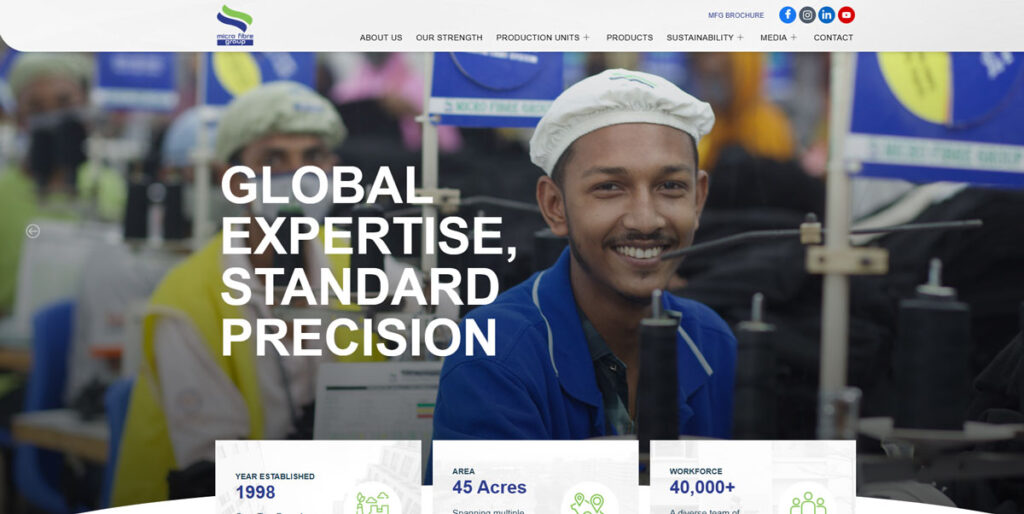
Since 1999, the company has invested in fabric and dyeing-finishing capabilities, possessing a complete closed-loop system of “knitting + dyeing-finishing + garment manufacturing”. It is a typical large-scale factory that delivers stable volume.
Official Linkedin: https://mfgbd.net
Editor’s Note:
It’s clear that Bangladesh’s garment exports are not built on a cluster of small and medium-sized factories, but rather on a dozen or so giant garment conglomerates. Each of them employs a systematic approach – vertical integration, deep customer relationships, and large-scale industrial park expansion. Therefore, future orders will increasingly concentrate in these systematic groups, rather than being evenly distributed among all factories.
I’m Kailyn, the founder of Aung Crown. I’ve spent over a decade “in the trenches” of the hat and clothing trade, learning exactly what it takes to make a product stand out. I’m a bit of a perfectionist when it comes to design and quality, but that’s because I care about your brand’s success as much as you do. Whether you need production advice or post-sales support, I’ve got you covered every step of the way.