Introduction
When your hiking hat blows off in strong wind, or when a fabric intended for UPF 50+ protection tests at only UPF 48, you quickly learn: functional hats are a completely different game from fashion hats.

The core difference is simple – it is not about “looking good”, but about “working well” in demanding outdoor conditions. Every step needs to serve the intended function.
Here is a real development sequence: fabric -> pattern -> process -> accessories, with lessons learned from actual production.
01 Fabric Selection – The First and Most Mistake-Prone Step
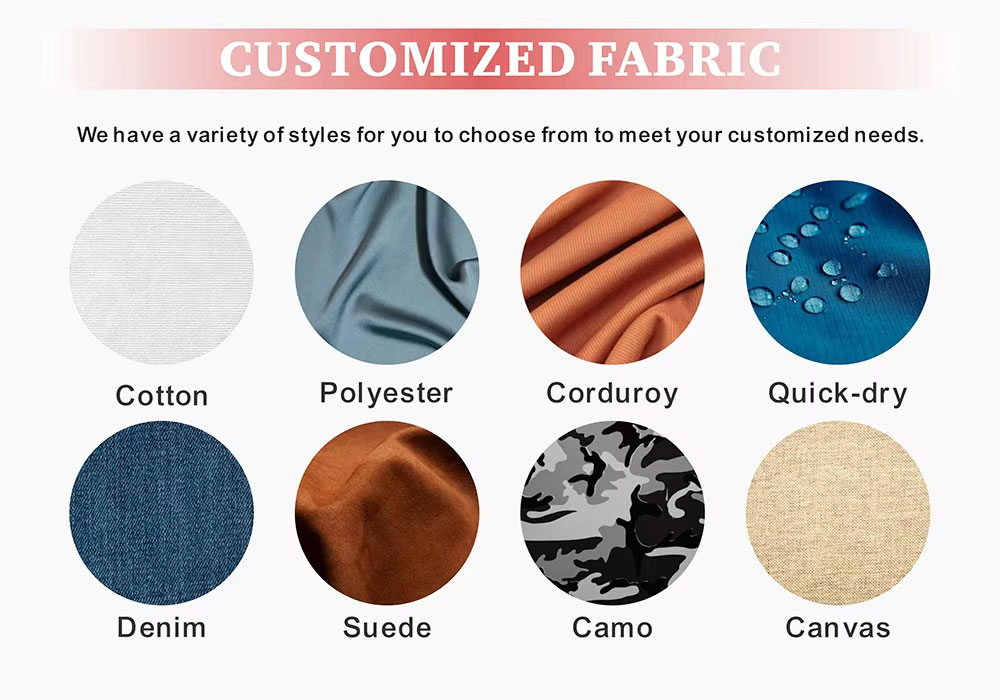
Fabric selection is one of the most important decisions in functional hat development. The fabric needs to match the intended performance requirements, but it also needs to work with the pattern, sewing process, decoration, and final use.
| Fabric Type | Main Advantage | Potential Issue | Common Application |
|---|---|---|---|
| Quick-dry polyester/nylon | Dries quickly and manages moisture well | Some fabrics can feel relatively firm and may require adjustments for embroidery | Summer outdoor hats, sports hats |
| Water-resistant fabric | Provides protection against rain and moisture | Stronger water-resistant constructions can reduce breathability | Hiking hats, outdoor rain-resistant hats |
| UPF-rated fabric | Provides tested UV protection when properly developed and tested | Specific UPF claims require appropriate testing and labeling | Sun-protection hats, hiking hats |
| Stretch fabric | Provides a closer and more comfortable fit | Requires accurate pattern cutting and careful sewing tension | Sports hats, performance caps |
Quick-dry fabric (polyester/nylon): A common choice for summer outdoor hats because it dries quickly and is suitable for sports and outdoor activities. However, some lightweight performance fabrics can feel relatively firm and may require adjustments to the embroidery process.
Water-resistant fabric (PU coating/lamination): Provides good resistance to rain and moisture and is suitable for outdoor hats that need additional protection from wet conditions. However, stronger water-resistant constructions can reduce breathability, so water resistance and ventilation need to be balanced.
Sun-protection fabric (UPF-rated): Suitable for hats designed specifically for sun protection. UPF 50+ is a common performance target for high-level sun-protection products. If the product is intended to make a specific UPF claim or enter a market with relevant testing and labeling requirements, these requirements should be confirmed during the development stage.
Stretch fabric: Provides a closer fit and is commonly used for sports hats. However, stretch fabrics require higher pattern accuracy and better control of sewing tension.
02 Pattern Design – Not the Same as Fashion Hat Patterns
Functional hat patterns need to be developed around the intended activity rather than simply following the appearance of a standard fashion hat.
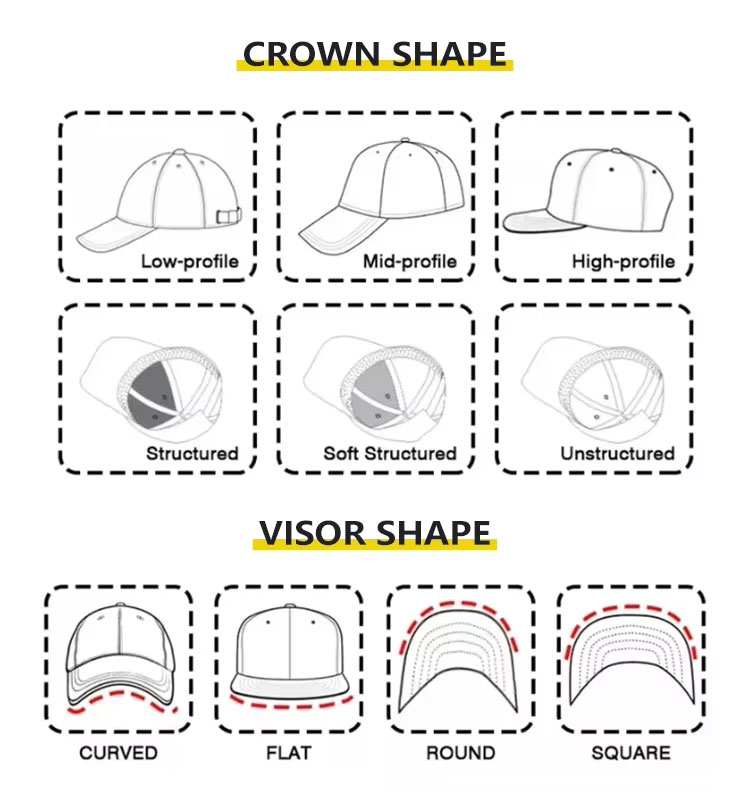
Brim: The brim can be longer or more structured when sun protection is a core function. The exact brim dimensions should be determined according to the intended application.
Crown depth: The crown can be deeper than a standard baseball cap. For sports and outdoor activities involving significant movement, a deeper crown can provide a more secure fit. Depending on the design, the crown may be around 1-2 cm deeper than a conventional baseball cap.
Back adjustment: The hat should have an appropriate adjustment system. Common options include a metal or plastic buckle, hook-and-loop closure, webbing adjustment, cord lock, or dial-based adjustment system. For adult hats, a head circumference range around 56-60 cm can be used as a common development reference, but the final size should be determined according to the target market and product design.
A dial-based adjustment system, such as the type commonly used in performance footwear and outdoor equipment, can provide precise fit adjustment and is suitable for certain performance hat designs.
For climbing and trekking hats: A detachable chin cord can be added to help keep the hat secure during windy conditions or active movement.
03 Process Choice – Durability Comes Before Decoration
The decoration process also needs to be considered together with the structure of the hat. A decoration that looks good on a fashion hat may not be the best choice for a lightweight performance hat.
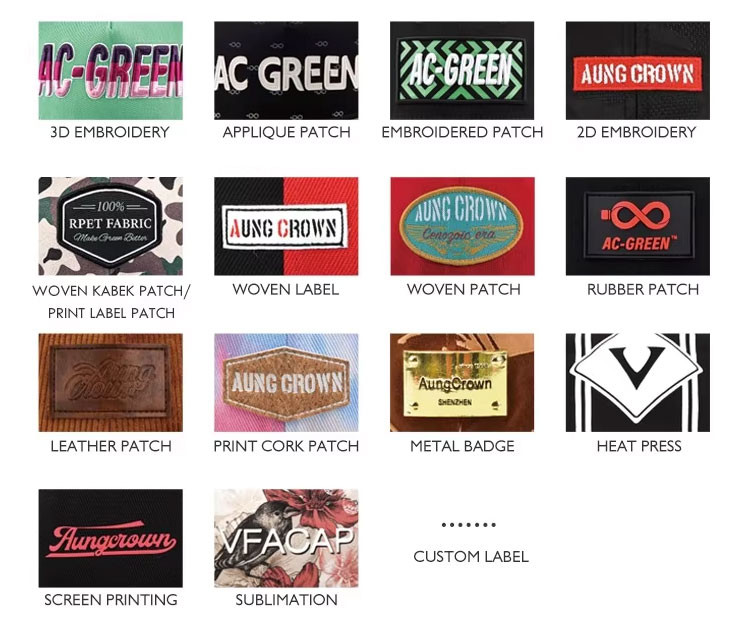
Large logos: Heat transfer or patch embroidery can be considered instead of large areas of dense embroidery. Heat transfer can add relatively little weight, while large areas of dense embroidery may increase weight and affect breathability, especially on lightweight performance fabrics.
Small logos: Flat embroidery is usually sufficient. 3D puff embroidery is less commonly used on performance hats because it adds visual volume without necessarily improving functionality.
Thread: High-tenacity polyester thread is generally suitable for performance hats because it provides good durability and resistance to moisture and repeated handling. Ordinary cotton thread may be less suitable for applications involving repeated folding, pulling, and exposure to moisture.
Brim stiffening: Steel wire or reinforced EVA can be considered when the brim needs to maintain its shape or allow adjustable shaping. The choice depends on the required flexibility, weight, durability, and final shape.
Some resin-based brim materials may lose their shape under certain heat or moisture conditions, depending on the material formulation and construction. Therefore, the reinforcement material should be selected according to the actual application rather than simply choosing the lowest-cost option.
04 Accessory Selection – The Hidden Cost of Details
Small components can have a significant effect on the final performance and comfort of a functional hat.
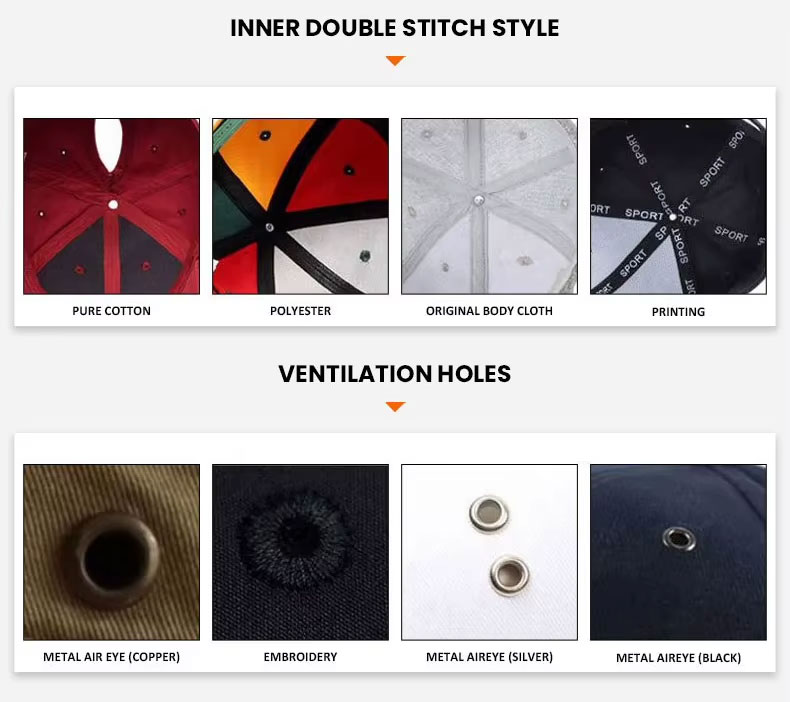
Sweatband: Use moisture-wicking fabric when sweat management is important.
Lining: Mesh fabric can be used to improve ventilation and reduce heat buildup.
Adjustment system: Buckles, hook-and-loop closures, cord locks, webbing, and dial-based systems can all be used depending on the required fit, adjustment range, and product positioning.
Labels and hangtags: Provide appropriate performance and care information. If the product is marketed with a UPF rating or other specific performance claims, the relevant testing and labeling requirements should be confirmed before production.
Real Development Case – A Hiking Hat That Required Three Samples
A client required a hiking hat with UPF 50+ sun protection, a steel-wire reinforced brim, a dial-based adjustment system, and detachable chin cords.
During the first sampling stage, we placed a heat-transfer logo on the front brim. However, the steel wire inside the brim made the surface uneven, making it difficult to press the transfer completely flat.
After two adjustments, the production yield was still only 60%.
The final solution was to move the logo to the side of the crown, leaving the brim plain for structural support and sun protection.
The revised construction increased the production yield to 98%, allowing the client to meet the delivery deadline.
This case shows why functional hat development needs to consider the fabric, structure, decoration, and accessories together. A decoration process that works well on a normal cap may create production problems when it is placed on a reinforced performance hat.
Final Takeaway
The logic for functional hats is simple: define the functional requirements first, then work backward to the fabric, pattern, process, and accessories.
Do not choose a good-looking fabric first and then try to determine what it can do. If the product needs sun protection, choose an appropriate UPF-rated fabric. If it needs water resistance, choose a suitable water-resistant construction.
Functionality comes first.

I’m Kailyn, the founder of Aung Crown. I’ve spent over a decade “in the trenches” of the hat and clothing trade, learning exactly what it takes to make a product stand out. I’m a bit of a perfectionist when it comes to design and quality, but that’s because I care about your brand’s success as much as you do. Whether you need production advice or post-sales support, I’ve got you covered every step of the way.