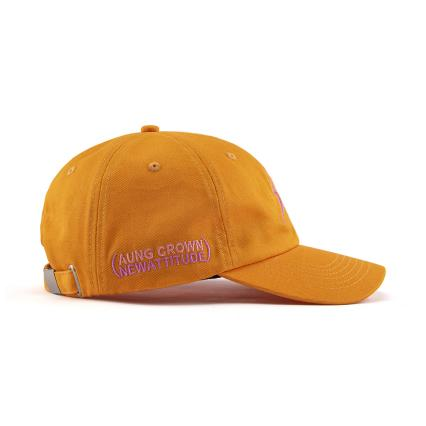
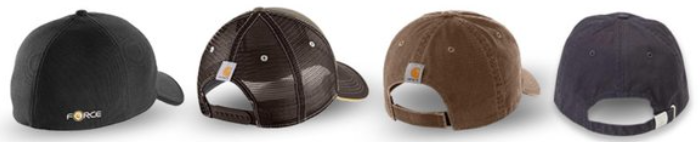
In the world of sports events, corporate team‑building, outdoor marketing campaigns, high‑end golf club merchandise, and summer sun protection gift customization, two hat styles are most frequently pitted against each other: the visor (sun visor) and the baseball cap. They may look similar at a glance (both have brims), but one is “open‑top” and the other is “closed‑top.” That seemingly simple structural difference actually dictates a completely different set of manufacturing processes – from pattern‑making and material selection to shaping and wearing comfort.
Many buyers mistakenly assume that a visor is simply a baseball cap “with the crown cut off,” and try to apply the same production logic to both. The result? A brim that loses its shape, a sweatband that chafes the forehead, or an adjustable strap that digs in uncomfortably. Today, we’re breaking down the fundamental differences between these two styles from our 28+ years of professional experience in hat making – so you can make the right call when it comes to custom orders.
1. Differences in Structure and Visual Styles

| Visor | Baseball Cap | |
| Core Structure | A hollow-top crown + a front brim+ an inner sweatband + back adjustable closure. | A complete 6-panel or 5-panel crown + a front brim + a top button + eyelets + back closure. |
| Visual Styles | Lightweight, sporty, breathable, cool, and trendy. | Casual, classic, streetwear, and full sun protection for the head. |
| Functional Tags | Visors are engineered for sun protection with a strong emphasis on top‑of‑head heat dissipation. | Baseball caps, on the other hand, are built for sun protection with full‑head coverage, warmth retention, and wind resistance. |
2. Craftsmanship Challenges and Precision Thresholds (Core Differences)

| Visor | Baseball Cap | |
| The First Challenge | The brim curve and stability: Without the support of the crown, the whole structure relies on the brim, which is very prone to blending, lifting, and asymmetry. | The plump crown: 5/6 panels are stitched into a round and non-collapsible shape, which can be worn for a long time without deformation. |
| The Second Challenge | Sweatband and fit: Sweatband directly touches our forehead sweat glands. Therefore, sweatbands need to be moisture-wicking, quick-drying, soft, and non-friction on our skin at the same time. | Inner cozy design: Sweatband + mesh back or eyelets can ensure moisture-wicking and not sticky and hot at the same time. |
| The Third Challenge | Back closure: Because of the hollow-top design, the back adjustable closure needs to be more accurately tailored to different head circumferences. If it’s too loose, the visor is very easy to slide down; if it’s too tight, the visor is very likely to leave a red mark on the forehead from the pressure. | Back closure and the whole proportion: The adjustable closure needs to be in proportion with the whole proportion, which won’t affect the whole silhouette. |
| Common Pitfalls(Areas prone to failure) | Brim deformation, sweatband yellowing or hardening, buckle breakage, or headband seam unraveling. | crown collapse, brim bubbling or delamination, persistent sweatband odor, or buckles that catch or pull hair. |
For visors, the brim operates as a standalone structure – there is no crown fabric to pull or stabilize it. This demands a high‑density, anti‑bending brim stiffener (such as reinforced PE board or memory EVA), which is then heat‑pressed and shaped to achieve a naturally curved, resilient form. Low‑quality visors use ordinary cardboard for the brim; after exposure to sweat or sunlight, they warp quickly, becoming asymmetrical and damaging the brand’s image.
For baseball caps, while the brim also has an internal stiffener, the six‑panel crown fabric interconnects and shares some of the stress, so the brim stiffener doesn’t need to be as rigid as that of a visor. However, the crown shaping of a baseball cap presents its own challenge: precise panel curvature and heat‑press molds are required to create a rounded, full dome effect, without over‑hardening the structure.
3. Differences in Choices of Fabric and Trims

| Visor | Baseball Cap | |
| Preferred Fabrics | Lightweight, quick-drying, and breathable fabrics like mesh polyester, functional knitted fabrics, and Coolmax composite fabrics. | Cotton, cotton-polyester blends, and canvas that can combine comfort and structural silhouettes. |
| Visor Insert | Reinforced PE boards (bending resistance and sweat resistance) or high-elastic EVA. | Standard PE boards or paper backing (for applications with slightly lower strength requirements). |
| Sweatband | Key components – utilizing versatile Coolmax terry cloth or bamboo charcoal fiber – are required to provide rapid moisture absorption, antibacterial properties, and odor resistance. | Cotton or Coollmax sweatbands. |
| Back Adjustable Closure | Typically features Velcro or silicone non-slip fasteners and needs to be lightweight and snag-free. | Metal buckle, plastic snap, or Velcro. |
Here is the conclusion: Visor caps: most costs are on inner brim inserts and sweatbands; baseball caps: costs are split more between fabric weights and inner linings. Heat dissipation performance
4. Wearing Experience and Suitable Scenarios

| Visor | Baseball Cap | |
| Heat Dissipation Performance | Super excellent (hollow-top design lets heat dissipate very easily). | General (rely on eyelets and mesh-back designs, still with a hot, sticky sense). |
| Sun Protection Range | Only for forehead and eyes. | Full-head protection including the top of the head for more comprehensive sun protection. |
| Effect on Hairstyles | Won’t flatten the hair at the crown; perfect for style-conscious individuals. | It flattens the hair, and there may be “hat marks” after taking it off. |
| Suitable Activities | Golf, tennis, running, cycling, beach activities, outdoor exhibitions (high-temperature environments). | Daily commuting, baseball, corporate team-building, and creative merchandise/gifts. |
| Best for Seasons | Spring and summer | All seasons |
| Brand Tones | Energetic · Dynamic · Contemporary · Premium Performance | Timeless · Approachable · Casual · Everyday |
5. Production Cost and Custom Lead Time

| Visor | Baseball Cap | |
| The Complexity of Sampling | Medium (the curve of the brim needs to be tested many times, and the accuracy of the elastic head band also needs to be tested.) | Pretty tough (the stitching of panels needs accurate tailoring, and the hat shape needs to be tested many times) |
| Production Process | About 20 to 25 processes (simplify the crown stitching, but enhance the brim heat-pressing and sweatband attachment process) | About 30 to 33 processes including stitching, embroidering, shaping, etc. |
| Production Cycle | About 15 to 20 days | About 20 to 25 days (for complex embroidery or special crafts, the whole production cycle will be longer) |
| Unit Cost | Medium (fewer trims with higher demand for functional fabrics) | Medium-high (high fabric consumption and complex craftsmanship) |
6. Key Strategic Points While Customizing for Sourcing

- If your event takes place in a hot outdoor summer setting – such as a marathon, music festival, or golf invitational – go with visors. They offer superior heat dissipation, which increases participant willingness to wear them, and the open‑top design helps the brand logo stand out more prominently on the brim.
- If you’re looking for year‑round versatility, consistent brand image, and broad head‑shape compatibility, choose baseball caps. They’re classic, universally appealing, and suitable for everyday wear across a wide range of users.
- If your brand emphasizes “professional sports” or “fashion‑forward luxury,” the visor’s golf/tennis DNA naturally conveys that premium, athletic aesthetic. If your brand leans toward “streetwear culture” or “team cohesion,” the baseball cap is the better fit.
- Regarding logo embroidery: Visors have limited brim space – embroidery is typically placed on the front or side of the brim, so it’s essential to confirm design size and techniques (appliqué, flat embroidery, or 3D puff embroidery) in advance. Baseball caps, on the other hand, offer a larger crown surface, allowing for embroidery on the front, side, and even back panels.
7. How Is Premium Quality Guaranteed? – Aung Crown’s Approach
Whether it’s a visor or a baseball cap, we adhere to a 33‑step quality inspection protocol – but with dedicated checkpoints tailored to each hat style:
Visor‑specific inspections: Brim flex fatigue testing (200 repeated bends without deformation), sweatband moisture‑wicking and quick‑dry performance testing, and buckle tensile strength testing.
Baseball cap‑specific inspections: Instrument‑measured crown fullness, brim symmetry checks, and sweatband antibacterial/odor‑resistant treatment verification.
With over 28 years of hat‑making experience and custom services for 30,000+ brands worldwide, we know that “one extra heat‑press step” or “one less stitch” can make all the difference in how the finished product feels. That’s why we’ve built a dedicated process database for each hat style – ensuring consistent, reliable quality across every bulk order.
FAQs about Visor Caps and Baseball Caps
Aung Crown – Since 1998, a Shenzhen‑based original hat manufacturer specializing in custom premium sports and casual headwear. With our own pattern‑making center and in‑house quality assurance lab, we deliver both the breezy elegance of visors and the timeless versatility of baseball caps – all to the highest craftsmanship standards.
Got a design or reference sample? Reach out to us for a free consultation and expert process recommendations. We’re here to bring your vision to life.

Having studied in the U.S., I now lead the global digital operations at Aung Crown. My passion lies in blending fashion trends and musical inspiration into the B2B landscape, allowing me to share the unique craftsmanship of Chinese hat-making with a global audience.