A Misunderstood Material
“100% polyester” – when many people see this label, their first thought is: not breathable, stuffy, and cheap.

But is that really the case?
As a hat factory that has been in business for over 20 years, we work with all kinds of fabrics every day. Today, I want to give you an insider’s perspective on polyester (PET) in the hat industry.
Let’s Start with the Bottom Line
Polyester itself is neither good nor bad – it all comes down to how and where it is used.
Polyester (PET) has certain properties that make it the best choice in some scenarios, while in others, it may not be ideal.
Key Advantages of Polyester
| Property | Explanation |
|---|---|
| High strength | Resistant to tearing and pulling |
| Excellent abrasion resistance | Resists pilling even with long-term use |
| Dimensional stability | Won’t shrink or deform – hats keep their shape over time |
| Good wrinkle resistance | Stays crisp without ironing |
These properties are exactly why:
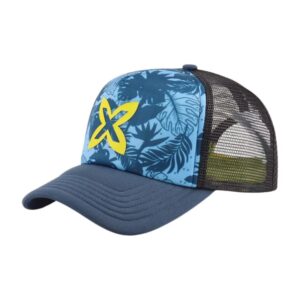
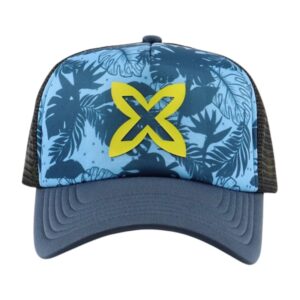
Sports caps, outdoor caps, cycling caps, running caps, and even many international brand baseball caps rely heavily on polyester fabrics.
Clearing Up the “Moisture Wicking” Myth
Many people think “moisture wicking” means the fabric actively absorbs water. But polyester itself barely absorbs any moisture – its standard moisture regain is only about 0.4%, while cotton’s is roughly 8.5%.
What this actually means:
- Polyester dries very quickly when wet
- Effective sweat transfer depends more on yarn structure, weaving method, and finishing treatments than on the fiber itself
- True moisture management comes from fabric engineering, not from the fiber’s natural absorbency
So saying “polyester doesn’t absorb sweat” is both true and false – it doesn’t absorb moisture, but that’s exactly why it dries faster.
Where Does Polyester Fall Short?
Plain polyester fabrics do have some drawbacks:
- Limited skin‑friendly moisture absorption – the feel is less soft than natural fibers
- If the fabric density is too high, breathability can be compromised in hot weather
But these issues can be addressed through advanced processing. Premium hats today often incorporate:
- ✅ Irregular cross‑section fibers (better moisture channels)
- ✅ Moisture‑wicking modified polyester
- ✅ Cooling finishes
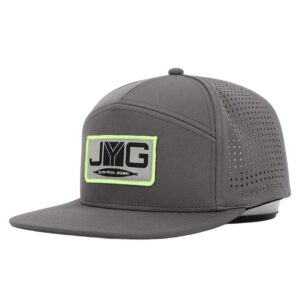
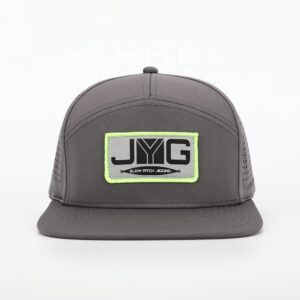
- ✅ Laser‑cut ventilation holes
- ✅ Mesh panel inserts
Our 3 Rules for Choosing Hat Fabrics
After six years in the hat business, we evaluate fabrics based on three criteria:
1. Intended Use
| Hat Type | Recommended Fabric | Why |
|---|---|---|
| Running caps, cycling caps | Polyester preferred | Lightweight, quick‑drying, durable |
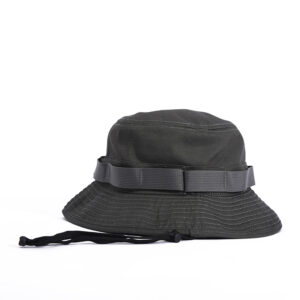
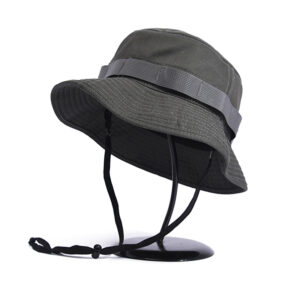
| Golf hats, outdoor hats | Polyester preferred | UV protection, sweat management, shape retention |
| Everyday casual hats | Cotton / blends optional | Comfort and softness |
2. Brand Identity & Style
- Retro / Americana / vintage styles → twill, canvas, corduroy (cotton‑based) are more fitting
- Sporty / tech‑wear / modern streetwear → polyester and functional fabrics work better
When style expression matters more than performance, we prioritise fabric texture and hand‑feel.
3. Budget
Even within the polyester category, price varies significantly:
| Polyester Type | Characteristics | Cost |
|---|---|---|
| Standard PET | Basic performance for everyday use | 💰 |
| Functional polyester | Moisture‑wicking, cooling, antibacterial | 💰💰 |
| Recycled polyester (rPET) | Eco‑friendly, higher quality | 💰💰💰 |
You get what you pay for – raw material grade, weaving quality, and finishing processes all affect the final product.
A Frequently Overlooked Truth
Many clients focus too much on “what fabric is this?” and miss a crucial point:
The quality of a hat is never determined solely by the fabric composition.
It also depends on:
- Fabric weight, density, and weave
- Finishing processes (e.g., washing, setting, UV treatment)
- Cutting precision
- Lining materials (sweatbands, interlinings)
- Brim construction (inner stiffeners, stitching)
- Sewing craftsmanship
Many high‑end brands also use polyester, but they invest heavily in raw material grades, weaving technology, and production details – which is why their finished hats feel and perform on a completely different level.

So, Is Polyester Good or Not?
Whenever a client asks me, “Is polyester fabric good?” I always ask back:
“In what setting will this hat be worn?”
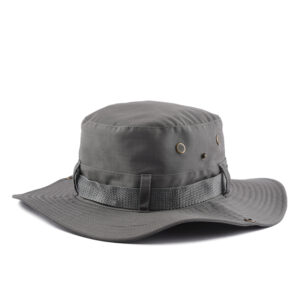
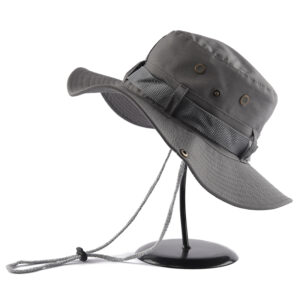
- For sports, outdoor activities, or hot summer sun, polyester is an excellent choice.
- For daily commuting or when you prioritise softness against the skin, cotton or cotton blends might be better.
- If you want a rugged, vintage look with structure, canvas or twill might be the way to go.
The right fabric for the right use is the truly good fabric.
Summary From Aung Crown
Polyester is not a dirty word for “cheap”, and cotton is not the only marker of “premium”. As a factory with six years of experience making hats, we believe:
Great products aren’t made with the most expensive materials – they’re made with the most suitable ones.
I hope this article gives you a more balanced view of polyester fabrics. If you have any questions about hat fabrics, craftsmanship, or custom orders, feel free to leave a comment – we’d love to chat.
🧢 About Us
As a custom hat factory with over 20 years of hat manufacturing experience, we have served over 30, 000 international brands. From fabric selection to production, we offer one‑stop custom hat solutions.
Make the rights hat with the right materials.

I have over 25 years of experience in hat and apparel manufacturing. With a steady and detail-oriented approach, I oversee factory production and team operations, ensuring reliable quality and on-time delivery for customers worldwide