Introduction
Let’s first learn about the many varieties of cotton. Based on the cultivated varieties of cotton and the length and thickness of the fibers, they can be classified into three major categories.
Types of cotton
Coarse cotton (outdated cotton)

Also known as Asian cotton, it refers to various varieties of cotton, including Chinese cotton and wild cotton. The fibers are short, coarse, and elastic. Due to their short length, coarse and stiff fibers, white or whitish color, and lack of luster, this type of cotton has low use value and low yield per unit area. It has been basically phased out in China, and there is no commercial cotton production of it in the world.
Fine cotton (the most common type of cotton)
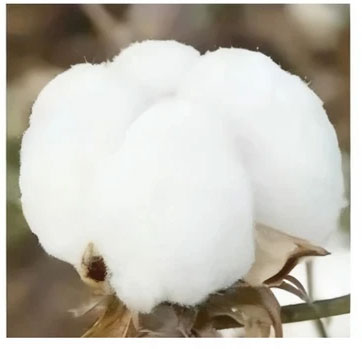
Also known as upland cotton, it refers to cotton varieties with medium fiber fineness and length, pure white or milky white color, and a silky luster, capable of producing fine yarn of 11-100 tex (60-6 English count). Upland cotton accounts for 85% of the world’s total cotton production and is currently the most important cultivated cotton variety in my country.
Fleece cotton (the highest grade of cotton)
Also known as Sea Island cotton, it refers to various varieties of Sea Island cotton and hybrid cotton. It has long, fine, and soft fibers, a creamy white or pale yellow color, and a silky luster.
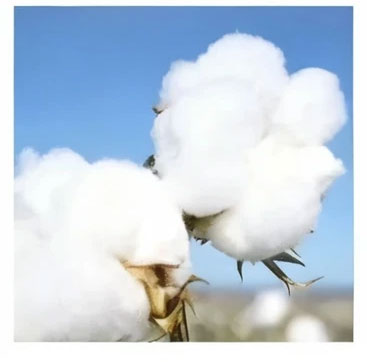
It is of excellent quality and is the raw material for producing cotton yarn below 10 tex. Currently, major countries producing long-staple cotton include Egypt, Sudan, the United States, Morocco, and Central Asian countries. In China the main production bases for long-staple cotton are located in parts of Xinjiang. Long-staple cotton can be further divided into extra-long staple cotton and medium-long staple cotton.
Key factors affecting cotton quality
Due to differences in cotton varieties, growing environments, planting and harvesting methods, the cotton produced varies considerably in fiber characteristics and price. Among these factors, the most critical to quality are the cotton fiber length and the harvesting method.
Long-fiber cotton vs. short-fiber cotton
When people think of cotton, they immediately picture white, fibrous, spherical flowers growing on branches in cotton fields. These flower-like white structures are called “cotton bolls.” They are actually the fruit of the cotton tree. After the cotton flower is pollinated and produces cotton seeds, the fuzz on the cotton seeds grows out of the seed coat, gradually filling the inside of the fruit and eventually bursting through the seed coat to form the shape.
The cotton we are generally familiar with is the cotton plant that has gone through flowering and fruiting, and finally the fibers growing from the cottonseed break through the outer shell of the fruit.
Cotton fibers growing on cottonseeds can be classified according to their length into extra-long fiber cotton (2.5 to 6.5 mm), long fiber cotton (1.3 to 3.3 mm), and short fiber cotton (1 to 2.5 mm).
Generally speaking, the longer the cotton fibers, the fewer fiber ends are exposed when spun into yarn, resulting in softer and lighter fabrics, suitable for making high-end clothing, intimate bedding, towels, etc. On the other hand, short-fiber cotton has more fiber ends exposed when spun into yarn, making it coarser, and is often used to make durable and washable everyday clothing, such as denim.
Hand-picked cotton vs. machine-harvested cotton
Besides the fiber length, the harvesting method also affects the quality of cotton. High-grade cotton products are almost all made from hand-picked cotton. This is not only because hand-picked cotton preserves the fibers intact, but also because cotton fruits mature from the bottom of the plant. Hand-picking allows for harvesting the lower cotton first, followed by harvesting the upper cotton one or two months later, instead of pulling the plant up like machine harvesting. Machine harvesting not only damages the fibers, but machine oil and dust can also contaminate them.
When harvesting cotton by hand, you must grasp the bottom of the cotton boll with all five fingers to minimize damage to the fibers.
The machine harvesting process mixes impurities such as dead branches and sand into the cotton, which causes significant damage to the fibers.
Xinjiang, Egyptian, or Pima? What’s the Difference?
When buying hats or clothes, we often see sellers claiming it’s made of Xinjiang cotton or Egyptian long-staple cotton, and in the last year or two, they’ve been heavily promoting Pima cotton; to the point that we’re often confused. Let’s take a look at the differences between these three types of cotton.
Xinjiang cotton, Egyptian cotton, and Pima cotton are actually representative of three regions. Why are the cottons from these three places so famous? Mainly because of the climate. The quality of cotton is closely related to the climate, such as length, fineness, micronaire value, etc.
Xinjiang cotton
Xinjiang cotton is mainly divided into short-staple cotton and long-staple cotton. The difference between the two lies in their fineness and length; long-staple cotton is definitely better in both length and fineness than short-staple cotton. Due to the weather and concentrated production area, Xinjiang cotton is the best in terms of color, length, foreign fiber content, and strength compared to cotton from other production areas in China.
Therefore, fabrics woven from Xinjiang cotton yarn have good moisture absorption and breathability, good luster, higher strength, and fewer yarn defects, making them a representative of the quality of pure cotton fabrics in China. At the same time, cotton quilts made from Xinjiang cotton have good fiber fluffiness, resulting in good warmth retention.
Xinjiang’s unique natural conditions—alkaline soil, abundant sunshine, and a long growing season—result in superior cotton quality. Xinjiang cotton is soft, comfortable to the touch, highly absorbent, and of far higher quality than other types of cotton.
Xinjiang cotton is produced in both southern and northern Xinjiang, with Aksu being the main production area and a high-quality cotton production base. It has now become a trading and distribution center for Xinjiang cotton and a hub for the light textile industry. Xinjiang cotton is known for its pure white color and strong tensile strength, making it the most promising newly developed cotton-producing region. Xinjiang boasts abundant water and soil resources, but its arid climate and low rainfall make it the main cotton-producing area, accounting for 80% of Xinjiang’s cotton production. It is a major production base for long-staple cotton. Ample sunshine and water resources, with snowmelt providing abundant irrigation for the cotton fields, further enhance its appeal.
What exactly is long-staple cotton? How does it differ from regular cotton? Long-staple cotton, as opposed to short-staple cotton, refers to cotton with fibers longer than 33mm. Also known as Sea Island cotton, it is a cultivated cotton variety. Long-staple cotton has a longer growth cycle and requires more heat; its growth period is generally 10-15 days longer than that of upland cotton.
Egyptian cotton
Egyptian cotton is divided into short-staple and long-staple varieties, but we generally refer to long-staple cotton. Egyptian cotton is produced in many different regions, with the long-staple cotton from the Giza 45 region being of the highest quality and produced in very limited quantities. Egyptian long-staple cotton has better fiber length, fineness, and maturity than Xinjiang cotton.
Egyptian long-staple cotton is generally used to produce high-end fabrics, mainly spun into fabrics with a count of 80 or higher. The fabrics woven from it have a silk-like luster. Because of its long fibers and good cohesion, it has excellent strength. Its high moisture regain also makes it excellent for dyeing. The price is generally around 1000-2000.
Egyptian cotton is a symbol of the highest quality in the cotton industry, considered one of the world’s finest cotton varieties, alongside West Indian Wisic cotton and Indian SUVIN cotton. West Indian Wisic and Indian SUVIN cotton are now extremely rare, accounting for only 0.00004% of global cotton production. Their fabrics are of royal quality, commanding exorbitant prices, and are currently not used in bedding. Egyptian cotton has a slightly higher production volume, and its fabric quality is not significantly different from the aforementioned two types. Currently, almost all of the highest quality bedding on the market uses Egyptian cotton.
Ordinary cotton is machine-picked and then bleached with chemical reagents, which weakens the cotton and damages its internal structure, making it harder and less lustrous with repeated washing.
Egyptian cotton is entirely hand-picked and combed to visually assess its quality, avoiding damage from mechanical harvesting and resulting in fine, long cotton fibers. It is highly clean, pollution-free, contains no added chemicals, and has zero harmful substances. The cotton’s structure remains intact, and it will not harden even after multiple washes, retaining its original softness.
The biggest advantage of Egyptian cotton is that its fibers are fine and strong. Therefore, for the same count yarn, Egyptian cotton can spin in more fibers than ordinary cotton, resulting in yarn with higher strength, better resilience, and greater toughness.
Smooth as silk, with excellent uniformity and high strength, Egyptian cotton yarn is extremely fine. Essentially, the yarn can be used directly without plying; after mercerizing, the resulting fabric is as smooth as silk.
Egyptian cotton has a growth cycle that is 10 to 15 days longer than that of ordinary cotton. It receives more sunshine, has a higher maturity, longer cotton fibers, a better feel, and is of far superior quality to ordinary cotton.
Pima Cotton
Pima cotton has become quite popular in the last two years. It belongs to the long-staple cotton category and is mainly produced in the United States and Peru. Because of its longer fibers, the fabric is softer and has better drape. However, cotton length is only one aspect of quality, so overall, Egyptian long-staple cotton is superior.
The Past and Present of Pima Cotton
Pima cotton is a general term for premium extra-long staple cotton, which is mainly grown in the western and southwestern United States, Peru, Egypt, and other regions.
Its history can be traced back to its cotton ancestor, the famous Sea Island cotton from the southwestern United States 1,700 years ago. After more than 20 years of research and development, and continuous cultivation and improvement, this cotton has been successfully cultivated into the Pima cotton we know today.

Pima cotton, also known as SUPIMA cotton, enjoys the reputation of being “soft gold among cotton” and “noble among cotton”.
Due to limitations in its production area and special growing environment, Pima cotton production is relatively low, accounting for only about 3% of the world’s cotton production. As a result, it is scarce and therefore commands a higher price.

Advantages of Pima cotton
1. Longer and tougher fibers
Pima cotton fibers are up to 40mm long, about 35% longer than ordinary cotton, allowing for the formation of denser, softer, and higher-quality fabrics during the spinning process. Furthermore, Pima cotton fibers are about 45% stronger than ordinary cotton, resulting in products that are more durable, less prone to tearing, and have a softer, more comfortable feel.
2. Better gloss
Pima cotton has a very strong luster, and the finished products woven from it are soft and smooth, as delicate as silk, and have a great drape.
Comparison of luster between Pima cotton and other cotton varieties
3. Better color rendering and color fastness
The finer fibers give it excellent color rendering and colorfastness. It can better present the printing and dyeing effect, and it is not easy to fade even after repeated washing and use.

I have over 25 years of experience in hat and apparel manufacturing. With a steady and detail-oriented approach, I oversee factory production and team operations, ensuring reliable quality and on-time delivery for customers worldwide