You grab a T-shirt in size M, try it on, and it’s perfect. Next week, you buy another M from a different brand – and it’s either skin-tight or baggy.

Did you suddenly change shape? Probably not. The truth is simpler and more frustrating: S/M/L/XL are not universal measurements. They’re just each brand’s own labels.
Here’s how to stop playing the guessing game and start buying clothes that fit – whether you’re shopping for tops or bottoms.
Why Does the Same Letter Fit So Differently?
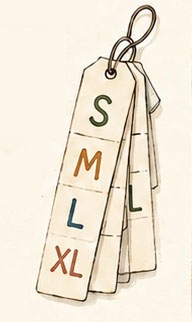
1. Brands target different body types
- Youth-oriented, slim-fit brands tend to run smaller.
- Workwear or mass-market brands often cut looser for comfort.
2. Garment styles change everything
- Slim fit -> close to the body
- Regular fit -> middle of the road
- Oversized / relaxed -> intentionally bigger
- Drop shoulder -> shoulder seam drops down
- Cropped -> shorter hem by design
3. Regional sizing habits vary

European, Asian, and US brands use different reference bodies. What’s a “medium” in one region may be a “small” or “large” in another.
4. Brand psychology
Some brands make sizes more “generous” so you feel thinner; others stay true to a slender aesthetic. It’s all part of their strategy.
Bottom line: A size letter is a brand’s own category, not a ruler. Never assume it travels across labels.
Buying Tops – Stop Asking “What’s My Size?”
Start with: “What are the actual measurements?”

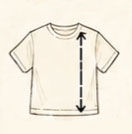

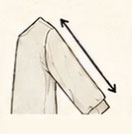
Key measurements for tops

- Shoulder width – determines if the shoulders bind or droop
- Chest (bust) circumference – decides if it feels tight
- Body length – affects your overall proportion
- Sleeve length – makes the look neat or sloppy
The smartest first step
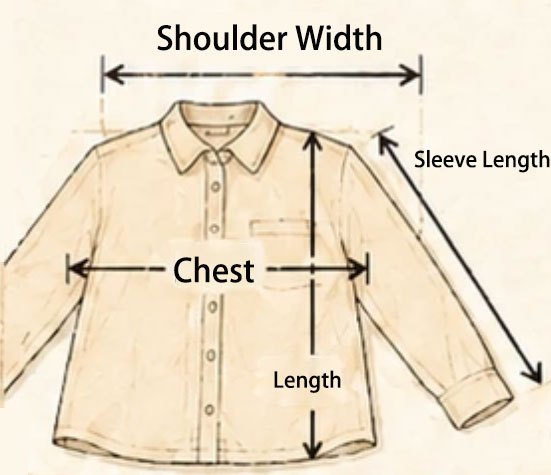
Take your best-fitting old top, lay it flat, and measure:
- Shoulder width
- Chest width (armpit to armpit)
- Length (from shoulder seam to hem)
- Sleeve length
Use these numbers as your personal benchmark. Measuring a well-worn garment is often more reliable than measuring your own body – because it already accounts for the ease and comfort you like.
Before you click “buy”
- Check the size chart – compare every key number.
- Note the fit style – slim, regular, or oversized.
- Check fabric stretch – no stretch means less room for error.
- Read model info and customer reviews – they often reveal if it runs large or small.
- Ignore “recommended weight” – it’s too vague.
If you’re between sizes
- For slim fits, size up.
- For oversized styles, don’t automatically size up – you might drown in it.
- With non-stretch fabrics, be extra cautious.
Top rule: Shoulder, chest, and length matter more than the letter on the tag.
Buying Bottoms – Even Trickier Than Tops
Pants depend on multiple curves, so a single letter almost never tells the whole story.


Key measurements for bottoms
- Waist – does it close?
- Hip – does it pull when you sit?
- Thigh – do you have room to walk comfortably?
- Inseam / length – do you need tailoring?
- Fabric stretch – the higher the stretch, the more forgiving.
The smartest first step
Find your best-fitting old pants, lay them flat, and measure:
- Waist width
- Hip width (at the widest point)
- Thigh width (just below the crotch)
- Inseam (from crotch to hem)
Always compare these numbers to the new item’s size chart. Never rely on suggested height/weight alone – it ignores body shape.
Before you check out
- Study the size chart – every centimeter counts.
- Check the fabric – stretchy or rigid?
- Know the silhouette – straight, relaxed, tapered, or skinny?
- Scan reviews for real-world clues – look for words like:
- runs small / large
- tight in waist / hip / thigh
- no stretch at all
Choosing between sizes
- If waist is fine but hips/thighs often feel tight, prioritise those areas – they’re harder to adjust.
- Length can be hemmed; hip and thigh cannot.
- Always size for the tightest point – usually hips or thighs – then adjust waist with a belt or tailor.
Bottom rule: Fit is about waist, hip, and thigh – not the letter on the hanger.
Final Takeaway
- Size letters are directional, not definitive.
- Your own measurements (from clothes you already love) are your true guide.
- Always cross-reference with the brand’s size chart, fit description, and customer feedback.
- For tops: focus on shoulder, chest, length.
- For bottoms: focus on waist, hip, thigh, and stretch.
Next time you shop, ignore the M or L – grab a tape measure instead. Your wardrobe (and your comfort) will thank you.

In short: size letters are just a reference; the size chart is key. Next time you buy clothes, don’t let an M or L dictate your choices.

I have over 25 years of experience in hat and apparel manufacturing. With a steady and detail-oriented approach, I oversee factory production and team operations, ensuring reliable quality and on-time delivery for customers worldwide