What is corduroy fabric?
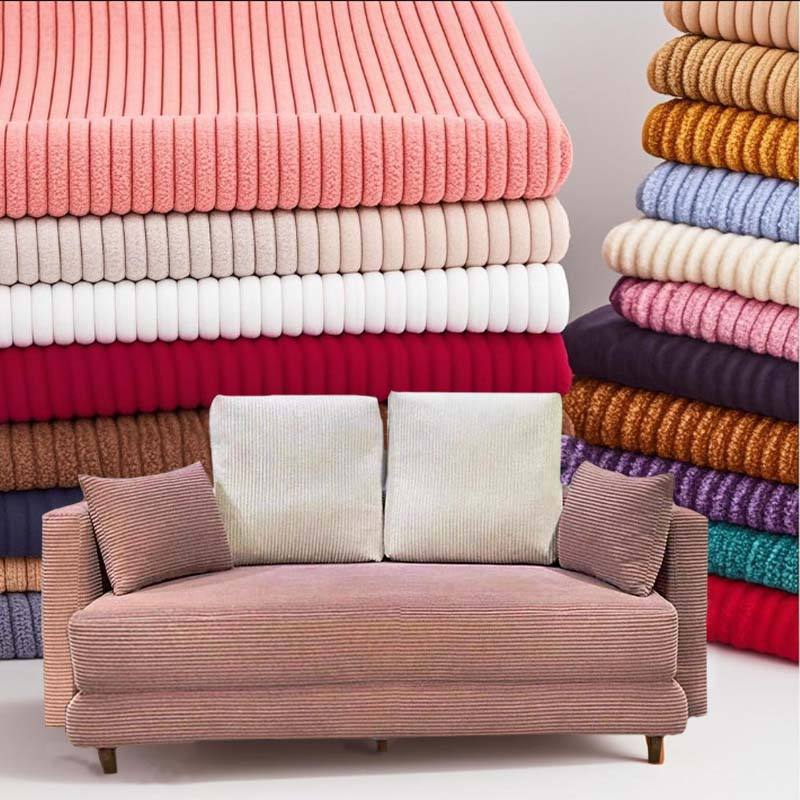
Corduroy is a cotton fabric with cut weft pile, resulting in longitudinal ribs on its surface. It is called corduroy because the ribs resemble the wicks of a lamp. Corduroy is generally made primarily of cotton, but it can also be blended or interwoven with fibers such as polyester , acrylic , and spandex . Corduroy is a cut-weft pile fabric, composed of a pile structure and a ground structure . After processing such as cutting and brushing, the fabric surface exhibits distinctly raised ribs resembling lamp wicks, hence its name.
Origin and Development
The prototype of corduroy began to appear in 18th-century England, and its English name was “Corduroy”Originating from the French”Corde du Roi”The King’s Cloth” originally meant “cloth for the king” and was exclusively for the royal family and nobility, inaccessible to ordinary people.

By the 19th century, it reached Britain and became practical, durable clothing for workers. Then, in the 1960s, The Beatles and pop culture gave it a cool revival. Today, vintage lovers and high-end designers alike keep corduroy in the spotlight.
Modern corduroy is lighter, thinner, and less prone to pilling, retaining its retro feel while expanding its usage scenarios.
How Is Corduroy Classified?
By ridge thickness (per 2.54 cm):
- Extra-fine: 19+ ridges – delicate and refined.
- Fine: 15–19 ridges – the most common choice.
- Medium: 9–14 ridges – balanced and classic.
- Coarse: 6–8 ridges – bold and rustic.
- Wide: fewer than 6 ridges – strong visual impact.
- Striped (alternating thick and thin ridges) – for extra variety.
By yarn structure:
- All-yarn corduroy
- Half-yarn (warp or weft blended)
- Full-yarn (both directions blended)
By finishing process:
- Dyed – solid, uniform color.
- Printed – patterns added on top.
- Yarn-dyed – yarns are colored before weaving, giving richer hues.
- Jacquard – woven-in patterns for a textured design.
Advantages of corduroy fabric:
- Corduroy fabric has full ribs, a good sense of standing, fine pile and soft hand feel, and is a natural fabric.
- Corduroy fabric is thick and durable, making it a popular choice for outerwear in spring and autumn due to its excellent warmth retention. It’s also commonly used in curtains, sofa upholstery, handicrafts, and toys for its comfortable feel.
- The color of corduroy fabric changes significantly. Modern corduroy is more drapey than traditional corduroy fabric, and its colors are more vibrant and bright. It also has a very smooth feel.
Disadvantages of corduroy fabric:
- The biggest drawback of corduroy fabric is that it easily attracts lint, which is difficult to remove. Therefore, it is best to dry corduroy inside out.
- Corduroy fabric is not very durable. Prolonged contact between the pile and the outside environment can cause the pile to shed.
- Corduroy fabric requires careful cleaning. It should not be rubbed vigorously during washing, and should never be scrubbed with a hard-bristled brush, as this will shorten its lifespan.
Where Corduroy Shines
Apparel:
- Kids’ wear – soft, sturdy, and stain-friendly.
- Adults – casual jeans, jackets, hoodies, and shirts; also dressy blazers and wide-leg trousers (the “quiet luxury” look).
- Functional wear – outdoor and sporty jackets with performance blends.
Home textiles:
- Sofa covers, curtains, cushions, and bedding – warm and cozy.
- Loungewear – pajamas, slippers, and house pants (a hot category for 2025).
Accessories & more:
- Bags, hats, scarves, gloves.
- Work aprons and DIY crafts – tough and reliable.
Corduroy fabric care
- Washing: Treat gently to avoid deformation of the corduroy stripes: Use warm water (below 30℃) and a neutral detergent to wash corduroy; do not use bleach! When hand washing, gently rub the corduroy stripes; do not rub them vigorously. When machine washing, select the “gentle” cycle and turn the fabric inside out to prevent wear and tear on the stripes. After washing, do not wring dry; gently squeeze out the water to avoid wrinkling the corduroy stripes.
- Drying: Dry inside out, away from direct sunlight: Corduroy should not be exposed to direct sunlight! Sunlight will cause the fabric to fade, harden, and the pile strips to deform. The correct way is to turn the fabric inside out and hang it in a well-ventilated, shady place to dry. After drying, you can gently pat the pile strips to restore its fluffiness.
- Storage: Hanging is recommended to avoid wrinkles: For long-term storage of corduroy clothing, it is best to hang it on a hanger and avoid folding it, as this can easily leave indentations and deform the corduroy strands. For corduroy home furnishings, pay attention to moisture prevention to avoid mold growth.
- Wrinkle Removal: Iron at a Low Temperature, Following the Pile Strands: When ironing corduroy clothes, pay attention to the temperature. Select the “low temperature” mode and iron on the reverse side of the fabric. Iron in the direction of the pile, and do not rub back and forth, otherwise you will flatten the pile and affect the appearance.

FAQ

I’m Kailyn, the founder of Aung Crown. I’ve spent over a decade “in the trenches” of the hat and clothing trade, learning exactly what it takes to make a product stand out. I’m a bit of a perfectionist when it comes to design and quality, but that’s because I care about your brand’s success as much as you do. Whether you need production advice or post-sales support, I’ve got you covered every step of the way.