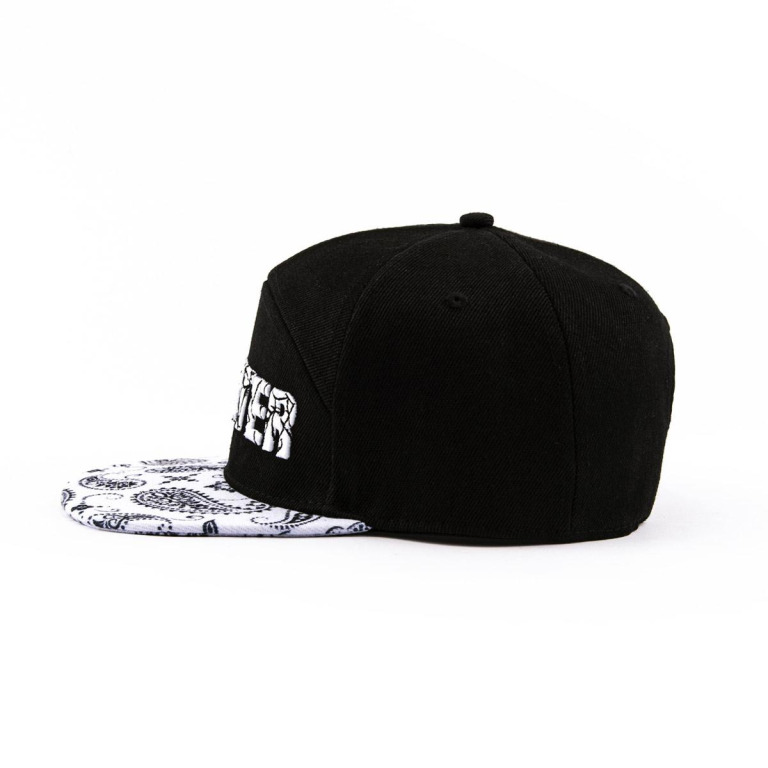
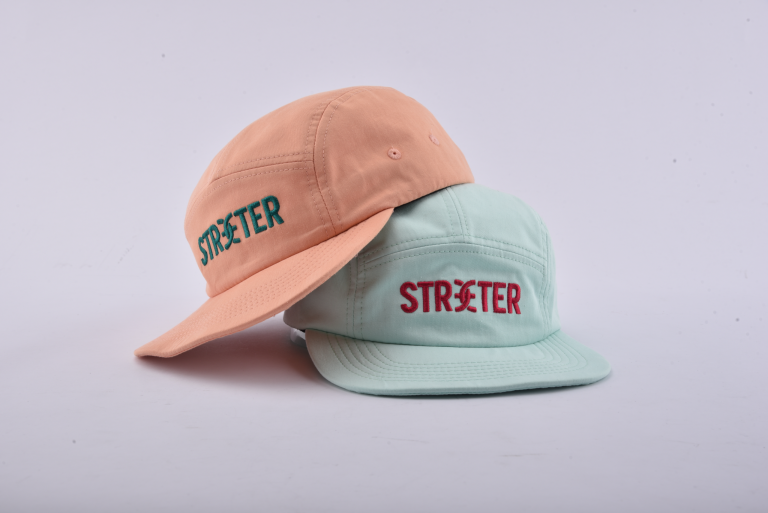
Cultivating the hat customization industry for 28+ years, we, Aung Crown (a professional custom hat manufacturer since 1998), have witnessed the hat-making leapfrog evolution, shifting from traditional craftsmanship to smart manufacturing. When personalized customization and soft supply chains have become the main industrial trend, custom hat manufacturers face the core problem that never changes – how to offer their clients the most suitable solution in a limited budget and within the cycle? From our 28+ years of experience in hat making, we are going deeply into the fundamental differences of these 3 core crafts – Jacquard, Printing, and Embroidery, combining the 2026 newest industrial trend to offer brands and buyers a considerable and practical insight into Jacquard, printing, and Embroidery.
The Craft Stone of Custom Hat Making
The fundamental differences of Jacquard, Printing, and Embroidery.
During the cloth decorative crafts, jacquard, printing, and embroidery are the most common crafts, differing from core crafts, visual effects, touching, and applying scenes. For customizing hats, understanding the fundamental differences between them is the first step to choosing the proper craftsmanship.
Jacquard – Woven in High-fashion Texture
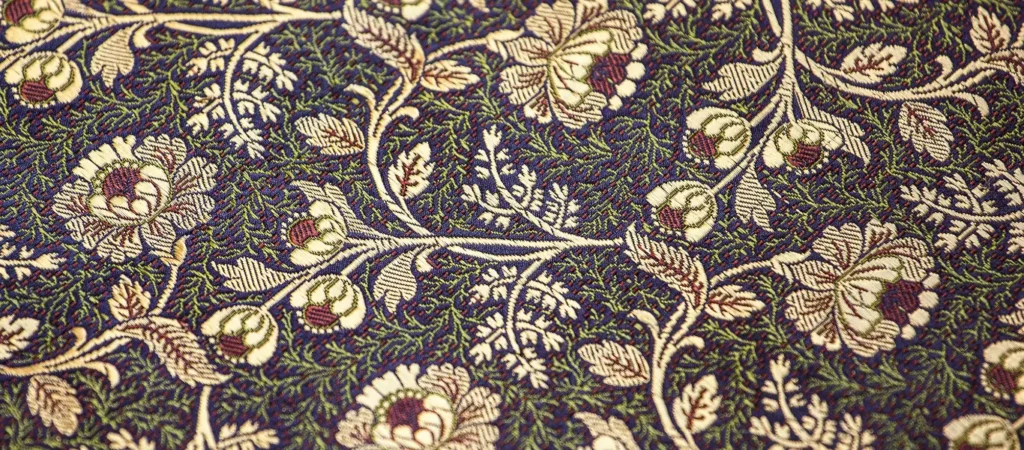
The essence of jacquard fabrics is their woven texture, and their patterns rely on the changes of woven structure; patterns are woven into the cloth rather than being produced via subsequent processing. In the custom hats field, jacquard is mainly used for knitted hats and bucket hats. Because patterns blend seamlessly with fabrics, patterns on the inner and outer of jacquard hats complement each other, with a fine and textured touch, which is not easy to fade or pill, and is excellent at breathability. This property makes jacquard craft popular among high-end top hats, brand giveaways, and these hats have a high demand for the fabric texture.
However, the shortcoming is obvious, which is complex in crafts, high in cost, and it’s very hard to change patterns after confirming the design.
However, for fast-fashion brands characterized by frequent style iterations, jacquard is not the optimal choice. But for brands that pursue a brand tone and long-term quality clients, the integrally molded texture that jacquard craft offers is very hard to replicate with printing and embroidery.
Printing – Balancing Color and Efficiency
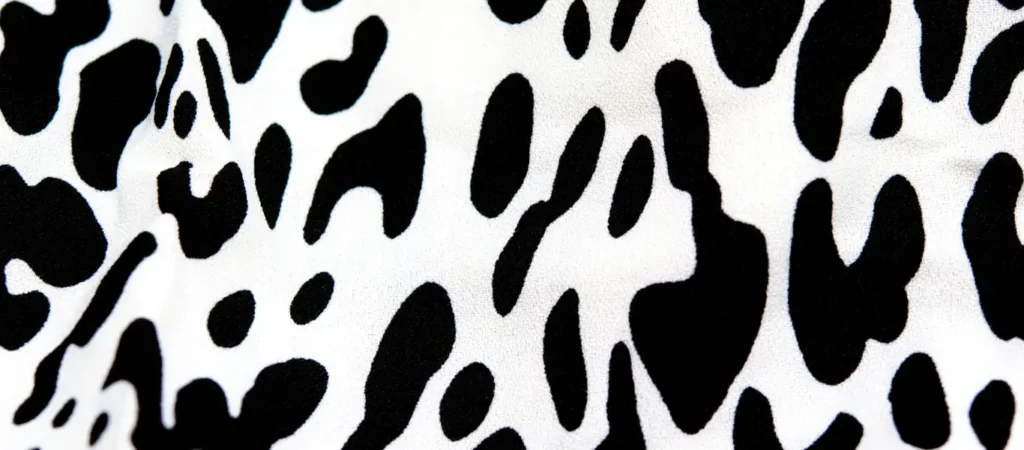
The essence of printing is to apply patterns to finished fabrics using dyes or pigments. In custom hats, printing is widely applied, from full-printed baseball caps to gradient bucket hats. All of these, printing can achieve colorful effects at a low cost.
The core advantage of printing is its high flexibility. The popularity of digital printing and reactive printing makes modifying patterns super easy, which is suitable for small bulk orders and orders of varieties. At the same time, printing is also suitable for bulk orders at a pretty low cost, which is the primary choice for most e-commerce brands and promotions. However, the limitation of printing is highly noticeable – the patterns lack a three-dimensional effect; some lower-end printing might result in fading, and its breathability is pretty poor. Therefore, for hats that need to be washed frequently and worn for a long time outdoors, the durability of printing needs to be evaluated with caution.
Embroidery – 3D and Exquisite Craftsmanship
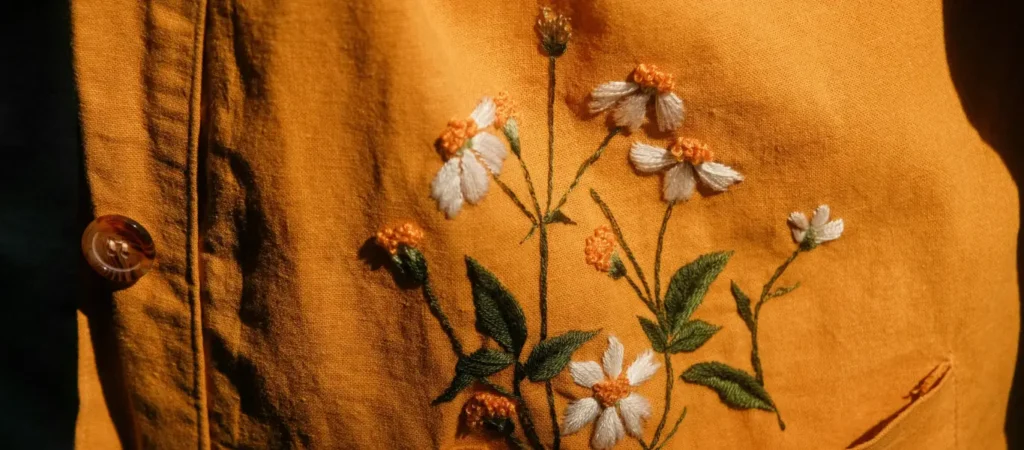
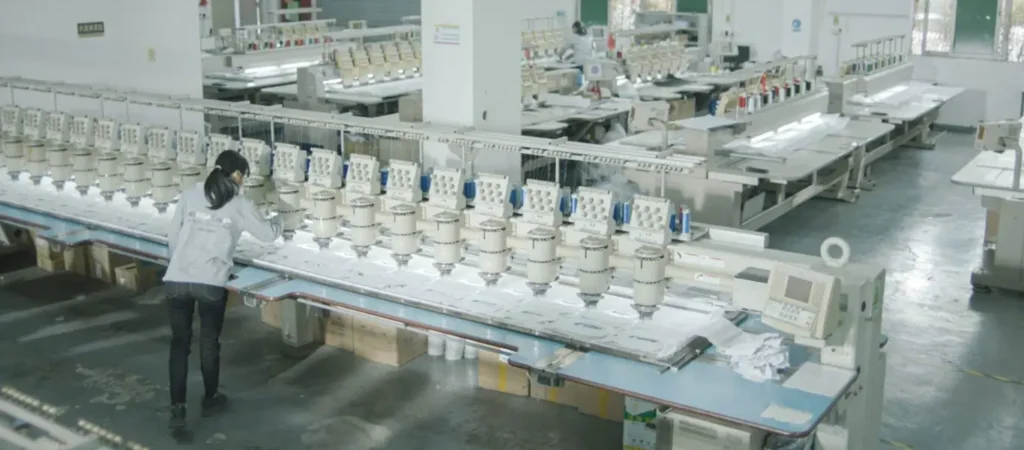
The essence of embroidery is to embroider patterns on the surface of finished fabrics using embroidered threads. In custom hats, embroidery is called the most maturely applied technique with the highest level of customer acceptance. From the logo on the front panel to the brand tag on the back panels, embroidery is the best carrier to showcase brand identity through its strong 3D sense and exquisite detail.
The main advantage of embroidery is its flexibility – patterns can be easily changed before production; it can also be produced by machines and can meet personalized demands. Particularly for brands that pursue distinctive clients, embroidered logos are more textured and more high-end than printed logos. However, the shortcoming of embroidery is pretty obvious – poor at breathability, and silk threads are prone to fraying under prolonged friction. Moreover, the large-scale embroidered pattern will add weight and cost. For the same pattern, the cost of embroidery is more expensive than printing, and the cost difference is mainly due to the complexity of crafts and consumable costs.
Comprehensive Sheet of These 3 Craftsmanship in Hat Making
From our real 28+ years of experience in hat making, here is the comparison of the dimensions of Jacquard, Printing, and Embroidery.
| Comparison Dimensions | Jacquard | Printing | Embroidery |
| The Essence of Craft | Woven pattern and texture. | Printing on the finished fabrics. | Embroider patterns and logos. |
| Visual Effect | Three-dimensional and full, with the front and back echoing each other. | Flatten effect and colorful. | Strong 3D sense and obvious layering. |
| Touching | Fine texture and seamlessly integrated with the fabric. | Consistent with the original fabric, with no raised texture. | The raised texture is layered and distinctly tactile. |
| Durability | Super great, no-fading, and no-pilling. | Medium; low-end printing might fade. | Great, silk threads are prone to fraying after prolonged friction. |
| Cost of Crafts | Pretty high with complex crafts. | Pretty low and suitable for bulk orders. | Medium-high, the larger the pattern, the higher the cost. |
| Design Flexibility | Low; it’s hard to change the design after confirming. | Super flexible; it’s very easy to change confirmed patterns. | Super flexible; it’s very flexible to change patterns. |
| Breathability | Good | Poor | Pretty Poor |
| Suitable Hat Types | Bucket hats, top hats, knit hats, beanies. | All types of hats. | Baseball caps, military hats, stiff hats. |
| MOQ (Minimum Order Quantity) | Pretty High(300-500+ pcs) | Pretty Low(50-100pcs) | Medium(100+ pcs) |
| Recommended Scenes | High-end custom and top hats. | Fast fashion and promotion hats | Brand logos and event commemorative caps |
Market Backgrounds
The chances and challenges of custom hats industry in 2026.
According to the newest research data from YHResearch, the 2025 global hat market was about 80.89¥billion, and it’s predicted that the 2032 global hat market can reach 101.68¥billion, and the compound annual growth rate is about 3.3%. The global hat market is stably increasing, and this is primarily attributable to consumers’ ongoing pursuit of personalization and style.
However, the increase in the global hat market hasn’t been easy. Nowadays, hat manufacturers still manufacture products for brands, particularly for numerous Chinese hat manufacturers that manufacture hats for internationally famous brands or foreign trade companies. Although some globally famous brands and large OEM manufacturers like Yupoong, Mainland Headwear, J&F Headwear, and us, Aung Crown occupy important places in the global hat market, in 2024, the combined market share of the top 10 global manufacturers fell short of 15%, reflecting a market landscape characterized by low concentration and relatively fragmented competition.
From China domestic market, the custom workwear market is also facing the same deep revolution. It’s predicted that the 2026 custom workwear market can reach 120¥billion, and the compound annual growth rate can keep over 12%. However, the competitive landscape is showing significant divergence: the low-end market is occupied by small manufacturers/workshops, and online standard platforms, which are highly competitive, with many similar offerings; for the medium/high-end market, it has a higher requirement for craftsmanship accuracy and service capability.
For custom headwear manufacturers, this means clients’ understanding of craftsmanship and decision-making capability fast increase, and it’s hard to maintain partnerships based only on competitive prices.
Choices for OEM Manufacturers
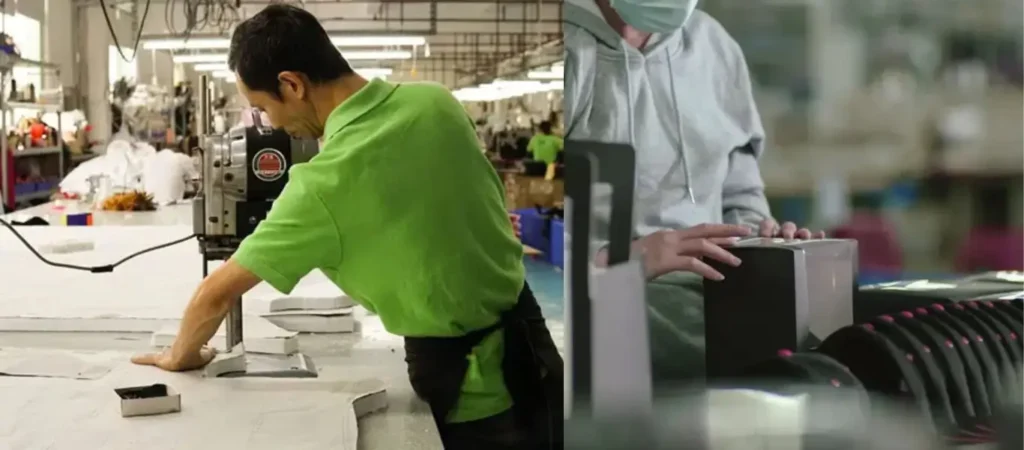
Large-scale manufacturers or small workshops.
In the custom hat field, looking for a large-scale manufacturer or a small workshop is the question that every sourcing manager will face. Based on our years of observation, both have their pros and cons, which can cater to different minimum order quantities and different business stages.
Pros and Cons of Large-scale Manufacturers
In general, large-scale manufacturers have a larger production scale and higher capacity, which can carry more bulk orders and massive production. For equipment and technologies, large-scale manufacturers are associated with more advanced production devices and a more effective production process, which can manufacture hats with complex craftsmanship. For quality control, large-scale manufacturers have a much stricter quality inspection system, and non-conforming products undergo rework to ensure the quality of the products.
For clients who need more than 10 thousand hats with simple patterns, large-scale manufacturers are the most cost-effective choices – automatic massive production, lower cost, and all is optimized for economies of scale.
However, the shortcomings of large-scale manufacturers cannot be ignored: higher minimum order quantities, long order lead times, and slow response to personalization. As pointed out by us, Aung Crown industry analysis: large-scale manufacturers might need two weeks to arrange for the production. Therefore, it’s not friendly for small bulk orders or full-customization orders.
The Flexibility and Cost of Small Workshops
Compared to large-scale manufacturers, small workshops have natural advantages in flexibility and personalized customization. Small workshops are willing to try creative crafts like embroidery, patches, laser holes, and more. As long as they are technically feasible, small workshops are willing to cooperate and give it a try. For urgent orders, small workshops can complete the delivery of 50 hats within three days.
However, the cons of small workshops are easy to see: pretty low levels of devices and technology, which means they can only manufacture simple hats. The quality control is not stable. Therefore, the quality often fluctuates due to cost pressures, and both the production environment and corporate management lack the standardization found in large-scale factories.
Our 28+ Years of Experience in Hat Making
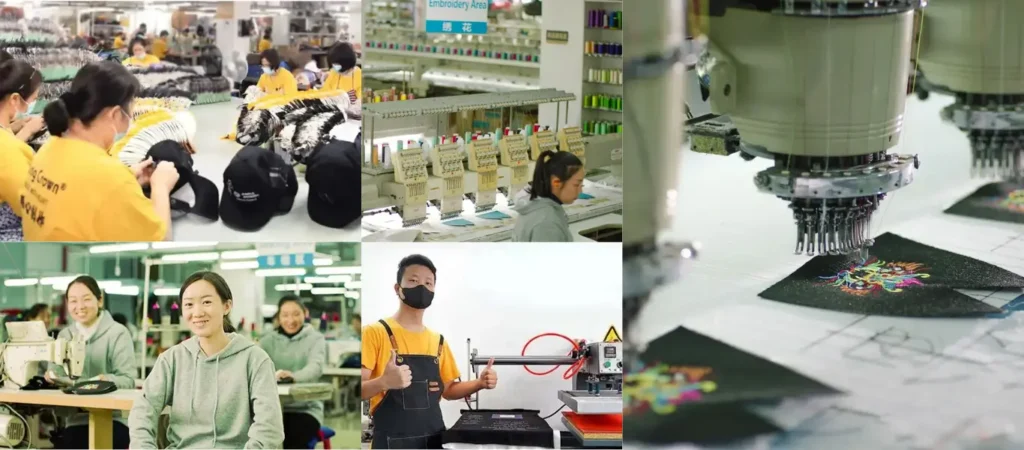
Since our founding in 1998, we have more than 28 years of experience in hat making. We believe that the ideal choice is not simply to choose a large-scale manufacturer or a small workshop. It’s to choose mid-large manufacturers with possessing the dual advantages of mass production capabilities and flexible customization capabilities. These types of custom hat manufacturers are able to reduce unit costs through mass production while simultaneously meeting small-batch customization requirements through modular production line designs. As our practices last year, by segmenting the production line into a series of flattened manufacturing units, rapid switching for on-demand personalized customization becomes feasible, resulting in a 200% increase in production efficiency and a 50% reduction in labor costs.
Production Capacity and Quality Control
- The Production Capacity Comparison
This part is the most distinctive difference between large-scale manufacturers and small workshops. In general, large-scale hat manufacturers are equipped with over 24 standard production lines, boasting a daily production capacity of over 50,000 hats. In stark contrast, the capacity of small workshops is typically limited to a few hundred to a thousand hats per day, rendering them unable to meet the demand for large-volume orders.
2. The Differences in Quality Control Systems
The quality control is the most concerning part for our clients. Usually, large-scale hat manufacturers have a whole quality control system from fabric warehousing, tailoring, embroidery/printing, stitching, to the final packaging. Each step has a clear quality control standard and involves checking records. However, due to the limitation of cost and manager capacity, most small workshops lack a system of quality control, and mostly rely on their staff experience and responsibility, which can lead to a quality difference in the same order.
For brands, the stability of quality control can directly affect consumers’ shopping experience and brand reputation, which makes large-scale hat manufacturers irreplaceable.
The Cost Structure
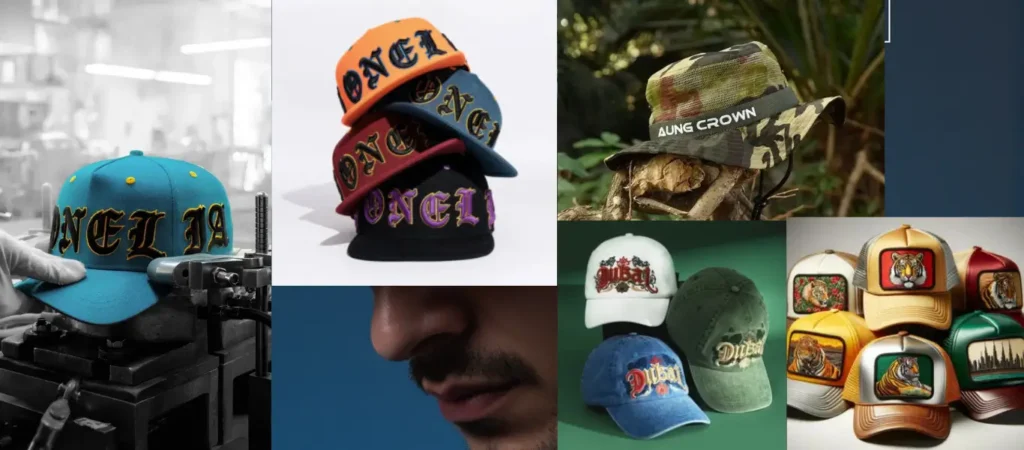
The core factors influencing custom hat pricing.
According to our custom orders from our clients, here are the 6 main factors that directly affect the cost.
- Hat Style: The hat style is decided based on the craftsmanship demands and production lead times. The more complex the style, the higher the cost.
- Hat Fabric: Fabric occupies the largest cost proportion in custom hats. Usually, pure cotton is relatively inexpensive, but for specialized industries like food processing, aerospace, and firefighting, which require anti-static or flame-retardant fabrics, the cost of these fabrics is significantly higher than that of ordinary fabrics.
- Accessories: Back tails, inner sweatband, top eyelets, and brand tags can also directly affect the overall cost.
- Requirements of Craftsmanship: In general, embroidered logos are more expensive than printed logos. The larger the logo and the more colors it uses, the higher the cost.
- Order Quantities: The larger the quantity, the more widely costs, such as fabric procurement and pattern making, which can be amortized, resulting in a lower unit price.
- Lead Time: The tighter the delivery deadline, the greater the need to reallocate production resources, leading to a higher price.
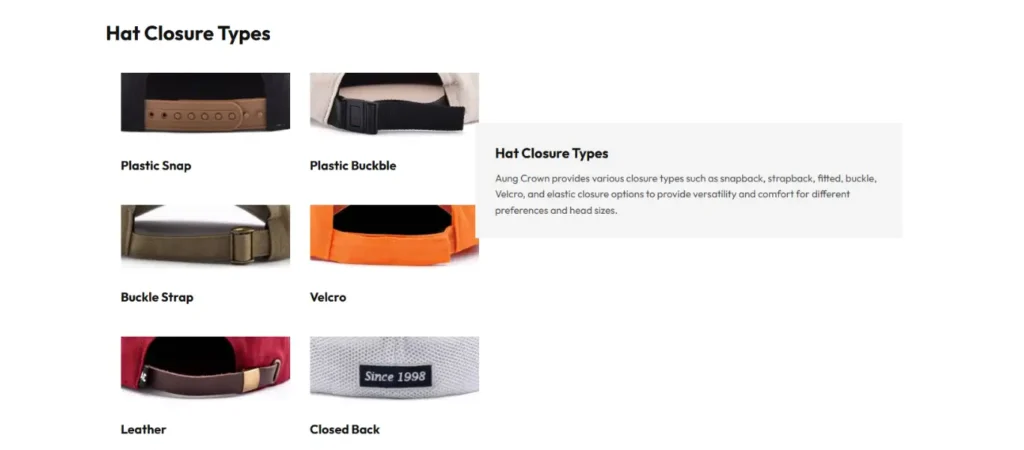
Besides that, the prototyping fee is another cost that sourcing managers should pay attention to. Because the general order quantities are from 50 to 300 pieces per style and color, if you proceed to establish a partnership with a custom hat manufacturer, the sampling fee can typically be refunded or deducted from the cost of the bulk order.
Practical Suggestions from Our 28+ Years of Experience in Hat Making
As a professional custom hat manufacturer with more than 28 years of experience in hat making, we suggest that our clients choose their hat craftsmanship based on the following dimensions.
Jacquard – Applied Scenes
Brand Position: Brands pursue high-end, classic, and low-key luxury.
Suitable Hat Type: Top hats, bucket hats, and flat cloth hats.
Budget: Mid-high budgets and not rushing to iterate rapidly.
Recommended Star: ★★★★☆ (Five stars is the maximum stars)
Printed – Suitable Scenes
Brand Position: Fast-fashion and trendy brands, and promotions.
Suitable Hat Type: All types of hats, particularly for full-pattern printing.
Budget: Limited budgets and pursue the rich colors.
Recommended Star: ★★★☆☆ (Need to note the durability of printed patterns)
Embroidery – Applied Scenes
Brand Position: Brands that pursue brand identity and a sense of 3D texture.
Suitable Hat Type: Baseball caps, army hats, and stiff-silhouette hats.
Budget: Mid-high budgets, focusing on brand display.
Recommended Star: ★★★★★ (the primary choice for brand logos)
The Industry Trends Outlook: Custom Hat-Making in 2026 and Beyond
The outlook in 2026 and beyond, the custom hat industry is accelerating in the following directions.
- Personalized Customization Becomes the Mainstream
More than 60% consumers are prone to choosing brands with customized service. Customizing hats is shifting from “luxurious pieces” to “must-have accessories”, which means that custom hat manufacturers need to have stronger and more flexible manufacturing capabilities.
The demands of organic cotton, regenerated polyester, moisture-wicking fabrics, and vegan leather accessories are increasingly rising. Eco-friendly packaging and degradable labels have become the differentiating factors in the high-end market.
- The Popularity of Intelligent Manufacturing is Accelerating
Automatic devices and production lines are rapidly increasing production efficiency and lowering reliance on manual labor. Nowadays, Doodays has achieved 60% automation of production processes, and it achieved complete automation of production processes last year.
- The Integration of Online and Offline Channels
Right now, offline channels still remain dominant; however, online channels are rising rapidly with a compound annual growth rate of 7.65%, and hat manufacturers are increasingly expanding their presence on e-commerce platforms and social media.
- The Emergence of Digital Customization
From DIYcap to Juhe Supply Chain, flexible supply chain platforms – supporting single-item customization and 48-hour shipping – are reshaping the delivery model for custom hats.
In the End
All these 3 crafts have their own cons and pros, and there is no absolute “optimal solution”. There is only the “best choice” – the one most suitable for a specific scenario. As a source factory with over 28 years of experience in the hat customization industry, we have upheld the theory that no matter how complex the craft, we are driven by our clients’ demands.
No matter whether pursuing Jacquard with high-end textures, printed focusing on color efficiency, or embroidery emphasizing three-dimensional distinctiveness, we hope that we offer our clients the most professional craft suggestions and the most reliable delivery guarantee. In 2026 – a year marked by steady growth in the global hat market, where personalization and sustainability have emerged as new trends – only those who remain steadfast in their commitment to quality and embrace technological innovation can navigate fierce market competition with stability and achieve enduring success.
Editor’s Note
Curated edited by Cindy Chen, a Copywriter & Digital Content Specialist at Aung Crown
Pictures from Aung Crown are edited on Canva by Cindy.
Having studied in the U.S., I now lead the global digital operations at Aung Crown. My passion lies in blending fashion trends and musical inspiration into the B2B landscape, allowing me to share the unique craftsmanship of Chinese hat-making with a global audience.