Introduction

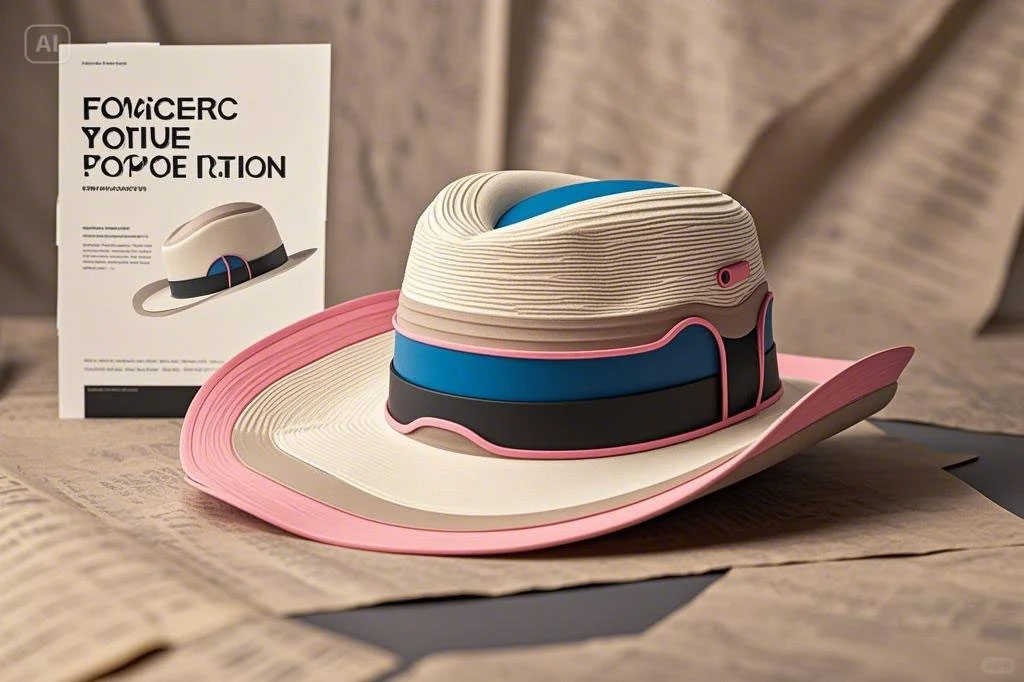
Recently, many clients have sent us AI‑generated hat images. Visually, these hats are indeed beautiful – exaggerated shapes, rich details, and a strong design sense. But from a production perspective, most of them can only stay at the conceptual stage. Why?
1. AI understands vision, not hat structure
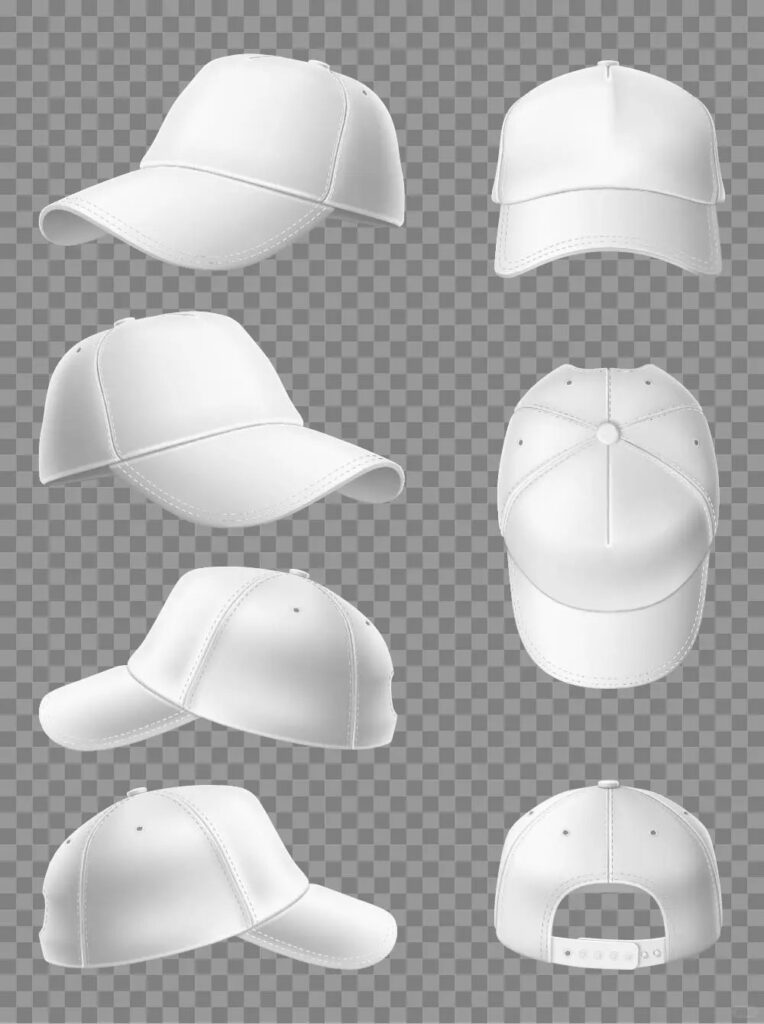
Hats are three‑dimensional products built from multiple structural elements:
- Crown height
- Front panel curvature
- Side panel proportions
- Brim length and circumference
- Internal support methods
AI focuses on overall aesthetics when generating images. In real production, however, we often find:
- A crown that is too high makes it look like a helmet.
- A brim that is too wide obstructs vision.
Hat design must prioritise wearability, not just visual impact.
2. AI ignores fabric characteristics
The same design can yield completely different results with different fabrics.
- Example: A soft, draped bucket hat – AI may generate a naturally drooping brim that looks elegant. But if ordinary cotton is used, the brim collapses easily due to insufficient support. Adding stiff lining may ruin the original softness.
- Example: A washed / distressed hat – AI can create a natural fading effect. In reality, production must consider fabric density, yarn count, weight, dyeing stability, washing processes, and more – all of which determine the final look.
3. AI‑designed processes may not be feasible
AI images often feature complex details: multi‑layered stitching, irregularly shaped panels, three‑dimensional decorations, intricate embroidery, and metal accessories. These are visually appealing, but factories must further evaluate:
- Is the structure easy to cut?
- Are seam placements reasonable?
- Can production efficiency match the order quantity?
- Is the cost within the client’s budget?
Commercialising a hat requires a balance between design and manufacturing.
4. AI ignores production errors
Every line in the AI rendering is perfect. In actual production, there are:
- Cutting tolerances
- Variations in worker operation
- Fabric shrinkage differences
- Effects of stitch count and density on embroidery
The value of an excellent factory lies in identifying these risks in advance.
5. AI lacks market judgment
Whether a hat sells depends not only on its appearance, but also on:
- Target consumers
- Wearing scenarios
- Price positioning
- Sales channels
For example, a trendy hat brand aimed at the Japanese market prioritises comfort, detail quality, and long‑term wearability. Design must be market‑driven, not just visually striking.
So, does AI have value in hat design? Absolutely!
And its value is growing. We also use AI to:
- Quickly explore design directions
- Test different colour schemes
- Help clients understand design concepts
- Improve early‑stage communication efficiency
However, the final production stage still relies on:
- Designer experience
- Pattern‑maker skills
- Process feasibility assessment
- Supply chain cooperation
Final Words From Aung Crown
As a hat factory, we focus on one thing: turning a hat from an image into a physical product – and that involves an entire manufacturing process. AI can help us see more possibilities, but for a hat to actually be worn by consumers, we still need people who truly understand the product.

I’m Kailyn, the founder of Aung Crown. I’ve spent over a decade “in the trenches” of the hat and clothing trade, learning exactly what it takes to make a product stand out. I’m a bit of a perfectionist when it comes to design and quality, but that’s because I care about your brand’s success as much as you do. Whether you need production advice or post-sales support, I’ve got you covered every step of the way.