Introduction
When you go to a restaurant, you can always see that all the chefs in the kitchen are wearing white hats, some of them are even tall white hats. Many people only know that they are to prevent hair loss, but in fact, the origin, color matching, height and pleats of this hat are all very particular. 90% of people only know half of it.
Why must it be white?
White is the color that shows stains the most. In a kitchen with heavy oil fumes, it is easy to get greasy, soupy, and sweaty stains. Even the smallest dirt will be immediately visible, making it easy to replace and clean in time, giving diners a sense of security from a visual perspective.
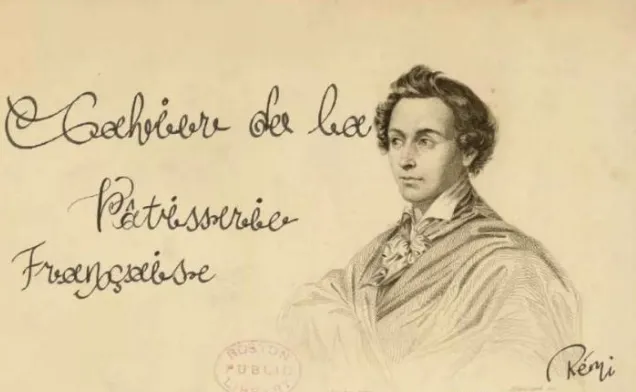
The culinary pioneer and 18th-century French chef Marie-Antoine Carême first established the rule: white symbolizes purity and hygiene, setting the standard for chefs’ attire worldwide. In contrast, dark hats make it difficult to detect grease and grime, hindering food safety control.
Why so tall?
The hat is made very tall, serving two main practical functions.
Insulated and breathable, relieving the stuffiness in the kitchen
Kitchen stovetops are constantly hot, and tall hats have a large open space at the top, forming an air buffer layer. They don’t stick to the scalp, reducing the stuffiness from the heat, making them much more comfortable than short hats that are close to the scalp.
All-round protection against hair and dandruff
The tall design can completely cover all hair, so no matter how long or short the hair is, stray hairs and dandruff will not fall into the food, which is the most basic line of defense for food hygiene.
The origins of the chef’s hat
The earliest theory about the origin of the chef’s hat is that it came from the Byzantine Empire.
Legend has it that at the end of the Middle Ages, when the Turks invaded Byzantium, a group of Byzantine cooks fled the invaders’ pursuit during the war and eventually took refuge in a monastery.
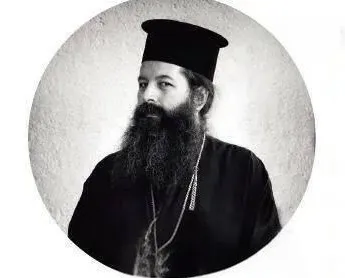
They disguised themselves as believers, donned black robes and cylindrical black hats, and lived among the monks.
The “Camille hat” originated in Byzantium.
After the war ended, to commemorate their time living in the monastery, the cooks adopted the round hat as their distinctive mark, only changing its color to white.
As for why it’s white, think about what color would make someone feel clean and hygienic at first glance?
Another popular theory is that the “chef’s hat” originated in 18th-century France.
It is said that in the late 18th century, there was a chef named Antoine Clemens who was somewhat famous in a restaurant in Paris. He was a man with a natural sense of humor.
One day, a customer wearing a tall white hat came to the restaurant. Clem found it very interesting, so he, who liked new things, copied it and ordered a white hat that was even taller than the customer’s hat. From then on, he wore this tall hat every day as he went around the kitchen.
His strange appearance attracted a crowd of curious customers, and the restaurant’s business suddenly boomed.
Chefs in other restaurants discovered this clever way to attract customers and followed suit. Soon, these tall white hats were everywhere in restaurants and eateries throughout Paris.
Even more interestingly, when Clem discovered that his apprentices were wearing hats of the same height as him, in order to distinguish himself from his apprentices, he raised his own hat again, reportedly to 40 centimeters.
This later evolved into a ranking system for chefs, with the higher the chef’s hat, the more senior and skilled they were.
The height and folds subtly indicate the chef’s rank
In 1949, an international organization called the “Chef’s Hat Society” was even established in Paris.
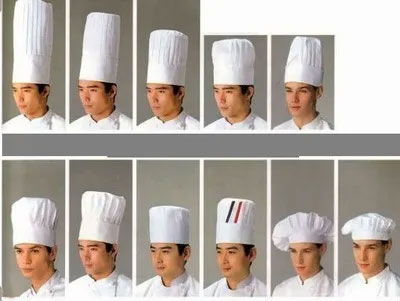
This “Chef Hat Association” stipulates that, based on the height of the hat, chef hats are divided into several different types: head chef hats, ordinary chef hats, and kitchen worker hats.
The tallest chef’s hat is about 29.5 cm high, the ordinary chef’s hat is about 25 cm high, and the shortest kitchen worker’s hat is about 10.5 cm high.
In addition, it is stipulated that the folds on the brim of the hat represent the chef’s skill level, indicating the number of recipes for a certain food that the chef has mastered. For example, if a chef’s hat brim has 20 folds, it means that he knows 20 different ways to cook a certain ingredient.
In the culinary world, the taller the hat and the more wrinkles it has, the higher the chef’s level and the more experienced they are. Chef hats are mainly divided into the following three levels:
Chef Hat Classification by Height and Rank
| Hat Type | Height | Worn By | Key Features / Symbolism |
|---|---|---|---|
| Line Cook / Commis Cap | 10–15 cm | Junior chefs, kitchen helpers, or commis staff | Indicates a learning or support role; basic level |
| Standard Chef’s Hat | ~25 cm | Intermediate‑level chefs with solid skills | Represents mature cooking techniques and ability to work independently |
| Executive / Head Chef Hat | 29–30 cm | Executive chefs, head chefs, or master chefs | Features up to 100 pleats; symbolizes mastery of hundreds of dishes, exceptional culinary expertise, and extensive kitchen management experience |
In the early days, the hats of top French chefs could be half a meter high. The industry directly referred to senior chefs as “big hats,” and they could tell who had the most influence in the kitchen at a glance.
However, nowadays, unless it’s a very formal restaurant, chefs in ordinary restaurants don’t seem to care as much about the height and folds of their hats.
Is it because they’re afraid of ruining their reputation by making bad food?

I have over 25 years of experience in hat and apparel manufacturing. With a steady and detail-oriented approach, I oversee factory production and team operations, ensuring reliable quality and on-time delivery for customers worldwide